Our facility
Inside Our 35,000 Square Foot Repair Facility
In short
35,000 square feet under one roof: a downdraft booth that takes a full size coach, a full frame rack, heavy chassis lift capacity, in house laminate, fabrication, systems, and interior work, and yard space to hold multiple fleet units at once.
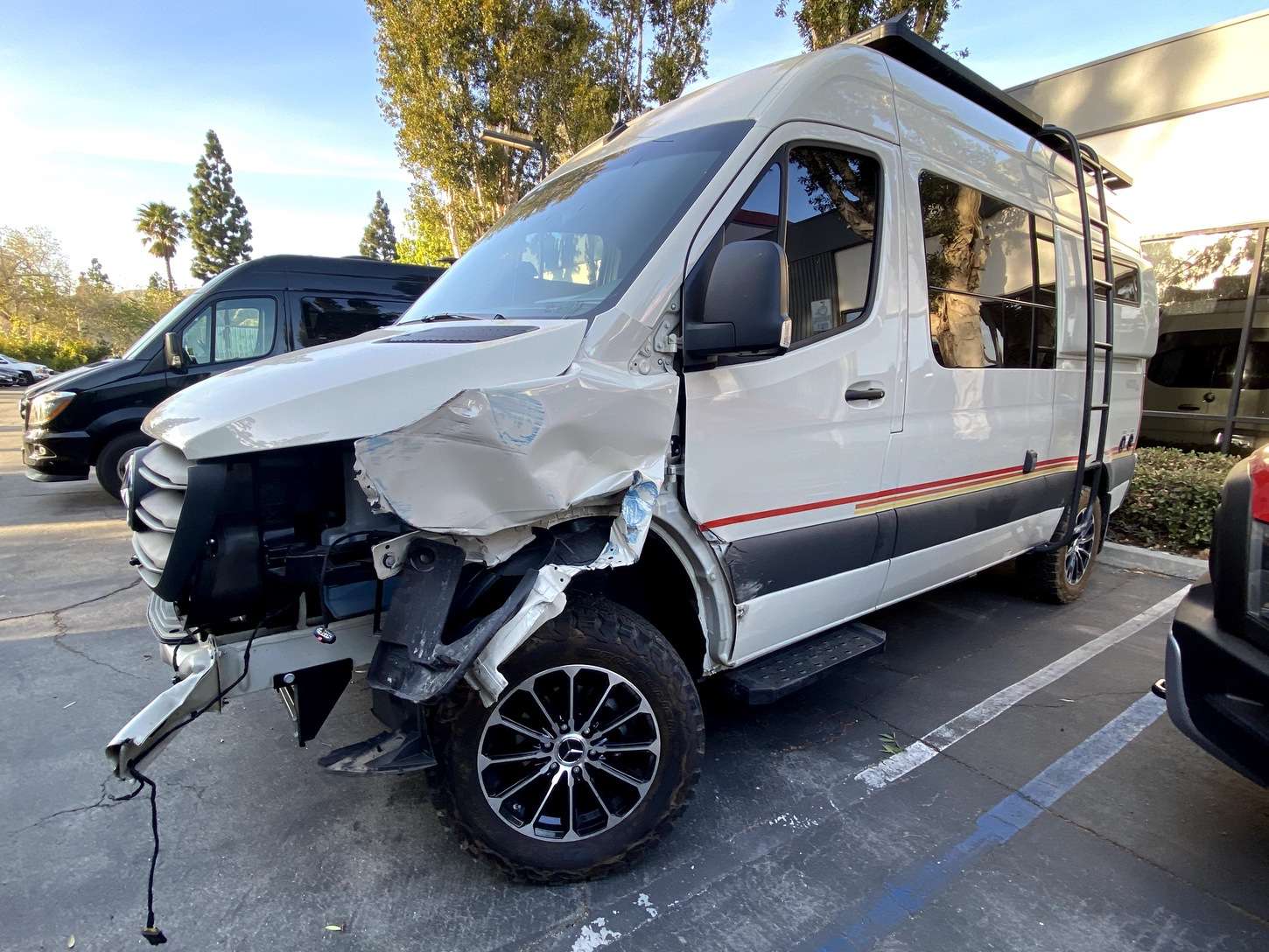
Square footage is only interesting for what it makes possible. Here is what this particular building lets us do, and what it lets us avoid asking you to accept.
- Square feet under one roof
- 35,000Square feet under one roof
- Vehicles through the floor monthly
- 75+Vehicles through the floor monthly
- Location, no satellite yards
- 1Location, no satellite yards
- Operating since
- 2015Operating since
Space
What the square footage actually buys
The first thing a large building buys is the ability to leave a vehicle alone. A coach that goes on the rack for structural correction stays in that area through the body stage. It is not shuffled out to make room for the next arrival and shuffled back in two days later. Every reposition of a large vehicle costs setup time, risks contact damage in a crowded yard, and interrupts a technician who then has to reacquaint himself with where the job stood. In a constrained shop that shuffle happens several times a week and none of it appears on your invoice as a delay, it just shows up as a longer repair.
The second thing it buys is parallel work. Structural, body, paint, systems, interior, and detail are separate disciplines with separate equipment and separate environmental needs. Sanding dust and wet paint are enemies. Welding and upholstery do not belong in the same room. Separating those areas means several jobs at different stages can run at once without contaminating each other, which is the only way a floor moves roughly 75+ vehicles a month without cutting corners on any of them.
The third thing it buys is staging. Vehicles waiting on a part, waiting on an adjuster, or waiting on an owner decision have somewhere to sit that is not a production bay. That sounds administrative until you have watched a shop with no staging area hold a finished job in the booth because there was nowhere else to put it. Every vehicle parked in a working space is a working space that is not working.
Equipment
Capability by area
What is in the building, and what each area is for.
| Area | What it covers |
|---|---|
| Refinishing | Downdraft booth with the volume and bay length to take a full size coach in one pass |
| Structural | Full frame rack with anchoring and measurement for motorhome, truck, and trailer chassis |
| Lifting | Heavy chassis lift capacity, so a loaded commercial unit can be worked from underneath |
| Laminate and fiberglass | Dedicated area for substrate repair, layup, cure, and gelcoat finishing |
| Fabrication | In house welding and metal fabrication for brackets, bumpers, racks, and structural sections |
| Systems | Bays set up for electrical, generator, plumbing, appliance, and climate diagnosis under load |
| Interior | Trim and cabinet area for flooring, wall panels, cabinetry, countertops, and upholstery |
| Staging | Yard space to hold multiple fleet units at once without blocking production bays |
Refinishing
A booth built around the length of a coach
A paint booth is a controlled room: filtered air in, contaminated air out, temperature and airflow held steady through spray and through cure. The specification that matters for our work is not the equipment brand, it is the internal dimensions. A booth that will take a full size motorhome with the mirrors on and enough clearance for a technician to walk the perimeter with a gun is a substantially different piece of infrastructure from one built for sedans, and very few shops in the region have one.
What that buys you is continuity of finish. A coach sidewall is one enormous flat plane, which is the least forgiving surface in refinishing. Any variation in film build, any difference in flash time between one section and another, any dust settling on a horizontal run, all of it reads clearly under direct sunlight from thirty feet away. The only reliable answer is to lay the whole panel in one continuous pass in a stable environment, and that requires a room the vehicle fits inside.
Color is the other half. Coaches carry multi stage graphics, metallic and pearl bases, and years of ultraviolet exposure that has moved the color away from whatever the paint code says. We spray out and check against the actual panel under corrected lighting before committing, and we make blend decisions based on what the adjacent panels actually look like today. A code match to a faded surface is a mismatch, and it is the single most common complaint owners bring us from previous repairs elsewhere.
Structure
Frame rack and lift capacity for heavy chassis
Structural work on a large vehicle is a measurement problem before it is a force problem. The chassis gets anchored to the rack, reference points are established, and a measuring system tracks those points while hydraulic pressure is applied in a controlled direction. The technician is not pulling until it looks right. He is pulling until the numbers return to specification, then checking that the surrounding structure moved with it rather than against it.
The complication with our vehicles is mass and geometry. A diesel coach or a loaded commercial chassis weighs far more than anything a passenger car rack is rated to hold, and the anchoring points are in different places. Length matters too, because a rack that a forty foot unit overhangs cannot control the far end of the vehicle while force is being applied to the near end. Getting this wrong does not produce an obvious failure. It produces a vehicle that tracks slightly off, wears tires unevenly, and never quite closes its doors the same way again.
Lift capacity serves the same purpose from below. Brake, axle, suspension, driveline, and underfloor plumbing work on a heavy unit is far more accurate and far safer with the vehicle raised than with a technician on his back on a creeper in a yard. It also shortens the job, which matters to a fleet operator counting days of unit downtime rather than hours of labor.
In house
Paint and fabrication under our own roof, not sublet
Sublet is the quiet cost in this trade. A shop takes a job, then sends the paint out, or the welding out, or the structural pull out, because it does not own that capability. The vehicle now travels. It sits in someone else's queue at someone else's priority. If the result is wrong, the two companies discuss it with each other while your unit waits. None of that appears in the estimate you were given, and all of it appears in the calendar.
Keeping paint, fabrication, laminate work, systems, and interior in one building removes the handoffs. When the body technician finds that a bracket needs to be made rather than ordered, the fabrication area is thirty steps away and the part exists that afternoon. When paint discovers a substrate issue during prep, the laminate technician who did the repair is still in the building and can look at it. Problems get resolved in conversation rather than in email between companies.
It also fixes accountability. One shop wrote the estimate, one shop performed the work, one shop signs off at final inspection, and one shop answers the phone if something is not right. There is no version of the conversation where the finish is blamed on the paint vendor and the fit is blamed on the body vendor while you stand in the middle of it.
Questions
Frequently asked questions
Why does the size of the building matter to my repair
Square footage on its own is a vanity number. What matters is what it lets a shop avoid. At 35,000 square feet we can hold a vehicle in a single bay through structural, body, and prep without moving it, keep a booth free for the paint stage instead of scheduling around one shared bay, and stage arrivals in the yard rather than parking them where a technician needs to stand. Every one of those is a source of delay in a smaller building. A shop with two bays and a yard that fits three vehicles is not being careless when a job stretches, it is being physically constrained, and the constraint lands on your timeline.
What does a booth sized for a coach change about the paint work
It changes whether the finish is done in one controlled environment or in sections. Refinishing a large vehicle in a booth that is too short means masking, painting a portion, moving the vehicle, remasking, and painting the rest. Every reposition is a new set of edges, a new set of overspray boundaries, and another chance for the two halves to read differently under sunlight. It also changes contamination control. A downdraft booth pulls air and airborne particulate down and away from the horizontal surfaces, which on a coach is where most of your visible square footage is. On a large roof and long flat sidewalls, dust control is most of the difference between an acceptable finish and a good one.
What is a frame rack and why does an RV shop need one
A frame rack is a fixed steel platform that a vehicle is anchored to so that controlled hydraulic force can be applied in a specific direction, with a measuring system tracking reference points while the pull happens. Without one, correcting a bent rail or a shifted chassis is guesswork. With one, the correction is verified against measurements before and after, and the record goes in the file. Most general body shops have a rack rated and configured for passenger cars. Anchoring a motorhome or a commercial chassis is a different problem in weight, in length, and in where the pull points can safely be set.
Do you sublet any of the work to other shops
The core disciplines are all in house: structural, body, laminate and fiberglass, refinishing, fabrication, systems, interior, and detail. That is the point of building a facility this size. Occasional specialty items still go out, glass in some configurations, certain driveline components, and manufacturer specific electronic work that requires a credential we do not hold. When something does go out we tell you, and we tell you what it does to the schedule. What we avoid is the pattern where a shop takes a whole job and quietly ships the hard parts elsewhere, which is how a two week repair becomes six weeks with nobody accountable for the gap.
Can you handle several fleet vehicles at the same time
Yes, and that is one of the practical reasons for the yard and the bay count. A department that runs shuttle buses or a company that runs box trucks cannot give up its whole fleet at once, so the useful arrangement is scheduled groups: a set of units in, worked, and out, then the next set. Holding capacity is what makes that possible. If a shop can only stage three vehicles, a group of six turns into two separate engagements weeks apart. We serve Westminster operators and Orange County municipal fleets on exactly this pattern, and the scheduling conversation happens before the first unit arrives, not after.
Is the facility equipped for regulated paint and hazardous material handling
Yes. The refinishing operation runs under California air quality rules for coatings and equipment, and the shop holds EPA identification CAL000367879 for hazardous waste generation. In practice that means compliant spray equipment, capture and filtration on the booth, gun cleaning that contains solvent rather than releasing it, and manifested disposal of waste paint, solvent, filters, used oil, coolant, refrigerant, and batteries through licensed haulers. The hazardous material and disposal line that appears on an invoice when chemicals, refrigerant, or LP are involved is what that program costs, and it is shown as its own line rather than buried in materials.
Can I visit and look at the shop before I commit
Yes. Walk ins are welcome during business hours and we will show you the floor. It is worth doing before you leave a vehicle anywhere. Look at whether damaged units are staged out of the working area or parked in it, whether the booth is being used for storage, whether the rack has a measuring system attached to it, and whether the technicians have somewhere to put parts other than the floor. Those four observations tell you more about how your job will run than any conversation at the counter will. Calling ahead means someone who can answer technical questions is available when you arrive.
Talk to a repair specialist today
Tell us what happened and we will tell you what the repair actually involves, what it costs, and how long it takes. We work directly with every major carrier and serve Westminster owners and fleets from our 35,000 square foot facility.
Posted labor rates are published on our prices page. Diagnostic and systems assessment fees are credited against an authorized repair.