Videos
Repair Walkthroughs and Damage Explained on Video
In short
Our channel covers repair walkthroughs, what specific damage actually looks like once the surface comes off, and how a job moves through the shop. Watch it on YouTube rather than through an embedded player that slows this page down.
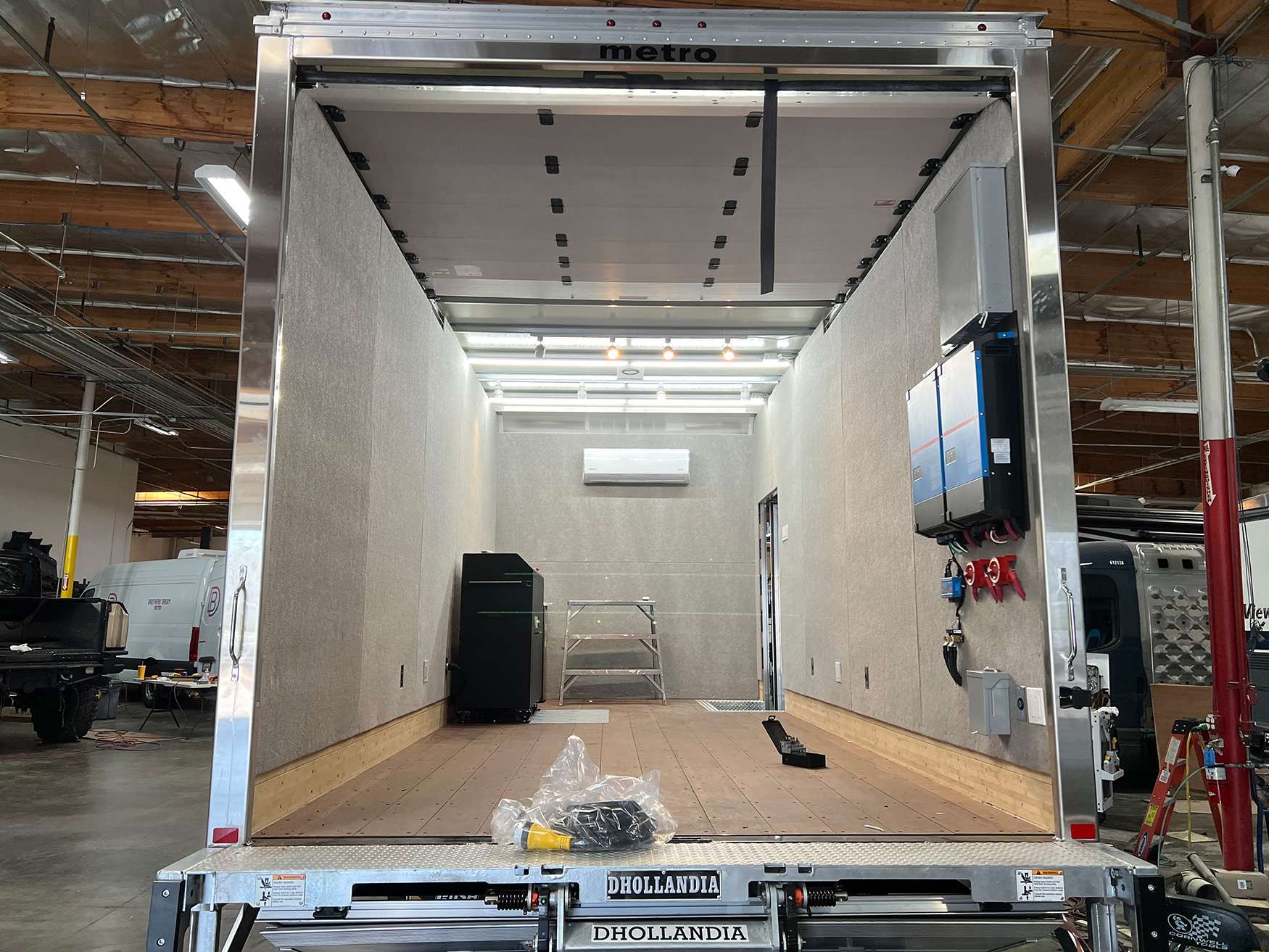
Some things in this trade are far easier to show than to describe. What a bonded sidewall looks like when the outer skin comes off. How far a wet region extends past the stain that prompted the call. Why a chassis on the rack is a measurement exercise rather than a demonstration of force. Those are the subjects the video content exists for.
What is covered
The kinds of video we publish
Filming happens around production rather than instead of it, so the subjects follow whatever came through the floor.
Repair walkthroughs
A vehicle followed through the stages of a job: intake and teardown, substrate reconstruction, refinishing, and reassembly. The purpose is to make the labor content visible, because on a bonded vehicle the number of stages is the reason the hours read the way they do.
Damage explained
What a particular kind of damage actually is once the surface comes off. Delamination, soft floor, a failed roof seam, a slide that has stopped sealing, a cracked front cap. Owners recognize the symptom long before they understand the cause.
Process and paperwork
How an estimate is built, what teardown does to the scope, what a supplement is, and what an adjuster is looking at when a file arrives. The paperwork is where most repairs go wrong, and it is the part nobody films.
Equipment and capability
The rack, the booth, the fabrication area, and what each one makes possible. Useful mainly as a reference point when you are comparing shops and trying to work out what the differences actually are.
Inspection and prevention
What to look at on your own vehicle, particularly seams, seals, roof penetrations, and slide perimeters. Most of the expensive repairs on our floor started as a maintenance item somebody could not see from the ground.
Fleet and commercial
How multi unit work is scheduled and documented, and the repeat damage patterns that show up across a group of identical vehicles once you have seen enough of them.
Walkthroughs
Why watching a teardown changes what you expect from an estimate
The most common reaction owners have to a repair estimate on a coach or a trailer is that the labor hours look impossible. That reaction is entirely reasonable if your reference point is automotive body work, where a panel is fastened to a structure and replacing it is a defined operation. On a laminated vehicle the panel is the structure, the structure is adhesive, and getting to the damage means taking apart layers that were bonded together at the factory and never intended to separate.
A walkthrough makes that visible in a way no written explanation manages. You watch the outer skin come off, you see how far the separation actually travelled past the visible damage, you see the core condition, and you see the framework behind it. Then the rebuild happens in the same order, layer by layer, and the number of distinct operations becomes obvious. Owners who have watched one of those tend to ask entirely different questions at the counter, and better ones.
The same applies to refinishing. A viewer who has watched color development, spray out cards checked against a faded panel, blend boundary decisions, and the cure schedule understands immediately why a repaint is not simply a matter of matching the paint code. It is also the fastest way to explain why a shop without a booth long enough for the vehicle produces a different result, since the sectioning and repositioning are visible on camera.
Damage explained
Symptoms owners recognize, causes they usually do not
The damage videos exist because the same handful of conditions account for most of what arrives at this shop, and almost every owner recognizes the symptom long after the cause became expensive. A wavy or bubbled sidewall is delamination, and by the time it is visible the bond has been failing for a while. A soft spot in a floor is a leak that has been running along a joist, often nowhere near the wet patch you can feel.
Roof and slide failures get the most attention because they cause the most damage per dollar of neglected maintenance. A membrane seam that has begun to lift, a lap sealant bead that has cracked around a roof penetration, or a slide wiper seal that no longer compresses evenly will all admit water for months before anything appears inside. By the time an interior stain appears, the repair is no longer a sealing job, it is a structural one.
The point of showing these is not to alarm anyone. It is that all of them are cheap to address early and extremely expensive to address late, and the gap between the two is usually just knowing what to look at. Nothing in those videos requires a technician to act on. Most of it requires a ladder and twenty minutes twice a year.
Privacy and page speed
Why the videos are linked rather than embedded
An embedded player is not a picture. It loads scripts, cookies, and network requests from another company for every person who opens the page, whether or not they intended to watch anything. That cost lands hardest on exactly the visitor we most want to serve well: someone standing next to a damaged vehicle on a phone, on a weak connection, trying to work out what to do next.
Linking out also gives you the whole channel rather than a curated selection. You can sort by date, read comments, and see the material that nobody chose to feature, which is frequently the more useful material. If we ever do embed video here, it will be behind an explicit click rather than loaded automatically, and this page will say so.
Nothing on the channel is a substitute for having your vehicle looked at. Video shows you what a category of damage involves. An estimate requires the unit on our floor with panels off, moisture recorded by location, and the chassis measured where the impact suggests it moved. The videos are there so you arrive at that conversation already speaking the language.
Questions
Frequently asked questions
Where can I watch your videos
On our YouTube channel, linked from this page. We have deliberately not embedded a player here. Embedding a third party video frame loads scripts from another domain, slows the page down for everyone who did not intend to watch anything, and adds tracking that a visitor did not ask for. Going to the channel directly also lets you see everything published rather than whichever handful somebody chose to feature, and it lets you sort by date and read the comments, both of which tell you more than a curated selection would.
Do the videos show how much a repair costs
Not usually, and where cost is discussed it is discussed as a range with the drivers explained rather than as a figure attached to a vehicle. The reason is that a number quoted in a video becomes the number a viewer remembers, and scope on this type of vehicle varies enormously between two units that look identical from the outside. Our actual pricing is published: body and paint $210 per hour, mechanical $260 per hour, diagnostics $285 per hour credited against an authorized repair, and detail $95 per hour, with parts, materials, deposits, and tax treatment all listed on the prices page.
Can I use a video to diagnose my own vehicle
You can use one to understand what you are looking at, which is genuinely valuable, and you should be careful about going further than that. The recurring lesson in this trade is that the visible symptom and the actual fault are frequently in different places. A stain on an interior wall is rarely directly under the leak. A slide that binds is often a mechanism problem presenting as a seal problem. Watching a walkthrough will help you describe your situation accurately and ask better questions, and that is worth a lot. It will not tell you how far the damage extends behind a surface that still looks intact.
Do you film customer vehicles, and do you ask first
Any filming on the floor happens with the owner's knowledge, and we do not publish footage that identifies a vehicle or its owner: no registration plates, no unit or fleet numbers, no claim references, and no interiors that reveal more about the people who live in the unit than they would choose to share. If you would prefer that your vehicle not be filmed at all, tell us at intake and it goes on the file. Nobody who brings a damaged vehicle to a repair shop signed up to be publicity, and treating that as an assumption rather than a question would be wrong.
Why not put the videos directly on this page
Page weight and privacy, mostly. A third party video embed pulls in scripts and cookies from another company for every visitor, including the large majority who came here to read about a repair and have no intention of watching anything. That slows the page, particularly on a phone in a parking lot where somebody is standing next to a damaged vehicle trying to work out what to do. Linking out keeps this site fast and keeps the tracking decision with you rather than making it on your behalf.
Is the video content a substitute for an estimate
No, and it is not intended to be. Video is useful for showing what a category of damage involves and why a repair takes the stages it takes. An estimate is specific to your vehicle and requires the vehicle on our floor, panels off where we need to see behind them, moisture readings recorded by location, and the chassis measured if the impact suggests structural involvement. Watching a walkthrough of a similar repair is a good way to arrive at that conversation already understanding the vocabulary, which makes the conversation shorter and better.
How often is new content published
Irregularly, and honestly so. Filming happens around production, not instead of it, so publishing follows whatever came through the shop and whatever was worth documenting. We would rather post occasionally with something real on the floor than keep a schedule by producing content with nothing in it. Subscribing on the channel is the reliable way to see new material, since we do not maintain a mailing list for video announcements and we are not going to start one just to have something to send.
Can I request a video on a specific repair or vehicle type
Yes, send it to info@ocrvcenter.com and put the vehicle type and the topic in the subject line. Requests genuinely influence what gets filmed, because the useful topics are the ones people are already trying to understand rather than the ones that look impressive. The most requested subjects so far have been water intrusion tracing, slide seal failure, and how a supplement works on a claim, which happen to be three of the areas where owners lose the most money by not understanding them early.
Talk to a repair specialist today
Tell us what happened and we will tell you what the repair actually involves, what it costs, and how long it takes. We work directly with every major carrier and serve Westminster owners and fleets from our 35,000 square foot facility.
Posted labor rates are published on our prices page. Diagnostic and systems assessment fees are credited against an authorized repair.