Public Sector and Partners
School District Bus Fleet Repair and Summer Scheduling
In short
School district bus fleet repair lives inside a calendar nobody can move. Buses have to run on the first day of school, and the only reliable repair window is summer. We work with districts serving Westminster and the surrounding Orange County area on multi bus coordination, inspection readiness after body work, and the support fleet nobody plans for.
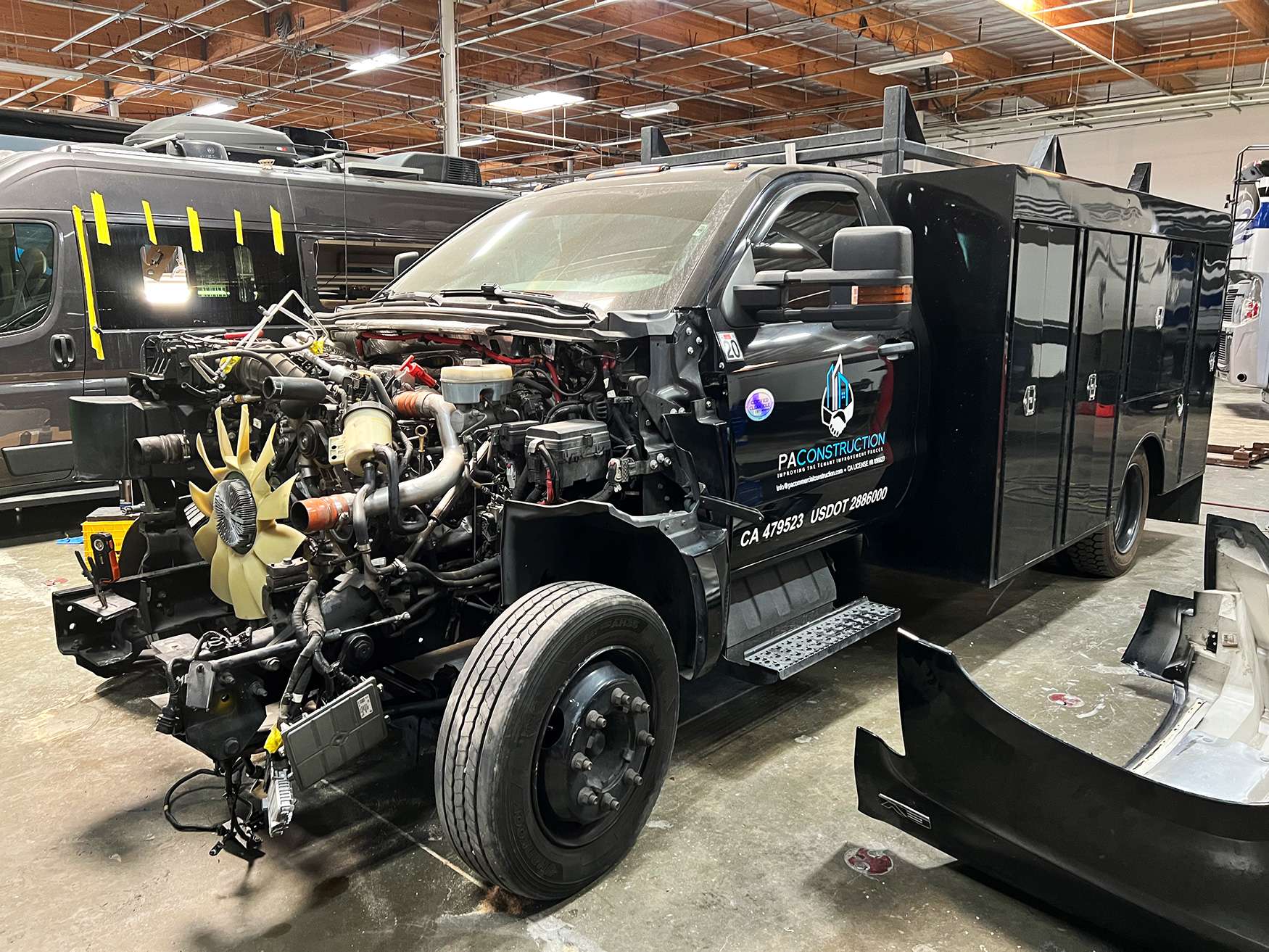
School district bus fleet repair is governed by a calendar that does not negotiate. Buses carry students on a fixed schedule, the summer window is the one predictable period for major work, and a unit that is not ready on the first day of the term is a routing problem affecting families directly. We handle body and structural repair for districts serving Westminster and across Orange County, planned against the academic calendar rather than against ours.
Student Transport Sets the Standard
A bus is not an ordinary fleet vehicle and everyone in a transportation office already knows it. The occupants are children, the operator answers to parents and to the state, and the tolerance for a marginal repair is exactly zero. That changes how a shop should approach the work, and it changes which corners are available to cut when a schedule gets tight, which is to say none of them.
Structural repair on a bus body has to restore the original load path rather than approximate something close to it. Compartmentalization depends on seat mounting, floor structure, and body integrity all working together as a single system, and a repair leaving any one of those compromised is not actually a repair. We treat bus body structure as a safety system rather than as sheet metal that happens to be shaped like a vehicle.
The same standard applies to emergency exits, doors, and the structure surrounding them. If a rear door or an emergency window opening is involved in the damage, the repair has to return it to correct operation and correct clearance, and that has to be verified under operation rather than assumed because the panel went back where it came from. Verification takes a few extra minutes and it is the only thing separating a completed repair from a confident assumption.
Summer Is the Only Real Window
Most districts have roughly one usable block for significant repair work each year, and it is bounded on both ends by dates nobody in the transportation office controls. That makes summer scheduling the single most consequential planning decision a transportation director makes annually, and it is one where the cost of being late is measured in routes rather than dollars.
The districts that use the window well start scoping in spring. Identify the units needing work, assess them before the term ends, get parts identified and ordered while buses are still running their routes, and have the shop schedule locked before the first bus arrives in June. The districts that struggle are almost always the ones beginning the conversation after the school year has already ended.
We plan district work backward from your first day of school rather than forward from your drop off date, because only one of those dates actually matters. That means telling you in advance which items realistically fit inside the window and which should be scheduled for a winter or spring break block instead. A plan that looks optimistic in June becomes a routing crisis in August.
- Assess candidate units in spring while buses are still in service
- Order long lead parts before the summer block begins
- Lock the shop schedule ahead of the drop off date
- Identify work that belongs in a shorter winter or spring block
- Plan backward from the first day of the term, not forward from drop off
Coordinating Several Buses at Once
Districts rarely send a single bus. They send a group, and that group has to come back on a schedule keeping routes covered as the term approaches. Handling six buses in parallel and returning them all in the final week before school starts is the outcome every transportation director is trying to avoid, and it happens whenever nobody plans the release sequence deliberately.
We stage multi bus intake with a release calendar issued at authorization rather than assembled as vehicles happen to finish. Units with the longest parts lead times start first so their waiting overlaps productive work on other buses. Straightforward body repairs fill the gaps that creates. You know which buses come back in which week, which is exactly what your routing staff needs in order to plan anything.
Each unit gets its own file, photographs, scope, and invoice referencing your identifiers, while you receive a consolidated summary across the whole batch. That structure works for the transportation office and the business office simultaneously, which usually want the same underlying information presented in two different formats for two different purposes. Neither office should have to call the other to reconcile what a repair covered or when a specific bus is expected back on a route.
- Release calendar issued at authorization, not at completion
- Long lead parts units started first to overlap waiting
- Individual file, scope, and invoice per bus
- Consolidated batch summary for authorization decisions
- Routing staff know availability by week rather than by rumor
Inspection Readiness After Body Work
School buses in California operate under inspection requirements considerably more demanding than ordinary commercial standards, and a repair that creates an inspection finding is worse than no repair at all. It takes a unit out of service at the worst possible moment, usually after the district has already built a routing plan assuming that bus would be available on day one.
We scope body and structural work with that endpoint in view from the start. Emergency exit operation and clearance, door mechanisms, seat and floor mounting integrity, mirror mounting and adjustment, lighting and reflective marking, and body panel integrity are all items an inspector examines closely and all items a collision repair is capable of disturbing without anyone noticing. Each of those gets checked under operation before a bus leaves the shop, because an inspection finding in August becomes a routing problem in September.
We document what was repaired and how it was done so your maintenance staff has the record on file when a question comes up later. What we do not do is speak for an inspection authority about what their findings will be. Your district knows its own requirements, and we scope against what you tell us those requirements are rather than against a general assumption.
- Emergency exit operation and clearance verified after repair
- Seat mounting and floor structure integrity restored to original
- Door mechanisms and surrounding structure checked under operation
- Mirror mounting, lighting, and reflective marking restored
- Written record of repair operations for district maintenance files
Support Vehicles Nobody Budgets For
Districts run considerably more than buses. Maintenance trucks, grounds vehicles, delivery vans for food service and materials, passenger vans for athletics and activity programs, and trailers for equipment all sit inside the same fleet with a much smaller share of the attention and an even smaller share of the budget conversation. They are also the vehicles that quietly keep a campus operating, which only becomes obvious on the morning one of them will not start.
Those vehicles accumulate damage quietly and then fail at genuinely inconvenient moments, usually during an event where somebody was counting on them and there is no substitute available. Because they do not carry students, they slide steadily down the priority list until they stop working entirely, at which point the repair is larger and the timing is worse. A grounds truck sidelined during a fall sports season is not a minor inconvenience for the staff who were depending on it.
We handle the support fleet in the same intake as the buses, which is frequently the only practical way a district ever gets that work done. Batching a few activity vans and a maintenance truck alongside a scheduled bus block costs less per unit and consumes far less staff coordination time than trying to handle each of them separately across a busy school year.
Reporting the Transportation Office Can Use
A transportation director defends a budget much the same way a commercial fleet manager does, except the audience frequently includes a school board and a public comment period. That conversation goes considerably better with unit level history in hand than with a summary of annual spend and a general assertion that costs went up. Boards respond to documented patterns considerably better than to summaries, particularly when the request that follows involves capital spending.
We retain repair records by vehicle identifier, so a bus that keeps coming back becomes a visible documented pattern rather than a feeling somebody has. When a district is building a replacement request, documented repair history spanning several years is a substantially stronger argument than a statement that a unit is aging out, particularly in front of an audience that did not attend the last three budget cycles.
Invoices reference your purchase order and your identifiers, and they separate labor, parts, and approved supplements into distinct lines so nothing is folded quietly into an original scope. Call (949) 799-3387 or email info@ocrvcenter.com in the spring to plan a summer block while there is still time to order parts. We will tell you at that point which items realistically fit the block, so the plan you present internally is one you can deliver.
Questions
Frequently asked questions
When should we start planning summer bus repairs?
In spring, while buses are still running routes. The districts that use the summer window well identify candidate units early, get them assessed before the term ends, order long lead parts while there is still time, and lock the shop schedule before the first bus arrives. The districts that struggle are the ones starting the conversation in June, because by then parts lead times consume a meaningful share of the available block. We plan backward from your first day of school rather than forward from your drop off date, which is the only way the math actually works.
Can you return buses on a staggered schedule instead of all at once?
Yes, and that is how we prefer to run district work. You receive a release calendar at authorization showing which buses come back in which week. Units needing long lead parts start first so their waiting overlaps with other work, and straightforward body repairs fill the gaps. Your routing staff needs to know availability by week rather than a single completion date at the end, and staging the batch is what makes that possible without extending the total calendar time.
How do you make sure a body repair does not create an inspection finding?
By scoping toward that endpoint from the start. Collision and body repair on a bus can disturb emergency exit operation and clearance, door mechanisms, seat and floor mounting integrity, mirror mounting, lighting, and reflective marking, and every one of those is something an inspector examines. We verify operation rather than assuming it, and we restore structure to the original load path rather than approximating it. We also document what was repaired and how, so your maintenance staff has the record. We scope against the requirements your district provides rather than speaking for an inspection authority.
Do you work on activity vans and district support vehicles?
Yes, and batching them with a bus block is usually the only practical way districts get that work done. Maintenance trucks, grounds vehicles, food service delivery vans, athletics and activity passenger vans, and equipment trailers all accumulate damage quietly because they do not carry students and therefore never reach the top of a priority list. Handling them alongside a scheduled bus intake costs less per unit and consumes far less staff coordination time than scheduling them individually across the year.
Why does structural repair on a bus need different treatment?
Because occupant protection on a school bus depends on compartmentalization, which requires seat mounting, floor structure, and body integrity to work together as a system. A repair that restores appearance without restoring the original load path leaves that system compromised in a way nobody can see from outside. We treat bus body structure as a safety system rather than sheet metal, which means restoring the original load path rather than approximating it and verifying the result rather than assuming it held.
Do you accept district purchase orders?
Yes. Every job references the purchase order or authorization number your district provides, uses your vehicle identifiers rather than shop numbering, and separates labor, parts, and approved supplements into distinct invoice lines so nothing is folded quietly into an original scope. If your business office requires quotes above a threshold before issuing a purchase order, tell us the threshold and format at the start and we will produce documents your staff can process directly rather than having to rework.
What if a bus needs more work than the summer block allows?
We tell you that in advance rather than discovering it in August. When we assess in spring, part of the output is a realistic statement of which items fit the summer window and which do not. Work that will not fit gets scheduled for a winter or spring break block, or the unit gets sequenced so the safety and structural items complete inside summer while cosmetic completion waits. A routing plan built on an optimistic June estimate becomes a crisis on the first day of the term, and that is the outcome the planning exists to prevent.
How do we get a summer block scheduled?
Call (949) 799-3387 or email info@ocrvcenter.com in the spring with your candidate unit list, your first day of school, and your procurement requirements. We will assess, produce a prioritized plan with cost and expected downtime by unit, and lock a schedule before the block opens. Assessments are paid and credited against an authorized repair. Our facility has operated since 2015, is licensed under BAR ARD00288521, and holds EPA identification CAL000367879.
Keep reading
Related pages
Others we work with
Services we perform
Talk to a repair specialist today
Tell us what happened and we will tell you what the repair actually involves, what it costs, and how long it takes. We work directly with every major carrier and serve Westminster owners and fleets from our 35,000 square foot facility.
Posted labor rates are published on our prices page. Diagnostic and systems assessment fees are credited against an authorized repair.