Owners
RV Owner Repair Services for Westminster Coach Owners
In short
We repair privately owned motorhomes, travel trailers, fifth wheels, and camper vans for owners in Westminster and the surrounding Orange County area. Assessments are paid and credited against an authorized repair, so the scope you approve is the scope we build to. Most owners come to us with a trip on the calendar, and the repair window gets planned around it.
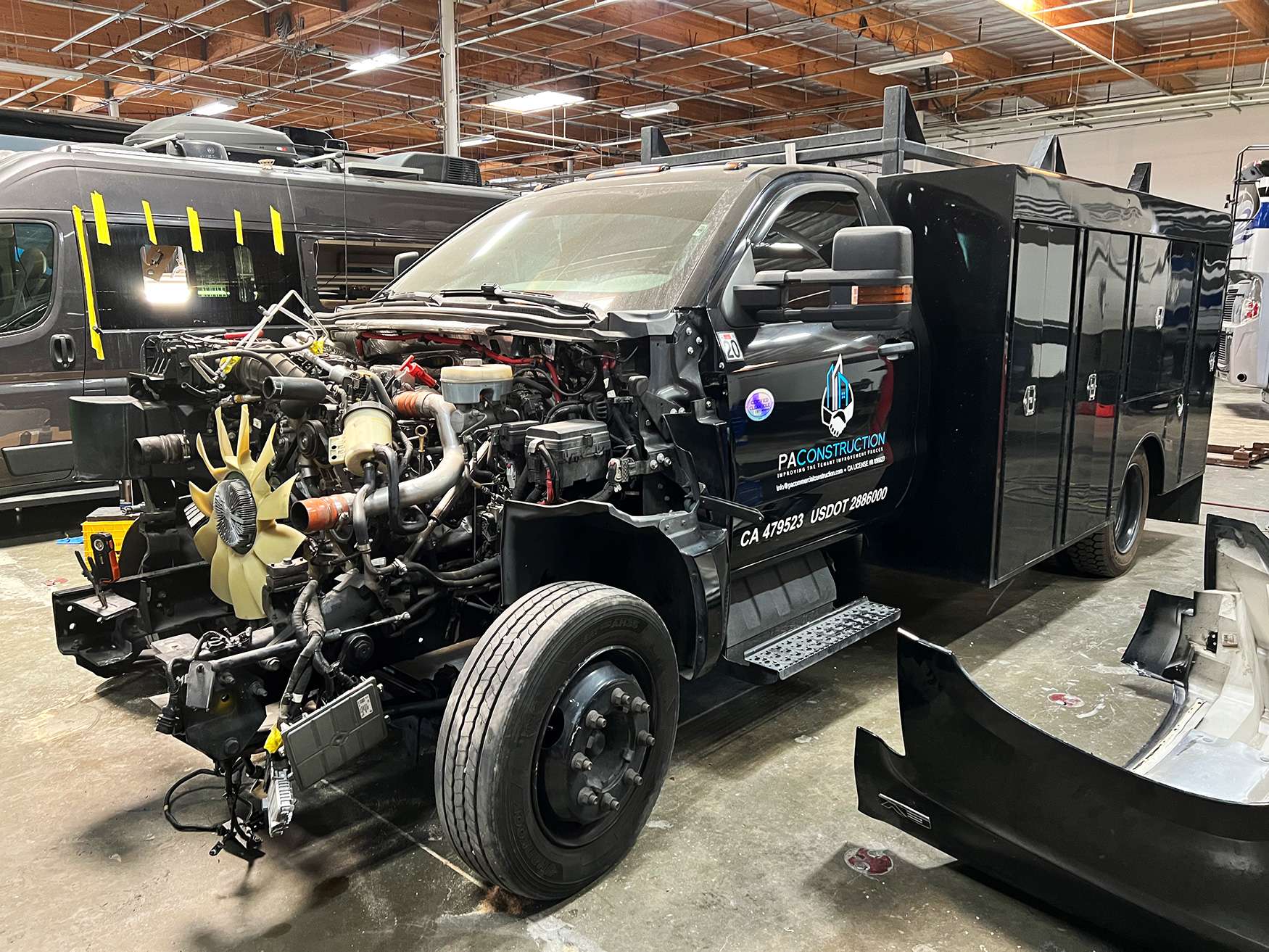
RV owner repair services in Westminster start with a simple question: what does this coach need to be road ready again? We work on private motorhomes, travel trailers, fifth wheels, and camper vans for owners across Orange County. Some arrive after a collision, some after a storm, and some after a season parked in a side yard. Our shop scopes the damage, prices it honestly, and gives you a repair window you can plan a trip around.
What Private Coach Owners Bring Us
The single coach owner is a different customer than a fleet buyer. You are not spreading a repair across thirty units. This is your vehicle, it sits in your driveway or a storage lot, and every dollar of the repair comes out of one household budget. That shapes how we talk to you. We tell you what is structural and what is cosmetic, we tell you which items can wait a season without getting worse, and we tell you which ones will cost three times as much if you let them sit.
Most private jobs fall into a handful of categories. Sidewall damage from a low clearance or a tight turn. Roof membrane failure that let water into the ceiling. Delamination along a seam. Rear cap damage from a backing incident. Slide out mechanisms that stopped sealing correctly. Paint that has chalked after years of Southern California sun. Each of those has a different repair path, a different parts situation, and a very different price, which is why a number over the phone is never worth much.
We handle roughly 75 vehicles a month across our 35,000 square foot facility, and a meaningful share of that volume is privately owned coaches. That mix matters to you more than it might sound. It means the technician working on your rig has almost certainly seen your floorplan before, the parts sourcing process is already running for the same chassis and body brands, and the failure you are describing is one we have corrected on a similar unit rather than one we are meeting for the first time.
- Sidewall punctures, scrapes, and impact damage
- Roof membrane tears and the water intrusion that follows
- Delamination and separated exterior seams
- Front and rear cap replacement after a collision
- Slide out seal and mechanism repair
- Full or partial repaint after sun exposure and oxidation
Planning a Trip Around a Repair Window
Owners rarely ask how long a repair takes in the abstract. They ask whether the coach will be ready by a specific date, usually because a reservation was booked months ago and is not refundable. That is a fair question and we answer it directly. Before we start, we tell you what the realistic window looks like, where the risk of delay sits, and what specifically would push it. Nine times out of ten the risk is a back ordered part rather than labor hours.
If your date is tight, say so at intake rather than hoping it works out. Sometimes we can sequence the work differently, doing the structural and safety items first and scheduling the cosmetic finish for a return visit after your trip. That is not the ideal way to run a repair and we will tell you what it costs in final quality, but it beats canceling a reservation you have been planning around all year. We would rather have that conversation up front than surprise you two weeks in.
We also flag the opposite case without softening it. If damage affects the frame, the running gear, the braking system, or anything holding the body to the chassis, we will tell you the coach should not be driven until it is corrected. There is no version of that conversation where we bend to accommodate a schedule, because the consequence of being wrong is not a missed campground reservation. Owners occasionally push back on that, and the answer stays the same.
Seasonal Use and the Damage It Hides
Most private coaches are not daily drivers. They sit. A rig that runs four trips a year spends roughly ten months parked, and parked is where the expensive problems quietly start. Seals dry out and shrink. Roof sealant cracks along the seams where two materials meet. Rodents find their way into a wiring harness through a gap nobody knew existed. Tires flat spot and age out on the calendar even with almost no miles on them. None of that announces itself until you are already loaded and pulling out of the driveway.
Sun exposure is the quiet one in this region. Southern California light is hard on gel coat, decals, sealants, and every rubber component on the vehicle. A coach stored uncovered for several seasons often needs considerably more surface work than an equivalent rig that traveled twice as many miles under cover. Oxidation is not purely a cosmetic issue either, because a failed clear coat stops shedding water and lets moisture reach the substrate underneath, which turns a paint job into a panel repair.
The practical takeaway is to have the coach looked at before the season rather than after a problem strands you somewhere. A pre season assessment costs a fraction of an emergency repair three hundred miles from home with a family sitting in a campground and no good options. It also gives you the chance to spread work across two budget cycles instead of absorbing everything at once, which is usually the difference between a manageable expense and a painful one.
- Roof and seam sealant inspected before each travel season
- Tire age checked by date code, not just by tread depth
- Wiring and undercarriage checked for rodent damage
- Slide seals tested for compression and water resistance
- Water heater, holding tanks, and plumbing pressure checked
Inspecting the Coach Before You Book
You can save yourself real money by arriving with good information. Walk the coach and photograph everything that looks wrong, including things you assume are unrelated to the reason you are coming in. Water damage in particular travels along structure. A stain on an interior ceiling panel is almost never directly under the actual leak, so the more angles and locations you document, the faster we can trace the entry point instead of billing you for the search.
Check the corners and the seams first, because that is where most coach bodies fail. Look at the transition where the sidewall meets the roof and where the roof meets each cap. Look closely at every window frame and at the sealant around it. Press gently along interior walls for soft spots, which usually mean the substrate behind them has taken on moisture. Open every slide and look at the seal condition from outside while the room is extended, which is the only time you can see it.
Bring your paperwork with you. Prior repair records, the original build sheet if you still have it, and your insurance policy number if a claim is involved. Knowing what has already been repaired on a coach genuinely changes how we scope the next repair, especially on a used unit whose history you inherited from somebody else. A previous repair done badly is a common reason a new problem appeared where nothing should have failed.
How an Insurance Claim Affects You Personally
For a private owner, a claim is not a routine transaction the way it is for a fleet. It is your policy, your deductible, and potentially your premium at renewal, which makes it worth thinking about before you file. On a small cosmetic repair, the out of pocket cost may be close enough to the deductible that filing does not make financial sense at all. We will tell you honestly when that is the case, even though the direct pay job is usually smaller than the claim would be.
When a claim does make sense, our job is to document the loss thoroughly enough that the adjuster can approve a complete repair rather than a partial one. That means photographs, measurements, teardown findings, and written justification for every operation on the estimate. Underscoped estimates are the single most common reason an RV repair goes badly for an owner, because the shortfall gets discovered halfway through and the owner is the one left arguing about it while the coach sits.
You have the right to choose the shop that repairs your vehicle in California. An insurer can recommend a shop and there is nothing improper about the recommendation, but the decision belongs to you. If you want a specialty facility that works on coaches every day rather than a general body shop that sees one a year, you can direct the repair here and we will handle the carrier communication from that point forward without putting you in the middle of it.
- Compare the likely repair cost to your deductible before filing
- Photograph the damage before anything is moved or cleaned up
- Ask for the full estimate in writing, including all supplements
- Confirm what your policy covers for contents and accessories
- Remember that shop choice belongs to you, not to the carrier
Working With Our Shop as a Private Owner
The process is deliberately plain. You call or email, describe what happened, and send photographs if you have them. We schedule an assessment. That assessment is a paid service, and the fee is credited against the repair if you authorize the work. The structure exists because a real assessment on a coach takes hours of trained labor and often partial disassembly, and we would rather charge for it openly than pad a repair price to quietly cover it.
After the assessment you get a written scope with line items you can actually read and question. If a claim is involved, that document goes to your adjuster with the supporting photographs attached. If you are paying directly, it becomes the basis of the repair authorization and nothing gets added to it later without your approval. Anything discovered during teardown comes back to you as a documented supplement with images, not as a line on the final invoice.
Our shop is licensed by the California Bureau of Automotive Repair under ARD00288521, holds EPA identification CAL000367879, and has been repairing recreational vehicles since 2015. Call (949) 799-3387 or write to info@ocrvcenter.com to get on the schedule, and send photographs with your first message if you can, because that is what lets us anticipate parts before your coach arrives rather than after.
Questions
Frequently asked questions
How long does a typical RV repair take for a private owner?
It depends entirely on scope, and anyone who quotes a duration before seeing the coach is guessing. Minor cosmetic work such as a panel repair and blend can move through in a matter of days. A structural repair involving a cap replacement, sidewall reconstruction, or frame work runs considerably longer, and parts availability is usually the deciding factor rather than labor hours. At assessment we give you a realistic window and identify the specific items that could extend it. If you have a hard travel date, tell us at intake so we can plan the sequence around it rather than discovering the conflict halfway through.
Do you charge for the initial assessment?
Yes. A meaningful assessment on a recreational vehicle requires trained labor, bay time, and often partial disassembly to see what sits behind a damaged panel. We charge for that work, and the fee is credited against the repair when you authorize it. The reason we structure it this way is transparency. Shops that absorb assessment cost have to recover it somewhere, and that somewhere is usually inside the repair price where you cannot see it. We would rather show you the real number for the real work and let you decide whether to proceed.
Can I choose your shop even if my insurer recommends a different one?
Yes. In California the vehicle owner selects the repair facility. Your insurer can suggest shops in a direct repair program, and there is nothing improper about that suggestion, but it is not binding on you. Many RV owners specifically choose a specialty facility because a general automotive body shop rarely has experience with laminated sidewalls, roof membranes, coach specific structural framing, or house systems. If you want the repair done here, tell your adjuster you are directing it to us, and we will handle the documentation and communication from that point forward.
What if you find more damage after you start the repair?
That is common on recreational vehicles, particularly with water intrusion, because the visible symptom is usually smaller than the actual affected area. When we open a wall or remove a panel and find additional damage, we document it with photographs and measurements and issue a supplement. You approve it before we proceed, and if a claim is involved the supplement goes to your adjuster with supporting evidence. We do not perform unauthorized work and then invoice for it. The scope you approve is the scope we build to, and any change is a conversation before it is a charge.
Should I file a claim or pay out of pocket for minor damage?
Run the math before you decide. If the repair estimate lands close to your deductible, filing may cost you more over time through premium changes than the claim returns. For larger losses involving structural damage, a cap replacement, or extensive water intrusion, a claim is almost always the right call because those repairs run well past most deductibles. We will give you a written scope either way, and you can take that number to your own decision. We do not push owners toward filing, and we do not discourage it when the loss genuinely merits it.
Do you work on travel trailers and fifth wheels, or only motorhomes?
Both. We repair Class A, Class B, and Class C motorhomes, travel trailers, fifth wheels, toy haulers, truck campers, and camper vans. The body construction and the failure modes differ across those categories, but the underlying disciplines are the same: structural repair, panel and laminate work, roof and seal systems, refinishing, and the house systems that make a coach livable. Towable units also bring their own considerations around frame, axle, suspension, and coupling hardware, and we address those as part of the scope rather than treating them as somebody else's problem.
My coach has been sitting for two years. Where do I start?
Start with an assessment rather than a repair request, because you likely do not yet know what the coach needs. Long term storage produces a predictable pattern of problems: dried seals, cracked roof sealant, aged tires that still look fine, rodent damage in wiring and insulation, dead batteries, and stale fluids. Some of those are inexpensive to correct, and some are not. An assessment gives you a prioritized list separating safety and structural items from things that can reasonably wait. From there you decide how much to do now and how much to schedule later.
How do I get an appointment scheduled?
Call (949) 799-3387 or email info@ocrvcenter.com with a short description of what happened and any photographs you have. Photos genuinely speed things up, because they let us anticipate what the job needs before the coach arrives. We will schedule an assessment appointment and tell you what to bring, including prior repair records and your policy information if a claim is involved. Our shop is licensed by the California Bureau of Automotive Repair under ARD00288521 and has operated since 2015. We serve owners throughout Westminster and the wider Orange County area.
Keep reading
Related pages
Others we work with
Services we perform
Talk to a repair specialist today
Tell us what happened and we will tell you what the repair actually involves, what it costs, and how long it takes. We work directly with every major carrier and serve Westminster owners and fleets from our 35,000 square foot facility.
Posted labor rates are published on our prices page. Diagnostic and systems assessment fees are credited against an authorized repair.