Editorial policy
How Content on This Site Is Produced and Reviewed
In short
Technical pages are drafted from this shop's own practice and reviewed by our lead estimator. Price ranges come from our posted rates and observed scope, not an industry survey. We publish no ratings, no invented reviews, no unverifiable credentials, and no promised claim outcomes.
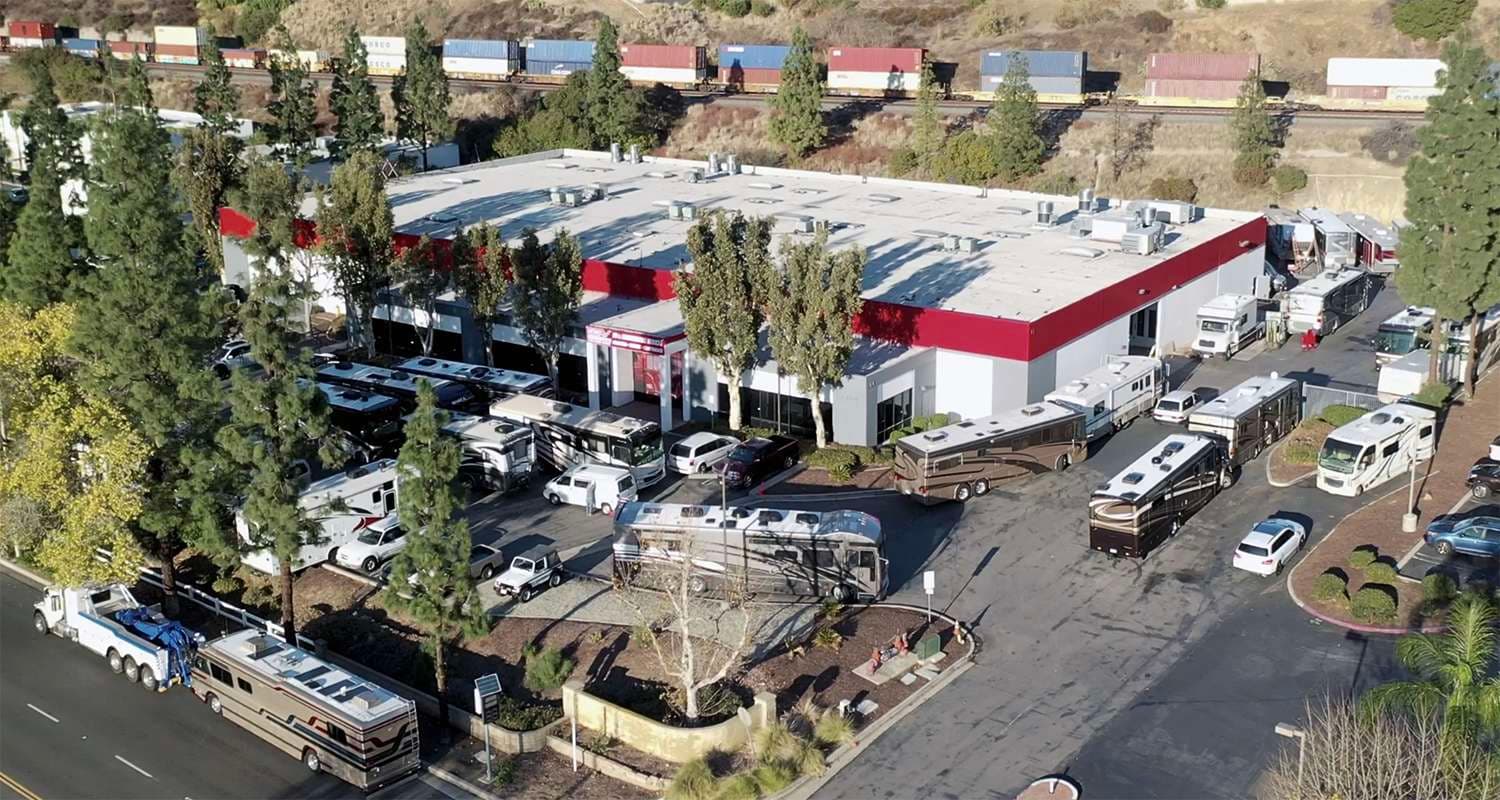
Everything else on this site asks you to believe something. This page explains how those statements were produced, who checked them, what we have ruled out publishing, and what to do when we get something wrong. It is written to be held against us.
Review
Who reviews the technical content
Technical pages are reviewed by our lead estimator and shop foreman. That is a real person with a named page on this site describing what he does, and his role is the reason the review means anything: he writes the opening scope on most units that come through the door, and he stays with those files through teardown, supplement, and final delivery. Review by someone who does not work the floor would be proofreading rather than verification.
What that review checks is specific. Whether a described repair sequence matches how the work is actually performed here. Whether a stated cause of failure matches what we find when the panel comes off. Whether a price range reflects our posted rates applied to hours this shop has genuinely spent on that category of job. Whether a timeline statement accounts for parts availability rather than assuming labor is the constraint. Any claim that fails one of those tests either gets corrected or gets removed.
Where a page carries a byline, that byline is a person and not a brand voice. Where it carries none, it is shop content reviewed under the same standard. What you will not find is a fabricated author with invented tenure and a stock photograph, which is common enough in this industry that it is worth stating plainly that we do not do it.
Boundaries
What we will not publish
This list is enforced by a build check as well as by policy, which means a page violating it does not reach the site.
| Not published | Why |
|---|---|
| Fabricated reviews or testimonials | No invented customer quotes, no composite customers, no reviews written in house. Reviews live on third party platforms where they carry account history and dates. |
| Star ratings or review averages | No rating appears anywhere on this site, in visible copy or in structured data, because a number we choose ourselves is not evidence and cannot be audited by a reader. |
| Certifications we cannot document | Only the state registration and the EPA identification are claimed, because both can be checked against a public record. No training logos, association badges, or manufacturer marks. |
| Promised claim outcomes | No page states that a claim will be approved, that a deductible will be handled for you, or that a carrier will accept a scope. Coverage decisions belong to the carrier. |
| Repair assurances stated as absolutes | No page promises a result that depends on parts availability, carrier approval, or conditions we do not control. Timelines are described with the thing that drives them attached. |
| Assessment offers used as bait | We do not advertise an assessment as though it costs nothing. Assessment fees are published, and they are credited against an authorized repair. |
| Invented local detail | No fabricated landmarks, no invented neighborhood knowledge, and no route or road detail dropped in to sound local. Geography here is the city, the county, and the region. |
| Statistics without a basis | No industry averages, survey figures, or percentages presented as fact unless they come from our own posted rates and observed scope, which is stated when they do. |
Two of those deserve expansion. The rating rule is absolute: no star figure appears in visible copy or in the structured data this site emits. Publishing an aggregate rating in markup that does not correspond to verified reviews shown on the page violates Google's structured data policy, and publishing review information that is fabricated or cannot be substantiated is a deceptive practice under federal consumer protection rules. The right answer is to point readers at the platforms and say nothing ourselves.
The credentials rule is equally firm. Only two are claimed anywhere on this site, the California Bureau of Automotive Repair registration and the EPA identification, because both can be verified against a public record in about a minute by someone who does not trust us. If a further credential is ever added, it will appear together with the issuing organization, the certificate number, and the expiration date, since those three details are what turn a claim into something a reader can audit.
Pricing
How the price ranges on this site are derived
Every range published here is built the same way: our own posted labor rates, applied to the hours a job of that type has actually taken on this floor, plus typical parts and materials for that scope. Nothing comes from an industry survey, a third party estimating database average, or a competitor's advertised figure. When a page says a category of repair generally runs within a band, that band is arithmetic on numbers we publish, not a market observation.
The rates themselves are on the prices page and they are the same rates that appear on your estimate. Materials are calculated per paint hour and per body hour. Parts markup is tiered and published. Deposits, the card payment surcharge, and the tax treatment are all published as well. Because those inputs are visible, any range on this site can be reconstructed by a reader who wants to check the arithmetic, which is the entire reason for publishing rates in the first place.
The ranges are wide, and that is a deliberate accuracy decision rather than an evasion. Two vehicles with visually identical damage can differ enormously once the panel comes off, depending on the condition of the structure behind it, how long water has been sitting in the core, and whether a previous repair was performed badly. Publishing a tight range would read as confidence and function as a misrepresentation. The range narrows to a number when the vehicle is here.
Sourcing
What we treat as a fact, and what we label as judgment
There is a short list of things stated on this site as verifiable facts about the business: the address, the phone number and email, the operating hours, the year the shop opened, the size of the facility, the approximate monthly volume, the posted rates, the state registration number, and the EPA identification number. Those are the claims a reader can check or hold us to, and they are kept in one place in the codebase so they cannot drift between pages.
Everything else that reads like expertise is judgment formed from work performed here, and it is written as such. When a page says water damage is usually larger than the visible stain, that is what this floor finds, stated as what this floor finds. When it describes how an adjuster tends to respond to a documented file, that is a pattern observed across the claims we submit, not a rule about the insurance industry.
Where a topic requires legal or regulatory precision, we describe the mechanism and stop short of advising. The pages about repair regulations explain what a registered shop is obligated to do and where to verify a registration. They do not tell you what your policy covers or what your legal remedies are, because a repair facility is not the right source for either and pretending otherwise would be the exact failure this policy exists to prevent.
Corrections
How to report an error, and what happens when you do
Email info@ocrvcenter.com with the page address and a description of what you believe is wrong. You do not need to be a customer. Corrections from people who work in the trade are especially welcome, including from other shops, and we have changed pages on that basis more than once. If you can point at a source or describe what you see on your own floor, that is helpful and not required.
Reports go to the foreman for a technical decision rather than to whoever maintains the site. If the claim is wrong, the page is fixed. If the claim is right but poorly worded enough to mislead, the wording is fixed, which is a genuine category and not a way of avoiding the first one. If we disagree, we will tell you why rather than letting the message go unanswered.
Material corrections, meaning anything that could have changed a reader's decision about a repair, a claim, or money, are noted on the page rather than edited silently. Minor fixes are simply made. If a page is substantially rewritten because our own practice changed, that is treated as an update rather than a correction, and the page says what changed. Silent editing of a substantive claim is how a site's credibility quietly erodes, and it is the practice this section exists to rule out.
Questions
Frequently asked questions
Who writes and reviews the content on this site
Technical content is drafted from the practices of this shop and reviewed by our lead estimator and shop foreman, who is named and described on his own author page. He writes the opening scope on most units that come through the door and stays with those files through teardown, supplement, and delivery, which is the experience the review is actually based on. Where a page states a price range, a timeline, a repair sequence, or a cause of failure, it reflects posted rates and what this floor genuinely finds. Anything that cannot be supported from work performed here does not get published.
How are the price ranges on service pages derived
From our own posted labor rates applied to the scope we actually observe on that category of repair, not from an industry survey or a third party estimating average. Body and paint is $210 per hour, mechanical is $260 per hour, diagnostics are $285 per hour, and detail is $95 per hour. A range on a page is those rates multiplied by the hours a job of that type has typically required here, plus typical parts and materials. That is why the ranges are wide. Narrowing them would make them look more confident and be less true, since two visually identical vehicles can differ by a factor of ten once a panel comes off.
Why are the ranges so wide if you know your own rates
Because scope varies more than price does. The rate is fixed and published. The hours are not, and on a bonded vehicle they depend on what is behind a surface that still looks intact: whether the framework is sound, whether water has been sitting in the core, whether a previous repair was performed badly and is now part of the problem. A tight range would be a marketing decision rather than an estimating one. The range narrows to a specific number when the vehicle is on our floor, panels are off, and moisture has been measured by location.
Do you use artificial intelligence to write pages
Drafting tools are used in production the way spelling and layout tools are, and no page is published on the basis of what a tool produced. Every technical claim, every price figure, every process description, and every statement about how a repair behaves is checked against this shop's own practice and posted rates before it goes live, and technical pages are reviewed by the foreman. The failure mode with generated text is that it is fluent and confidently wrong, particularly about a specialty trade, which is exactly why the review step exists and why it is done by someone who works the floor.
What do you do when you find an error
We correct it. If the error is material, meaning it could have changed a reader's decision about a repair, a claim, or money, the page notes that it was corrected rather than being silently edited. Non material corrections such as a typo or a broken link are simply fixed. If you find something wrong, email info@ocrvcenter.com with the page address and what you believe is incorrect. Corrections from readers who work in the trade are particularly welcome, including from other shops, and we have made changes on that basis.
Do you accept guest posts, sponsored content, or paid links
No. There is no sponsored content on this site, no paid placement, no affiliate links, and no guest posts. Nothing here is published in exchange for a payment, a link, a product, or a service. If that changes it will be disclosed clearly on the page itself rather than in a policy nobody reads. We also do not accept payment to name or to avoid naming a manufacturer, a supplier, or another shop, and where a page compares approaches, the comparison reflects what we see on the floor rather than a commercial relationship.
How do you decide what to publish about insurance
By restricting ourselves to how the process works and what documentation supports, and staying out of territory a repair facility has no standing in. We can explain what an adjuster is looking at, why a supplement exists, what a deductible is, and why a file with staged photographs and measurement records moves faster than one without. We cannot tell you what your policy covers, and no page here does. That depends on your specific policy language and your carrier, and a shop that speaks confidently about your coverage is a shop guessing on your behalf.
Why does this page exist at all
Because the claims on the rest of the site are only worth something if you know how they were produced. Any business can write that it is honest. What is checkable is whether it publishes its rates, whether it states a rating it cannot verify, whether it claims credentials, whether it promises outcomes it does not control, and whether it has a stated route for corrections. This page commits us to a specific set of answers to those questions, in public, so that a reader who wants to hold us to them has something written down to hold us to.
Talk to a repair specialist today
Tell us what happened and we will tell you what the repair actually involves, what it costs, and how long it takes. We work directly with every major carrier and serve Westminster owners and fleets from our 35,000 square foot facility.
Posted labor rates are published on our prices page. Diagnostic and systems assessment fees are credited against an authorized repair.