Public Sector and Partners
RV Repair Shop for Adjusters Handling Coach Claims
In short
An RV repair shop for adjusters should make the file easier to close, not harder. We write scopes with photographs, measurements, and teardown findings attached, submit supplements with evidence rather than assertions, and bill directly. Adjusters handling coach losses in Westminster and across Orange County work with our shop on files a general body shop is not equipped to scope.
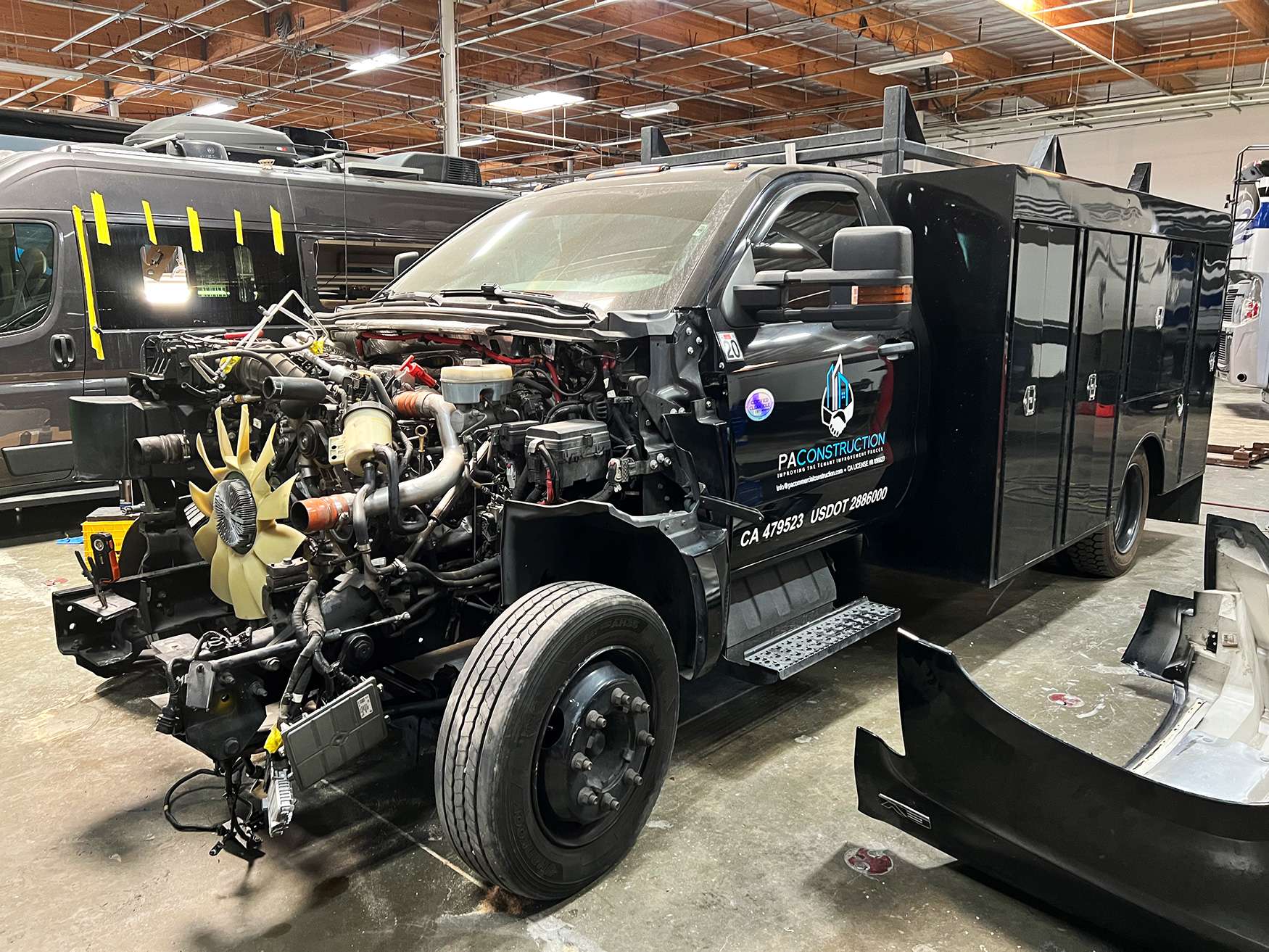
An RV repair shop for adjusters earns its place by writing files that hold up under review. You are managing cycle time, severity, and a caseload that does not pause because one coach happens to have laminated sidewalls. Our documentation answers the questions you would otherwise have to ask, and our supplements arrive with photographs and measurements already attached. OCRV Center works claims across Westminster and the surrounding Orange County area on recreational, commercial, and specialty vehicles.
What Our Documentation Looks Like
A file from us arrives with the supporting evidence already attached rather than sitting available on request somewhere. Dated photographs from consistent angles covering overall, area, and detail views of every damage point. Written damage descriptions in plain language instead of shop shorthand. Measurements wherever geometry is at issue. Teardown findings with images showing exactly what was behind the panel we opened.
Line items are written so the operation and its justification sit together on the same document. If a panel requires replacement rather than repair, the reason is stated in the line and the photograph supporting that reason is referenced directly. That is the practical difference between a scope you can approve in one pass and a scope you have to interrogate over three phone calls across a week.
We format consistently across every file we submit. An adjuster reviewing a second coach loss from us should not have to relearn how our documentation is organized or hunt for where the teardown images went. Consistency across a caseload measurably reduces the number of clarification requests that stall files in review, which is time neither of us gets back afterward.
- Overall, area, and detail photographs on every damage point
- Written descriptions distinguishing impact damage from pre existing condition
- Measurements documented where structural geometry is at issue
- Teardown images supporting every finding that was not visible
- Consistent file organization across submissions
How We Scope a Coach Loss
Scoping starts with establishing the actual extent of the damage, which on a recreational vehicle is rarely what is visible from outside. Laminated sidewall construction transmits impact energy laterally through the panel, so a point impact frequently delaminates a substantially larger area than the visible mark suggests. Water intrusion behaves the same way, tracking along structure and appearing far from wherever it entered.
Our initial scope therefore identifies both confirmed damage and the specific areas requiring teardown to confirm, and we label which is which. An estimate that presents suspected damage as confirmed is a file that generates a dispute the moment somebody looks closely. An estimate that omits the suspected areas entirely is a file that generates a large and unwelcome supplement three weeks later.
Where structural repair is involved, we document the load path and describe what restoring it actually requires. Coach body structure differs from unibody automotive construction in ways that directly affect the repair method and the hours attached to it, and stating that in the file is what makes an otherwise unfamiliar line item reviewable rather than something you have to take on faith.
Why a Specialty Shop Scopes Differently
A general automotive body shop writing a coach estimate tends to underscope, and in our experience it is rarely bad faith. It is unfamiliarity with the construction. Automotive body repair experience does not transfer cleanly to laminated sidewalls, aluminum framing, roof membrane systems, molded fiberglass caps, or the house systems mounted inside the structure being repaired. The estimator is applying accurate knowledge to a vehicle that does not follow the rules that knowledge came from.
The practical result is an estimate addressing the visible panel while missing delamination, substrate saturation, roof membrane damage at the edge, or the interior systems disturbed behind the wall. That file then generates supplements, extends cycle time well past the original projection, and not infrequently ends with a repair that fails and comes back as a second claim on the same vehicle.
Scoping the coach correctly the first time produces a larger initial number and a meaningfully smaller total. That trade is usually favorable on severity and reliably favorable on cycle time, which is why adjusters with recreational vehicle experience tend to route these losses toward specialty facilities rather than the nearest available body shop with an open bay. The initial number is higher and the file closes faster, which is the trade most experienced adjusters would take every time.
- Laminated sidewall damage extends beyond the visible impact area
- Water intrusion tracks along structure away from the entry point
- Roof membrane and edge systems are damaged by impacts that look lateral
- House systems mounted inside walls are disturbed by structural damage
- Cap and body construction methods differ substantially from automotive repair
Supplements and the Evidence Behind Them
Supplements on recreational vehicles are normal rather than a sign of a badly written original estimate, because the construction genuinely conceals damage until teardown exposes it. What is not normal, and what makes a file difficult, is a supplement arriving without supporting evidence and asking you to approve an increase on the strength of a description alone. An adjuster should not have to take a shop's word for something that a single photograph could settle in ten seconds.
Every supplement we submit includes photographs of the finding, a description of what was discovered and precisely where, an explanation of why it was not visible at the initial inspection, and pricing consistent with the structure of the original estimate. You should be able to approve it or question it from your desk without scheduling a site visit or a reinspection to understand what changed.
We submit supplements when we find the damage rather than batching them together at the end of the repair. That keeps your file current, avoids a single large late adjustment, and lets you manage reserves against a number close to reality. It also means the repair itself does not stop while everyone waits for a decision that could have been made two weeks earlier.
Direct Billing and File Handling
We bill carriers directly on approved claims, and the invoice reconciles line by line to the approved scope with supplements shown as distinct lines. Nothing gets folded quietly into an original estimate, which is the single most common reason an invoice bounces back to a shop for explanation and adds a week to a file that was otherwise finished and ready to close.
The owner sees the same numbers you do throughout. We do not maintain a separate conversation about scope with an insured, because parallel conversations are exactly how expectations diverge and how an otherwise routine file ends in a complaint. When a scope item is not approved and the owner elects to pay for it directly, that becomes a separate documented authorization sitting outside the claim.
One coordinator handles a file from assignment through completion, which means you are not re-explaining the claim to whoever happens to answer the phone on a Thursday afternoon. Reach us at (949) 799-3387 or info@ocrvcenter.com, and we will confirm assignment and inspection timing in the same conversation. That coordinator holds the photographs, the scope, the supplement history, and the current status, so a status call takes a minute.
- Direct billing to the carrier on approved claims
- Invoice reconciles line by line to the approved scope
- Supplements shown separately, never merged into the original
- Owner authorized items documented as distinct authorizations
- One coordinator per file from assignment to completion
Supporting a Total Loss Evaluation
Some coach losses should not be repaired at all, and a shop that pushes every file toward repair is not actually useful to you. When damage approaches or exceeds the practical repair threshold, we say so directly with documentation supporting the conclusion rather than handing you a very large estimate and leaving you to infer what we already know. Telling you late costs the carrier money and costs us the relationship, so there is no incentive on either side to delay that conversation.
That documentation includes the full extent of structural damage, the repair method it would require, a realistic cycle time, and the specific technical risks in attempting the repair at all. On older coaches, parts availability frequently drives the outcome more than damage severity does, and we identify discontinued or long lead components explicitly rather than pricing them optimistically and hoping.
The goal is a decision made on evidence early in the file rather than a repair abandoned in week five after significant labor has already been invested. That outcome costs the carrier considerably more, delays the insured by a month or more, and helps absolutely nobody involved in the claim including us. We would rather write one honest evaluation early than invoice a partial repair that nobody ends up satisfied with.
Communication While a File Is Open
You should never have to call to learn a file's status. We set a communication cadence at assignment and hold to it, with immediate contact whenever something changes cycle time or scope, particularly a back ordered part or a teardown finding that expands the work. Silence from a shop is not the same as progress, and experienced adjusters know that better than anyone.
For files where the insured is living in the coach full time, we flag that at assignment specifically. It changes the urgency profile of the entire file and it may implicate loss of use provisions worth addressing early rather than after a lodging bill has accumulated for three weeks and become its own conversation between you and the insured. Full time occupancy also changes what an insured can tolerate in terms of duration, and that is worth knowing on day one.
Our facility has operated since 2015, holds California Bureau of Automotive Repair license ARD00288521 and EPA identification CAL000367879, and moves roughly 75 vehicles a month through 35,000 square feet of shop space. That capacity is the reason a coach file assigned here does not sit in a lot waiting for a bay to open up. Assignments arriving with photographs and a loss description generally reach inspection faster than those arriving without them.
Questions
Frequently asked questions
What does your initial estimate include?
Dated photographs at overall, area, and detail levels for each damage point, written damage descriptions in plain language, measurements where structural geometry is at issue, and line items where the operation and its justification sit together rather than in separate documents. We also identify explicitly which damage is confirmed and which areas require teardown to confirm. Presenting suspected damage as confirmed generates disputes, and omitting it entirely generates a large supplement later, so we separate the two and say so directly in the file.
Why do RV estimates come in higher than comparable automotive damage?
Because the construction conceals and distributes damage differently. Laminated sidewalls transmit impact energy laterally, so a point impact frequently delaminates a considerably larger area than the visible mark indicates. Water intrusion tracks along structure and appears far from its entry point. Roof membrane and edge systems are damaged by impacts that look purely lateral. House systems mounted inside walls are disturbed by structural repair. None of that has an automotive analog, which is why a scope written from automotive experience typically lands low and then supplements upward.
How do you handle supplements?
Every supplement includes photographs of the finding, a description of what was discovered and where, an explanation of why it was not visible at the initial inspection, and pricing consistent with the original estimate structure, so you can approve or question it without a site visit. We submit when we find the damage rather than batching to the end of the repair. That keeps your file current, lets you manage reserves against something close to the real number, avoids a large late adjustment, and keeps the repair moving instead of stalled behind a pending decision.
Do you bill carriers directly?
Yes, on approved claims. The invoice reconciles line by line to the approved scope, with supplements shown as distinct lines rather than merged into the original estimate. Merging is the most common reason an invoice comes back for explanation, so we avoid it as a matter of practice. Where a scope item is not approved and the owner elects to pay for it directly, that appears as a separate authorization rather than being blended into the claim, which keeps the carrier portion clean and auditable.
How do you keep the insured aligned with the approved scope?
The owner sees the same numbers you do. We do not run a parallel conversation about scope with an insured, because that is precisely how expectations diverge and how a file ends in a complaint rather than a closure. When something is not approved, we tell the owner what it is and what their options are, including paying for it directly as a separate documented authorization. Handling it that way keeps everyone working from one document and removes most of the friction that shows up late in a coach file.
Will you tell us when a coach should be a total loss?
Yes, with documentation supporting the conclusion rather than leaving you to infer it from a large estimate. That includes the full extent of structural damage, the repair method required, realistic cycle time, and the specific risks in attempting the repair. On older units, parts availability frequently drives the outcome more than damage severity, and we identify discontinued or long lead components explicitly. An evidence based decision early is substantially cheaper for the carrier than a repair abandoned in week five, and better for the insured as well.
How quickly can you inspect an assigned vehicle?
Our shop moves roughly 75 vehicles a month through 35,000 square feet of space, and that capacity is the reason an assigned coach file does not sit waiting for a bay to open. Send the assignment with whatever photographs and loss description you have and we will schedule the inspection. If the insured is living in the coach full time, flag that at assignment. It changes the urgency profile and may implicate loss of use provisions worth addressing before a lodging bill accumulates rather than after.
What are your credentials and how do we reach the file coordinator?
Our facility has operated since 2015, holds California Bureau of Automotive Repair license ARD00288521, and holds EPA identification CAL000367879. One coordinator handles each file from assignment through completion, so you are not re-explaining a claim to whoever picks up the phone. We set a communication cadence at assignment and contact you immediately whenever something changes cycle time or scope. Reach us at (949) 799-3387 or info@ocrvcenter.com to make an assignment or discuss an open file.
Keep reading
Related pages
Others we work with
Services we perform
Talk to a repair specialist today
Tell us what happened and we will tell you what the repair actually involves, what it costs, and how long it takes. We work directly with every major carrier and serve Westminster owners and fleets from our 35,000 square foot facility.
Posted labor rates are published on our prices page. Diagnostic and systems assessment fees are credited against an authorized repair.