Careers
Working on Our Repair Floor
In short
We hire body, structural, paint, systems, estimating, and detail technicians for a 35,000 square foot floor that moves roughly 75+ vehicles a month. Send your background to info@ocrvcenter.com with the role in the subject line. Pay is discussed at interview.
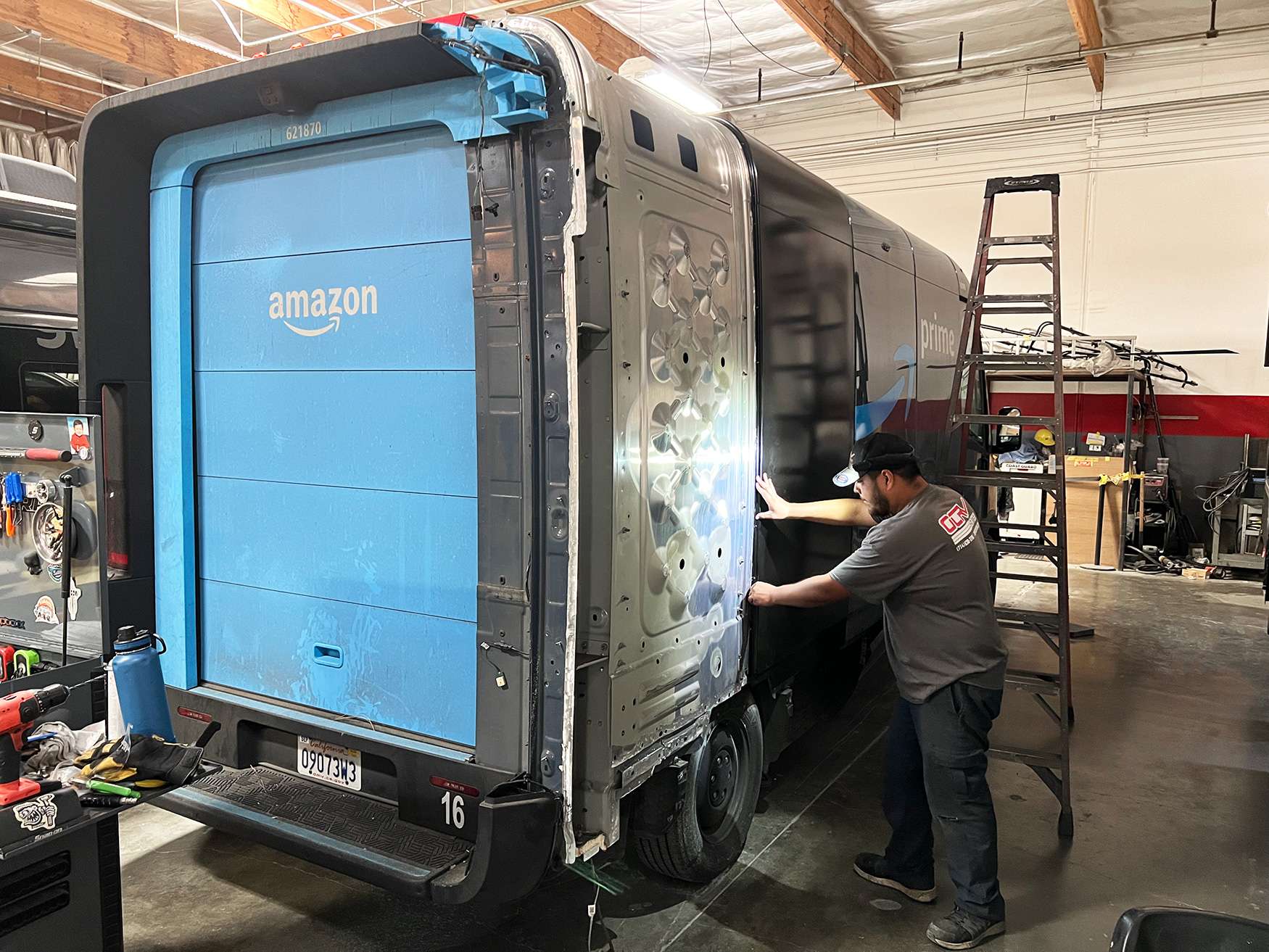
This is a specialty floor, and that cuts both ways. The work is more interesting than automotive collision because no two of these vehicles are built the same, and it is harder for the same reason. If you like a job where the answer is in a procedure manual, this is the wrong shop. If you like taking something apart to find out how it was actually made, this is a good one.
Open disciplines
Roles we hire for
What the work involves day to day, and what experience genuinely matters in each.
Body technician
The work
Panel repair and replacement on bonded and laminated assemblies, molded caps, sheet and aluminum skins, fiberglass layup and gelcoat, substrate reconstruction behind water damage, and the disassembly and reassembly that surrounds all of it. On these vehicles the panel is part of the structure, so the job is rebuilding an assembly that carries load, not making a surface flat.
What matters
Collision experience transfers, but comfort with adhesive bonded construction and composite repair is what separates a good candidate from a strong one. We look for people who think in layers, who are patient about substrate preparation, and who have opinions about when a section should be repaired and when it should be replaced.
Structural technician
The work
Rack setup and anchoring on motorhome, truck, trailer, and bus chassis, establishing measurement reference points, controlled pulls, sectioning and welding where the repair calls for it, and post repair verification with the printout that goes into the file. Also frame, suspension mount, and mounting structure work on heavy units.
What matters
Measurement discipline above everything. The failure mode when this is done poorly is invisible at delivery and shows up months later as uneven tire wear and doors that no longer close the same way. Heavy vehicle or truck frame experience is more relevant here than passenger car unibody work, though either is a starting point.
Painter and refinish technician
The work
Color development and spray out against faded panels, sealer and primer schedules, base and clear application across very large flat surfaces, multi stage graphics and layout, blend boundary decisions, cure scheduling, and gloss correction. Work happens in a downdraft booth sized for a full length coach.
What matters
Color matching on sun aged finishes is the skill that matters most, because matching a paint code on a vehicle that has been fading for years produces a panel that reads as a repair from across a parking lot. Large panel technique is the second skill: film build consistency and flash timing across a long sidewall are unforgiving in a way a fender is not.
RV systems technician
The work
Shore and battery power, converters and inverters, solar, onboard generators, twelve volt and shore side distribution, fresh and waste plumbing, tanks and water heaters, furnaces and roof air, gas appliances, and slide room mechanisms and seals. Also the systems verification pass after a collision repair, where wiring runs and plumbing frequently get disturbed without visible damage.
What matters
Diagnostic instinct over parts replacement. On these vehicles the reported complaint and the actual fault are often in different systems, so a technician who only replaces what he is pointed at will replace the wrong component confidently. Electrical troubleshooting ability, gas appliance experience, and any high voltage familiarity are all valuable.
Estimator
The work
Intake assessment including teardown decisions and moisture mapping, writing line by line scope with parts, hours, materials, and posted rates, building the carrier documentation package, writing and negotiating supplements, owning the customer relationship through the job, and running the file audit at delivery.
What matters
Judgment about what teardown is likely to expose, and the willingness to put a difficult number in front of an owner on day one rather than discovering it in week three. Writing ability genuinely matters here, because the reasoning under each labor line is what an adjuster reads. Prior estimating experience helps; floor experience on this vehicle type helps more.
Detail technician
The work
Paint correction and polishing, oxidation removal and gelcoat restoration, coating preparation and application, interior reconditioning, and the final presentation pass before a vehicle is released. Detail is also the last set of eyes on a finished repair, which makes it part of quality control rather than a cosmetic afterthought.
What matters
Machine polishing skill and knowing when to stop, which on aged gelcoat and single stage finishes is the difference between restoring a surface and destroying it. This is also the role we most often hire into with limited experience, because it sits next to the body and paint work and is where people learn this trade properly.
How to apply
What to send and what happens next
Email info@ocrvcenter.com with the role in the subject line. Tell us what you have actually done: the vehicle types, the repairs, the equipment you have run, and where. A formal resume is welcome and is not the thing that decides anything. For body, paint, and fabrication candidates, photographs of your own finished work are worth more than everything else in the message combined, and we would rather see a difficult repair than a flattering one.
If there is a fit, the next step is a conversation with the foreman, usually on the floor rather than in an office, walking past vehicles at different stages. Expect to be asked to explain a repair you have performed in enough detail that someone who was not there could follow it. For hands on roles there is normally a practical component, because talking about a repair and performing one are different skills and only one of them matters at five o'clock on a Thursday.
Compensation is discussed early rather than saved for the end. We do not publish figures because they would be misleading for most candidates who read them, and we do not expect anyone to work through a hiring process without knowing what the arrangement is. If you ask about pay in your first message, that is a reasonable question and you will get a straight answer.
What it is like here
How the floor runs, honestly
Work moves through the disciplines in a fixed sequence rather than being handed to one technician to complete end to end. Structural before body, body before paint, paint before systems and interior reinstallation, everything before final quality control. That means you spend your day in your own discipline, with the others close enough that a question gets answered by walking thirty steps instead of by sending a message.
The vehicles are large and the standards around staging and housekeeping reflect that. A crowded yard around a forty foot coach is how contact damage happens, and contact damage on a customer's vehicle in our own yard is the most avoidable and most expensive mistake a shop can make. Expect that to be taken seriously, and expect to be asked to put things away.
The other thing worth knowing is that documentation is part of every role, not just the estimator's. Photographs at each disassembly stage, moisture readings recorded with their locations, measurement printouts filed. On insurance work that documentation is what gets the job approved, so a technician who takes twelve photographs before he starts cutting is doing his job, not slowing it down.
Development
How people learn this trade here
There is no training program in Orange County that produces technicians who already know how to repair a bonded coach sidewall. Trade schools teach automotive collision, which is a genuinely useful foundation and a different trade. So the floor is staffed by hiring experienced people into the disciplines where inexperience is expensive, and developing people in the roles where this trade is actually learned.
Disassembly is the best teacher available. Someone who has taken hundreds of these vehicles apart knows how they are built, which is exactly the knowledge that makes a competent laminate repair or an accurate estimate possible later on. That is why prep, disassembly, and detail sit physically next to the body and paint work rather than in a back corner, and why they are treated as a starting point rather than a destination.
Advancement is by demonstrated work. The foreman signs off when someone is ready to move into a discipline, and that judgment is based on repairs performed rather than time served. If you want to know what that path has looked like for people already here, ask during the interview and you will get specifics rather than a policy statement.
Questions
Frequently asked questions
How do I apply
Email info@ocrvcenter.com with the role in the subject line, a short summary of your experience, and where you have worked. A formal resume is welcome and not required. What is genuinely useful is a plain description of the work you have actually performed: the kinds of vehicles, the kinds of repairs, and the equipment you have run. Photographs of your own finished work carry more weight than any bullet list, particularly for body, paint, and fabrication candidates. If you are local and would rather come by, walk ins during business hours are fine, though calling first means someone who can talk to you is available.
What does the role pay
Pay is discussed at interview and we do not publish figures, because compensation here depends on discipline, demonstrated skill level, and the arrangement that fits the role, and a number posted on a website would be misleading for most candidates who read it. What we will commit to is that the conversation happens early rather than at the end of a long process, that the structure is explained plainly, and that nobody is asked to accept a vague description of how they will be paid. If your first question is compensation, that is a completely reasonable first question and we will answer it.
Do I need recreational vehicle experience to be hired
For structural, paint, and systems roles, relevant heavy or specialty experience matters a great deal, because the cost of learning those disciplines on a customer's vehicle is unacceptable. For body work, strong collision experience plus a genuine willingness to learn bonded and laminated construction is a viable path, and several people on this floor came in exactly that way. For detail, prep, and disassembly, experience helps but attitude and care matter more. There is no local pipeline of people who already know how to repair a coach sidewall, so we develop that here.
What is the work environment actually like
A 35,000 square foot floor running roughly 75+ vehicles a month, with separate areas for structural, body and laminate, paint, systems, interior, fabrication, and detail. Work is scheduled through a fixed sequence rather than handed to one person to do everything, so you spend your day in your discipline with the other disciplines close by. It is a busy floor and the vehicles are large, which means the housekeeping and staging standards are stricter than in a small shop, because a crowded yard around a forty foot coach is how contact damage happens.
Are the roles full time, and what are the hours
The floor runs Monday through Friday from 8:00 AM to 5:00 PM and Saturday from 9:30 AM to 3:00 PM. Most positions are full time. Occasional Saturday coverage is part of several roles and that is discussed openly during hiring rather than discovered afterward. We are not a shop that quietly expects unpaid hours to hit a delivery date. If a job is going to run long, that is a scheduling failure to solve rather than something to push onto whoever happens to be standing there at five o'clock.
Is there a path from an entry role into a technician position
Yes, and it is the main way people advance here. Disassembly, prep, and detail are treated as starting points rather than permanent stations, and they are located physically next to the body and paint work they lead into. A technician who has taken hundreds of these vehicles apart understands how they are built, which is precisely the knowledge that makes a good laminate repair or an accurate estimate possible later. Advancement is based on demonstrated work rather than tenure, and the foreman is the person who signs off that someone is ready for the next discipline.
Do you hire estimators from outside the collision trade
Rarely, and it would take an unusual candidate. The role requires judgment about what disassembly is likely to expose on a vehicle whose damage is partly hidden by construction, and that judgment comes from having stood there when panels came off. Someone from a claims background who understands documentation and wants to move to the shop side is a more plausible fit than someone from a general sales background. Writing ability is a real requirement, since the reasoning attached to each labor line is what an adjuster actually reads and acts on.
What do you look for in the interview
Whether you can explain a repair you have performed in enough detail that someone who was not there could follow it. That single question separates candidates faster than anything else, because it tests understanding of the sequence, the materials, and the reasoning rather than familiarity with the vocabulary. We also ask about a job that went wrong and what you did about it. A technician who has never had a repair come back has either not worked long enough or is not telling the truth, and the interesting answer is what happened next.
Talk to a repair specialist today
Tell us what happened and we will tell you what the repair actually involves, what it costs, and how long it takes. We work directly with every major carrier and serve Westminster owners and fleets from our 35,000 square foot facility.
Posted labor rates are published on our prices page. Diagnostic and systems assessment fees are credited against an authorized repair.