Understanding Coverage
Collision vs Comprehensive RV Coverage
In short
Collision coverage responds when your RV strikes an object or another vehicle, or overturns. Comprehensive coverage, often labeled other than collision, responds to almost everything else: hail, theft, vandalism, fire, flood, falling branches, animal strikes, and glass breakage. Which section applies determines which deductible you pay, so getting the categorization right at first notice matters, and Westminster owners frequently find the two sections carry different deductible amounts on the same policy.
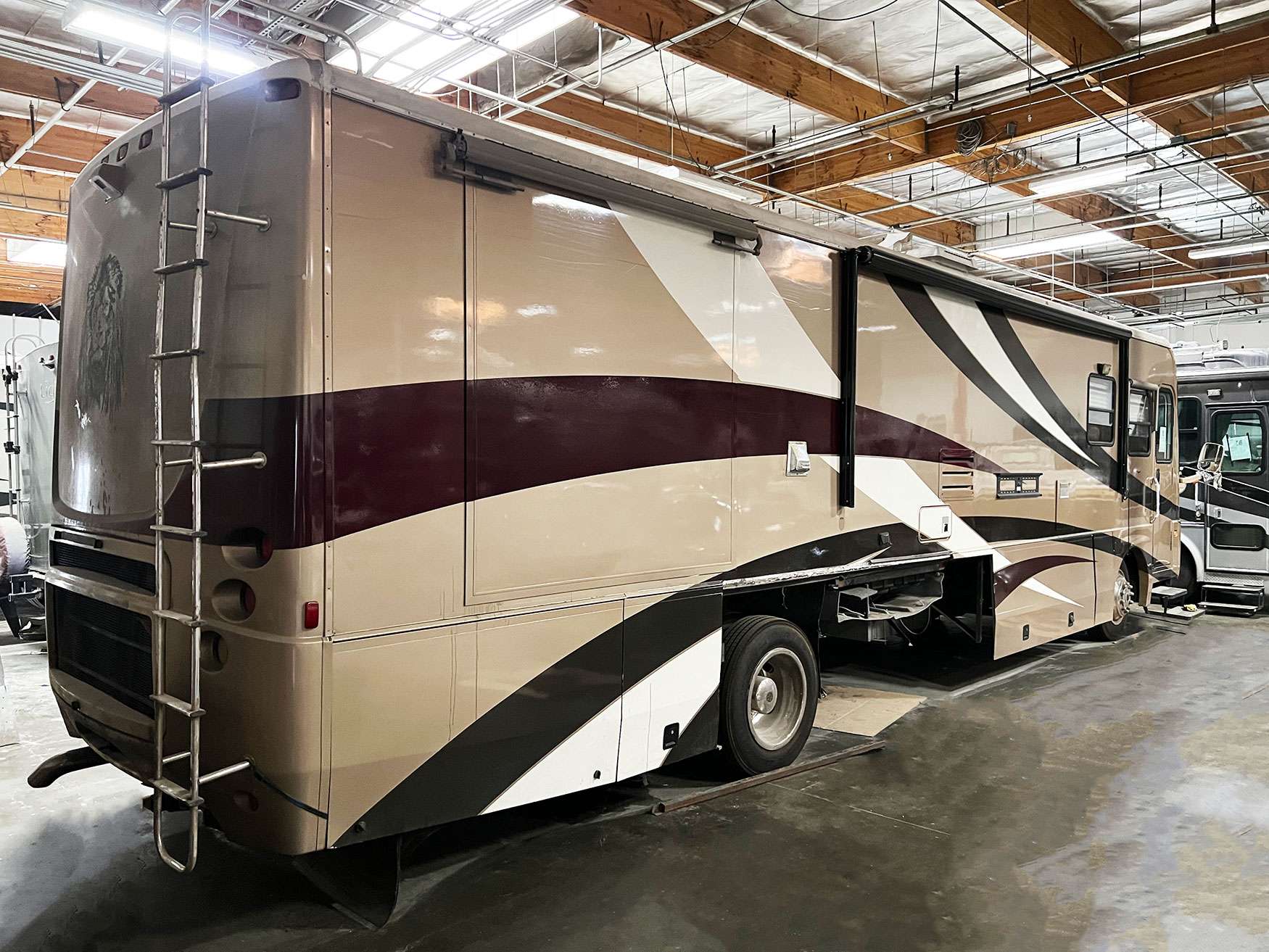
The practical difference in collision vs comprehensive rv coverage comes down to a single question: did your RV hit something, or did something happen to your RV. Collision responds to impact you were part of. Comprehensive responds to hail, theft, fire, falling objects, animals, and glass. The distinction sounds simple until you are standing next to a coach with a shredded fender skirt after a blowout, or a torn awning, and neither answer is obvious. This page works through those cases.
The Line Between the Two Coverages
Collision coverage responds when your vehicle strikes another vehicle or an object, or when it overturns. The defining element is impact involving your vehicle in motion or being moved. It does not matter whether you were driving, whether you were at fault, or whether the object was moving. Comprehensive coverage, which many policies label other than collision, responds to loss from causes that are not collision.
The list is long and it is broadly written: fire, theft, vandalism, hail, windstorm, flood, falling objects, contact with an animal, civil disturbance, explosion, and glass breakage. If something happened to your parked or stored RV, comprehensive is almost always the answer. Both are optional coverages on most policies, which surprises owners who assumed a full coverage policy included everything. Liability covers damage you cause to others. Collision and comprehensive cover damage to your own vehicle, and they are purchased separately, carry separate deductibles, and are frequently written at different amounts. Confirm you have both before you need them.
Which Coverage Pays for Hail, Theft, and Falling Branches?
All three fall under comprehensive. Hail is the classic comprehensive loss, and on a recreational vehicle it commonly affects the roof, the air conditioner shrouds, vents, sidewalls, and window frames simultaneously. Theft is comprehensive, whether the entire unit was taken or components were removed from it. A branch falling on a parked coach is a falling object, which is comprehensive, and this holds true whether the tree came down in a storm or on a calm day. Fire is comprehensive regardless of origin, including the refrigerator bay fires that recreational vehicles are specifically prone to, and including electrical fires that start in the coach wiring.
Flood and rising water are comprehensive. Vandalism is comprehensive. Contact with an animal is comprehensive, and this is the one that trips people up, because hitting a deer feels like a collision and is not classified as one. Rodent damage occupies a gray area worth understanding. Damage from an animal getting into a stored unit and chewing wiring or insulation is sometimes treated as a comprehensive animal contact loss and sometimes excluded as vermin or infestation damage, depending on the specific policy language. Read that section before you assume, and report promptly if it happens.
- Hail, windstorm, and storm driven debris
- Theft of the unit or of components from it
- Vandalism and civil disturbance damage
- Fire, including appliance and electrical origin
- Flood, rising water, and mudslide
- Falling objects including tree limbs and structures
- Contact with an animal, including deer strikes
- Glass breakage from any non collision cause
When Collision Coverage Is the One That Responds
Collision is the answer whenever your RV made contact with something as a result of its own movement or a movement it was part of. Rear ending another vehicle, being rear ended, sideswiping a barrier, backing into a post at a site, going off the shoulder and striking a ditch bank, or rolling the unit are all collision losses. Height and width incidents are the RV specific collision losses.
A low clearance strike that takes off an air conditioner shroud, a roof cap, or a vent is collision, because the vehicle struck a fixed object. So is clipping a mirror on a gate post, catching an awning arm on a tree while pulling into a site, and striking a curb hard enough to damage a step or a jack. Fault does not determine which coverage applies. If another driver hit you and you claim through your own policy, it is still a collision claim on your policy with your collision deductible, and your carrier pursues recovery afterward. Owners frequently assume that being blameless moves the loss to comprehensive. It does not.
The Edge Cases That Confuse RV Owners
Tire blowouts are the most disputed category. When a tire fails at speed and the carcass destroys a fender skirt, the underbelly, wiring, and plumbing on its way out, most carriers treat the resulting damage as collision, on the reasoning that the vehicle's own component struck the vehicle. Some treat it as comprehensive under road hazard or debris language. The tire itself is generally not covered under either, because a failed tire is a wearing part. The damage it caused usually is.
Road debris thrown by another vehicle is typically comprehensive, treated as a falling or flying object. Debris you drove into that was already lying in the road is more often collision, because your vehicle struck it. The distinction is whether the object came to you or you came to it, and it is not always documented cleanly at first notice.
A jackknife between a tow vehicle and a trailer is collision on both units, since they struck each other. A trailer that detaches and strikes something is collision. A slideout struck while extended is collision if a vehicle or object hit it while the coach was parked, and it is worth noting that some policies contain specific language about slideouts extended in transit, which is a different conversation entirely.
- Blowout damage to skirts, underbelly, wiring, and plumbing
- Debris thrown by another vehicle versus debris already in the road
- Jackknife contact between tow vehicle and trailer
- Detached trailer striking a vehicle or fixed object
- Slideout struck while extended at a site
- Awning torn on a tree, post, or structure while maneuvering
- Low clearance strike to roof cap, shroud, or vent
Why the Two Deductibles Are Usually Different
Most policies carry a separate deductible for each section, and on recreational vehicle policies they are frequently written at different amounts. A comprehensive deductible is often lower than a collision deductible, and some policies apply a separate percentage based deductible for wind and hail, particularly on units stored in areas with hail exposure. That difference is why categorization matters financially rather than just administratively.
The same physical damage classified under one section versus the other can change what you pay by a meaningful amount. It is also why the question at first notice, which is essentially how did this happen, deserves a careful factual answer rather than a quick one. Check your declarations page now, before you need it. Find the collision deductible, the comprehensive deductible, and whether a separate wind and hail deductible or percentage applies. Owners are routinely surprised at the worst possible moment, and it is a five minute exercise to avoid that.
Does a Comprehensive Claim Affect My Rates Differently?
As a general pattern, yes, though it varies enough by carrier that only your own carrier can answer it for your policy. Collision claims are commonly attributed to driver behavior and are more likely to affect rating. Comprehensive claims for hail, theft, falling objects, fire, or animal contact are typically treated as events outside the driver's control, and many carriers weigh them differently or not at all in individual rating.
That said, comprehensive claim frequency does matter to carriers. A pattern of repeated comprehensive claims on the same unit can affect renewal terms even where a single claim would not. And a widespread event such as a regional hail storm affects rates across a book of business regardless of who claimed. Do not let rate speculation drive a decision not to report a loss. Unreported damage creates a much worse problem than a reported claim, particularly with anything involving water, because a loss you did not report on the date it occurred becomes very difficult to establish as sudden and accidental later.
Getting the Categorization Right at First Notice
The classification is made from what you report at first notice of loss, and once it is entered into the file, changing it takes effort. Report facts in sequence: where the vehicle was, whether it was moving, what made contact with what, and what you observed. Let the carrier classify from those facts rather than offering a classification yourself. Where a loss genuinely could fall under either section, say so plainly and describe both elements.
A hail storm that also dropped a branch on the coach involves two causes. A blowout that then caused you to strike a barrier involves two events. Carriers handle multi cause losses regularly, but only when they are told about both causes at the outset. If damage is found later that appears unrelated to the reported cause, report it as its own loss rather than folding it into the open claim. Attaching unrelated damage to an existing claim is one of the fastest ways to create a coverage problem on a claim that would otherwise have been clean.
- Describe position, motion, and contact as plain facts
- Avoid offering your own coverage classification
- Disclose both causes when a loss has two
- Report separately discovered damage as its own loss
- Confirm in writing which section the carrier applied
- Verify which deductible was assigned before repairs begin
Questions
Frequently asked questions
What is the difference between collision and comprehensive on an RV policy?
Collision responds when your RV strikes another vehicle or an object, or overturns. The defining element is impact involving your vehicle's movement, and it applies whether or not you were at fault. Comprehensive, often labeled other than collision on the declarations page, responds to almost everything else: fire, theft, vandalism, hail, windstorm, flood, falling objects, contact with an animal, explosion, and glass breakage. Both are optional coverages purchased separately from liability, both carry their own deductible, and on recreational vehicle policies those deductibles are frequently different amounts. Which section applies to a given loss determines what you pay out of pocket, which is why the facts you report at first notice matter more than owners usually realize.
Is hail damage on an RV covered under collision or comprehensive?
Comprehensive. Hail is the textbook comprehensive loss and it is covered under the other than collision section of the policy. On a recreational vehicle, a hail event typically damages several areas at once: the roof membrane, the air conditioner shrouds, roof vents and covers, the sidewalls, and window and door frames. All of it falls under the same comprehensive claim with one deductible. Be aware that some policies apply a separate wind and hail deductible, occasionally calculated as a percentage of the insured value rather than a flat amount, which can be substantially higher than the standard comprehensive deductible. Check your declarations page for that specifically, because it is the most common unpleasant surprise on a hail claim.
If a deer hits my RV, is that a collision claim?
No, contact with an animal is a comprehensive loss on essentially every policy, even though it involves impact and even though it happens at speed while you are driving. This is one of the most useful things to know in advance, because the comprehensive deductible is often lower than the collision deductible, and because comprehensive claims are generally weighted differently in rating. Report it as contact with an animal and describe it exactly that way. If you swerved to avoid the animal and struck something else instead without ever making contact with the animal, that becomes a collision loss, because the damage came from striking an object rather than the animal. Describe the sequence precisely at first notice.
A tree branch fell on my parked travel trailer. Which coverage pays?
Comprehensive, under falling objects. This holds whether the branch came down during a windstorm or on a still day, and whether the trailer was at a site, in storage, or parked at a residence. Photograph the branch in place before anything is moved, because the position of the debris establishes the cause and the direction of force, and it is the single most useful piece of evidence in the file. Then look past the obvious dent. A branch strike on an RV roof frequently disturbs the sealant beds around vents, air conditioners, and roof to sidewall seams, and an unsealed seam becomes a water intrusion problem months later that is far harder to get covered.
My tire blew out and destroyed the underbelly. Is that covered?
The damage the blowout caused is usually covered, and the tire itself usually is not. Most carriers treat blowout damage as a collision loss, on the reasoning that the tire carcass struck the vehicle. Some treat it as comprehensive under road hazard or debris language. Either way, the resulting damage to fender skirts, the underbelly, wiring runs, plumbing lines, and any body panel the tread reached is generally a covered loss. The tire is a wearing component and is excluded on nearly every policy. When you report it, describe the sequence: the tire failed, the carcass struck these areas, this is the damage. Photograph the tire and the debris before it is removed, because tire failures sometimes raise questions about maintenance and age.
Which deductible applies if my RV was damaged two different ways at once?
It depends on whether the carrier treats it as one loss or two, and that determination follows the causes. A hail storm that also brought down a branch onto your coach involves two comprehensive causes and is normally handled as a single comprehensive claim with one deductible. A blowout that caused you to strike a barrier may be handled as one collision claim, or occasionally as two separate events with separate deductibles if the carrier views them as distinct. There is no universal rule, and the outcome depends on policy language and the specific facts. What you control is disclosure. Report every cause at first notice, in sequence, and ask the carrier in writing which section and which deductible they applied before repairs begin.
Do I need both collision and comprehensive on my RV?
That is a coverage decision for you and your agent, not something a repair facility should decide for you, but the practical considerations are worth stating. Comprehensive addresses the losses that happen while an RV sits, which is how recreational vehicles spend most of their lives: hail, theft, vandalism, fire, falling limbs, and storm damage in storage. Collision addresses losses while it moves. Owners who store a unit for long stretches and drive it rarely sometimes conclude comprehensive matters more to them. Owners who tow constantly weigh collision heavily. Also check whether a lienholder requires both, because a loan on the unit frequently mandates them, and check whether your policy uses actual cash value or agreed value, which affects what either coverage pays.
Does it matter which coverage the claim gets filed under?
Yes, in two concrete ways. First, the deductible. Collision and comprehensive carry separate deductibles on most policies, they are frequently written at different amounts on recreational vehicle policies, and some policies apply an additional wind and hail deductible that can be calculated as a percentage of insured value. The same physical damage classified one way rather than the other can change your out of pocket cost substantially. Second, rating. As a general pattern, collision claims are more likely to affect your rate than comprehensive claims, though carriers vary and only yours can answer for your policy. What you control is the accuracy of the facts you report at first notice, and confirming in writing which section was applied before authorizing repairs.
I backed my fifth wheel into a post at a campsite. What coverage is that?
Collision. Your vehicle struck a fixed object as a result of its own movement, which is the definition of a collision loss regardless of speed, location, or how minor the impact looked. Low speed backing incidents are among the most commonly under reported RV losses, because the visible damage is often a scuffed corner cap that looks cosmetic. On a laminated sidewall, a corner impact frequently separates the lamination well past the visible mark, fractures framing inside the wall cavity, and disturbs the sealant bed at the corner and roof joint. That last item is what turns a cosmetic scuff into a water intrusion claim six months later. Report it, photograph it, and have the area assessed properly even if it looks like nothing.
Keep reading
Related pages
More on insurance
Services we perform
Talk to a repair specialist today
Tell us what happened and we will tell you what the repair actually involves, what it costs, and how long it takes. We work directly with every major carrier and serve Westminster owners and fleets from our 35,000 square foot facility.
Posted labor rates are published on our prices page. Diagnostic and systems assessment fees are credited against an authorized repair.