Campers and Trailers
Pop Up Camper Repair and Lift System Service
In short
Pop up camper repair runs from about $500 for a cable and winch service to past $12,000 for a full roof and bunk rebuild. The lift system is the safety critical part and the roof is the expensive part. On many of these units the honest answer is that a full rebuild costs more than the camper is worth.
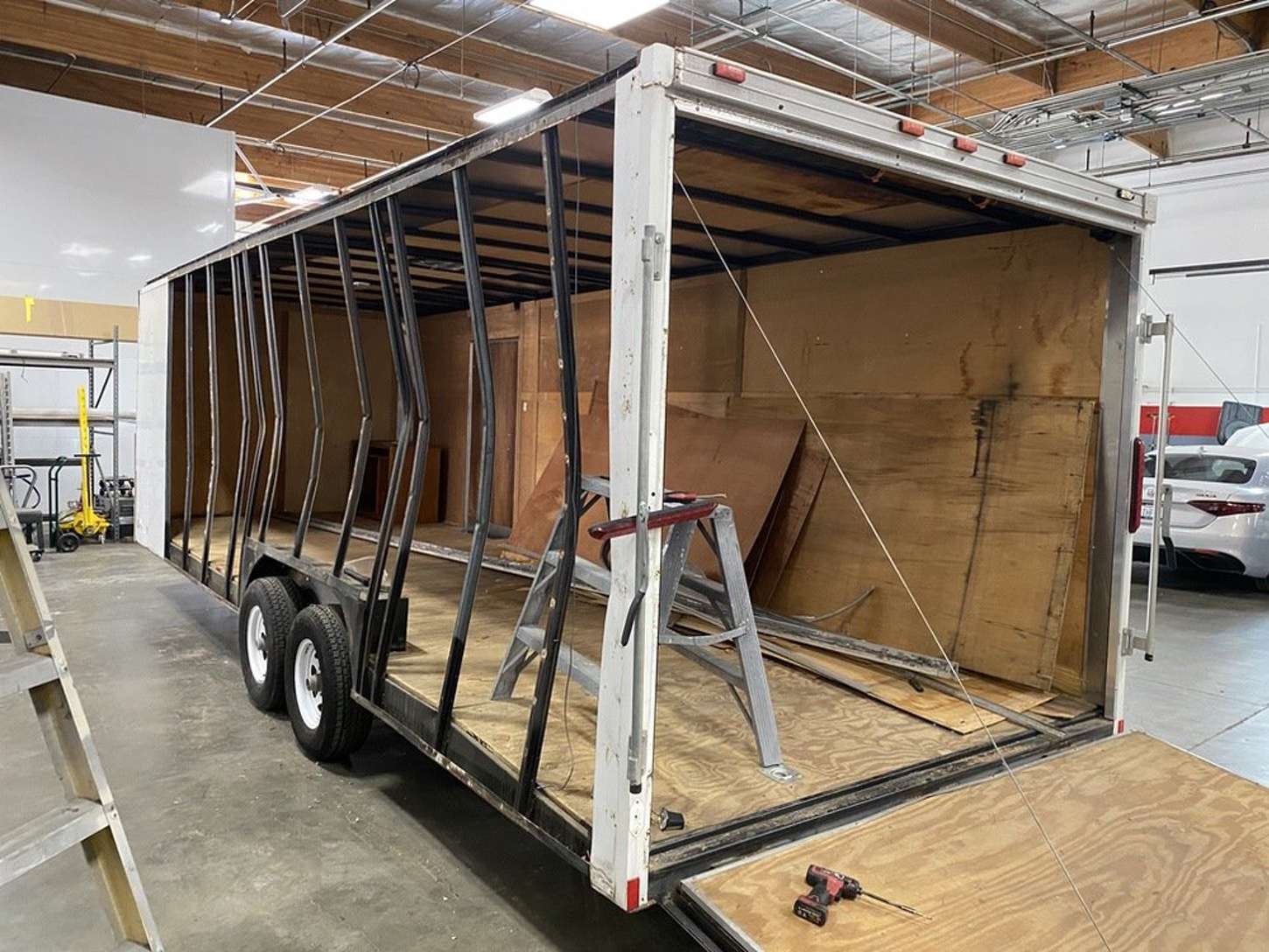
Pop up camper repair is mostly two jobs: keeping the lift system safe and keeping water out of the roof. Westminster owners bring us folding campers where a single frayed cable is one crank away from dropping a roof, and others where the bunk floors have gone soft from years of condensation. We handle both, and we are direct about the units where the numbers say stop.
The Lift System Is the Safety Item
A folding camper raises its roof on a set of cables running over pulleys, driven by a winch and usually assisted by torsion bars in the lift arms. The whole roof, plus whatever is mounted on it, hangs on that system every time it goes up. A single cable failure drops a corner, and a dropped corner bends lift arms, tears the canvas and can injure whoever is standing under it.
Cables fail progressively and visibly if you look. Broken strands, a flat spot where the cable has run over a worn pulley, or corrosion at the swage fitting are all signs the cable is near the end. The check takes ten minutes with a rag and a flashlight.
Full cable and pulley replacement on a typical unit is a few hundred dollars of parts and several hours of labor at the $260 mechanical rate. It is the single best money spent on one of these campers, and it is also the repair people put off because the roof still goes up.
- Run a rag along each cable to catch broken strands
- Check pulleys for grooving and smooth rotation
- Inspect swage fittings and anchor points for corrosion
- Verify torsion bars still assist evenly at all four corners
- Service the winch and its brake rather than only the cable
Canvas and Vinyl Replacement
The tent is a consumable. Canvas and vinyl take ultraviolet exposure, they get folded wet, and mildew and thread rot follow. In Southern California sun the material typically outlives its stitching, so a tent that looks acceptable can tear along a seam the first time it is stretched.
Replacement is available for many popular models, and for the rest a canvas shop can pattern from the old tent. Either way the labor is careful work: the tent attaches to the roof and box rails in a track or with fasteners, and the fit has to be right or the roof will not seat and the seals will not close.
Panel repairs and window replacements are worth doing when the rest of the material is sound. Patching a tent that is already brittle everywhere else is throwing good money after bad, and we will say so.
Bunk Floors and the Condensation Nobody Talks About
The pull out bunk ends are where these campers rot from the inside. Two people sleeping in a small enclosed space put a remarkable amount of moisture into the air overnight, and it condenses on the coldest surface, which is the underside of the bunk decking. Do that for a few seasons without drying the camper properly and the decking softens.
Symptoms are a bunk floor that flexes underfoot, a musty smell that comes back after storage, or visible staining at the outer corners. The repair is decking replacement and, where it has gone that far, framing replacement, which means the bunk comes apart.
That is where cost becomes the deciding factor. A single bunk floor repair is often $1,200 to $3,000. Both bunks plus roof decking on an older camper can reach $8,000 to $12,000, and at that point the honest question is what the camper is worth.
Roof Skin, Box Rails and the Seal Between Them
The hard roof of a pop up carries a skin, usually aluminum or fiberglass, over decking. Water gets in at the same places every time: the vent flange, the air conditioner if the unit has one, any rack fastener, and the edge trim. Once the decking underneath softens, the roof gets heavy, which loads the lift system that was already the weak point.
The seal between the roof and the box rails when the camper is closed is the other item. That gasket keeps road spray and rain out during storage and travel, and it takes a permanent set over the years. A camper stored closed for months with a flattened seal is quietly getting wet inside.
Roof skin and decking work runs $2,500 to $7,000 on most units depending on how much decking is bad, and it usually makes sense to service the lift system at the same time since the roof is already coming apart.
- Reseal vent flanges and any roof mounted hardware annually
- Check edge trim for lifting or cracked sealant
- Press the roof decking from inside for soft spots
- Replace the box rail seal when it takes a permanent set
- Store the camper with a cover rather than relying on a flat seal
When the Numbers Say Stop
We have this conversation more on pop ups than on any other unit. A folding camper with a soft roof, both bunk floors gone and a tired tent is a $10,000 to $14,000 rebuild on a camper that might sell for $4,000 sound. That is not a repair recommendation, it is an expensive hobby, and it should be a decision made with real numbers rather than discovered halfway through.
What we do instead is offer a scoped alternative. Make the lift system safe and the roof watertight for $2,000 to $4,000, live with a tired interior, and get several more seasons out of the camper. That is a legitimate outcome and it is what most owners actually want once they see both numbers.
Our $150 systems assessment gets you the moisture readings, the lift system condition and both numbers before you commit to anything, and it is credited against whatever repair you authorize.
Questions
Frequently asked questions
How much does pop up camper repair cost?
The range is about $500 to past $12,000. Cable, pulley and winch service is typically $500 to $1,200. Canvas replacement runs $1,800 to $4,500 depending on whether a model specific tent is available or has to be patterned. A single bunk floor repair is $1,200 to $3,000. Roof skin and decking work is $2,500 to $7,000. A full rebuild of both bunks plus the roof on an older camper reaches $8,000 to $12,000, which on many units is more than the camper is worth. Mechanical labor is $260 per hour and body labor is $210.
How do I know if my lift cables need replacing?
Run a rag along each cable. It will snag on broken strands well before you can see them, and any snag means the cable is done. Also look for a flat spot where the cable has been running over a worn pulley, and check the swage fittings at each end for corrosion. Then watch the roof go up: if one corner lags or the winch labors more than it used to, something in the system is binding. Cables fail progressively and then suddenly, and a dropped corner bends lift arms and tears canvas, turning a few hundred dollar job into a few thousand dollar one.
My bunk floor is soft. What caused that?
Almost always condensation rather than a leak. Two people sleeping in a small enclosed space put a lot of moisture into the air overnight, and it condenses on the coldest surface, which is the underside of the bunk decking. A few seasons of that without properly drying the camper between trips softens the wood. You will feel it as flex underfoot, smell it as a musty odor that returns after storage, or see it as staining at the outer corners. Repair is decking replacement, and where it has gone further, framing replacement, which means the bunk assembly comes apart.
Can the canvas be repaired instead of replaced?
Yes when the rest of the material is still sound. Panel replacement, seam restitching and window replacement are all worthwhile on a tent that is otherwise in decent shape. What is not worthwhile is patching material that has already gone brittle everywhere, because the next tear will be a foot from the patch. In Southern California the stitching usually fails before the fabric does, so a tent that looks acceptable can split along a seam the first time it is stretched. We will tell you honestly which category yours is in rather than selling you a patch that fails in a month.
Is it worth rebuilding an old pop up?
Often not, and we say so before you spend anything. A camper with a soft roof, both bunk floors gone and a tired tent is a $10,000 to $14,000 rebuild on a unit that might sell for $4,000 sound. The alternative we usually recommend is a scoped repair: make the lift system safe and the roof watertight for $2,000 to $4,000, accept a tired interior, and get several more seasons out of it. Our $150 systems assessment gives you the moisture readings, the lift system condition and both numbers before you commit, and it is credited against the repair you choose.
Water is getting in while it is stored closed. Why?
Most likely the seal between the roof and the box rails has taken a permanent set. That gasket is what keeps rain and road spray out when the camper is folded, and after enough years compressed it stops springing back and no longer contacts evenly. Other common entries are the roof vent flange, any rack or air conditioner fastener, and the roof edge trim where sealant has cracked. All of these are inexpensive to service and expensive to ignore, because water in a folded camper sits against decking and canvas with no ventilation until the next time you open it.
Do you work on the running gear on a pop up?
Yes, at the $260 per hour mechanical rate. Folding campers are light, which means owners tend to assume the axle, bearings and brakes need less attention. The opposite is true in practice, because these units often sit for long periods and grease breaks down in a hot hub whether or not the camper moves. We inspect bearings and seals, brake magnets and drums where the unit has brakes, springs, shackles and bushings, and axle alignment. Tire age matters more than tread here as well, since these campers rarely wear tires out before the sidewalls degrade.
How long does this work take?
Lift system service is usually one to two business days. Canvas replacement is one to two weeks and depends on whether the tent is available or has to be patterned from the old one. A single bunk floor repair is roughly a week. Roof skin and decking work is two to three weeks. A full rebuild of roof and both bunks is three to five weeks. Because these campers are small and simple, the schedule is driven more by parts and canvas lead times than by shop hours, and we will give you the realistic date at the assessment rather than an optimistic one.
How the work runs
Our six step repair process
The same sequence on every vehicle, whether it is a single coach or a fleet of box trucks.
- 01
Assessment and documentation
We put the vehicle on the floor, pull panels where we need to see behind them, and photograph everything. Hidden damage found now is damage that does not become a supplement argument later.
- 02
Written estimate
You get a line by line estimate with parts, labor hours, materials, and the posted rate applied to each. Nothing is bundled into a single number you cannot check.
- 03
Carrier coordination
If a claim is involved we deal with the adjuster directly, submit the documentation, and handle supplements when teardown reveals more than the first inspection showed.
- 04
Authorization and scheduling
Once the scope is approved we confirm the deposit, order parts, and give you a realistic slot. Special order parts drive the timeline more often than labor does.
- 05
Repair
Structural first, then body, then paint, then systems and interior. The sequence is not negotiable because each stage has to be right before the next one covers it up.
- 06
Quality check and delivery
Multi point inspection, systems tested under load, paint inspected under corrected lighting, and a walkthrough with you before the vehicle leaves.
Keep reading
Related pages
Related vehicles
Services we perform
Talk to a repair specialist today
Tell us what happened and we will tell you what the repair actually involves, what it costs, and how long it takes. We work directly with every major carrier and serve Westminster owners and fleets from our 35,000 square foot facility.
Posted labor rates are published on our prices page. Diagnostic and systems assessment fees are credited against an authorized repair.