Getting Started
RV Shop Direct Insurance Billing
In short
Direct billing means the repair facility invoices your carrier and receives payment on the claim file, so you are not fronting the repair cost and waiting to be reimbursed. You still pay your deductible, betterment, and anything you chose that the policy does not cover. We bill most major carriers direct for Westminster owners, and being able to bill a carrier direct is an administrative capability rather than an affiliation with them.
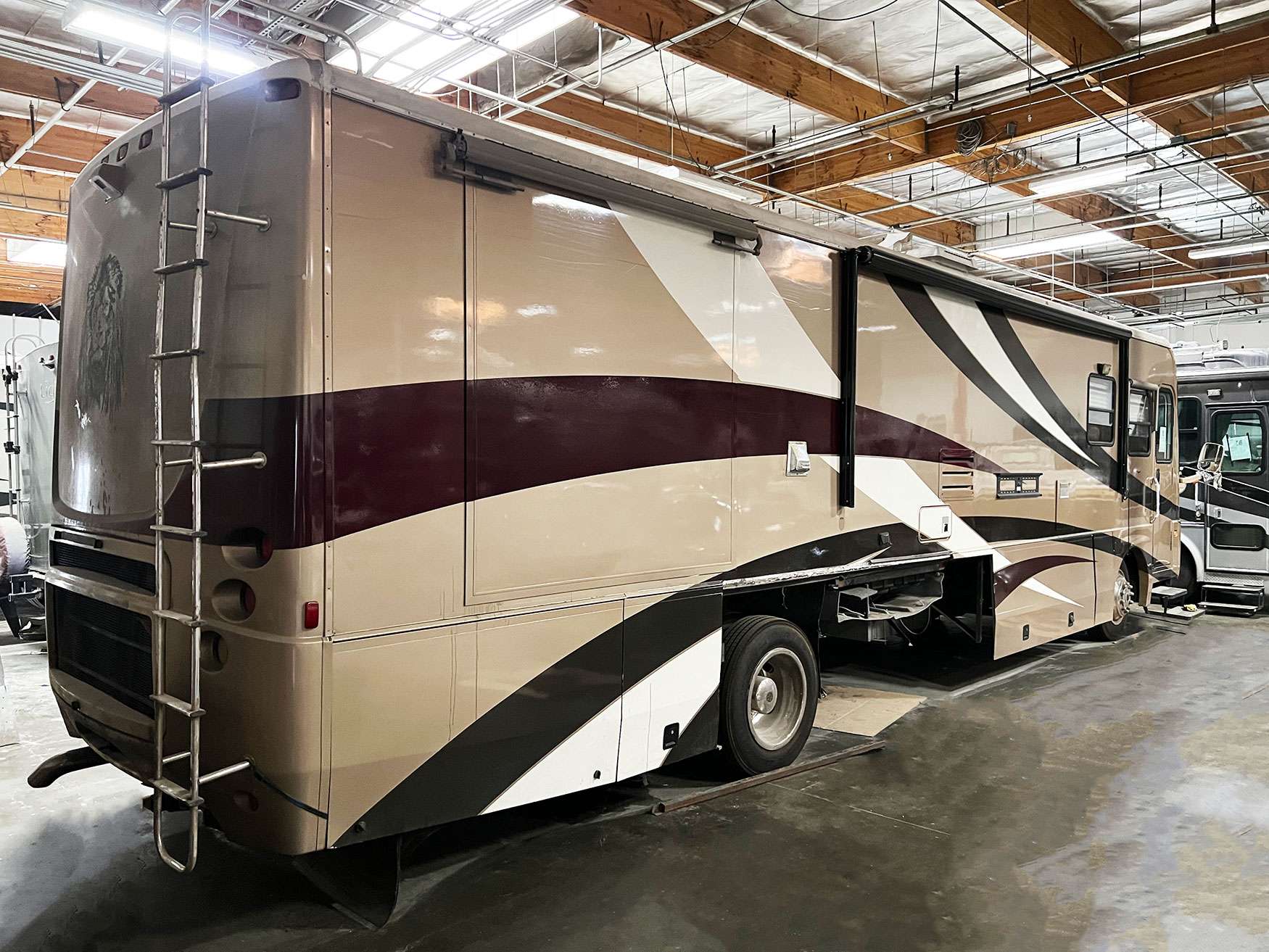
Rv shop direct insurance billing changes one thing that matters enormously to an owner: who carries the money during the repair. Under direct billing, the shop invoices your carrier and collects from the claim file, so a repair that runs into five figures does not have to pass through your checking account first. What you still owe is your deductible and anything outside the covered scope. This page explains how payment actually flows and where the numbers come from.
What Direct Billing Means in Practice
Under direct billing, the repair facility becomes the party the carrier pays. We submit the estimate, the supplements, and ultimately the final invoice, and the carrier remits payment to us against that file. Your involvement in the money is limited to your deductible and any non covered items you authorized. The alternative is reimbursement, where the carrier pays you and you pay the shop.
That works, but it puts the owner in the middle of a cash flow that can easily reach tens of thousands of dollars on a structural RV repair, and it means the shop is waiting on you while you wait on the carrier. It also means any delay in the carrier's payment becomes your problem to manage rather than ours.
Direct billing does not change coverage, does not change your deductible, and does not change what the carrier is willing to approve. It only changes the payment path. Owners sometimes assume a shop that bills direct has some special standing with the carrier. It does not. It has a billing arrangement and a working relationship with the claims department, which is administrative rather than substantive.
Costs That Stay With the Owner
Direct billing covers the carrier's share, not the whole bill. Four categories reliably remain with the owner, and knowing them in advance prevents the uncomfortable conversation at delivery. Your deductible comes first. It is subtracted from what the carrier pays, and you pay it to the shop, normally when you pick up the vehicle. Betterment comes second: when a repair replaces a wearing item with a new one and the replacement leaves you measurably better off than before the loss, some policies apply a proportional owner share. Tires and awning fabric are the usual examples.
Third is anything you elected that the claim does not cover. Nearly every RV that comes in for a covered repair has something else the owner wants addressed while the unit is apart, and that work is yours. Fourth is anything the carrier declined, whether because it was excluded, because it was pre existing, or because it fell outside the covered scope. We identify all four before work starts and put them in writing, so the final invoice never contains a surprise.
- The deductible on the applicable coverage section
- Betterment on wearing items replaced with new
- Optional or upgraded work you elected while the unit was apart
- Items excluded or declined by the carrier
- Storage beyond any period the policy allows
- Non covered pre existing conditions found during teardown
How Does the Insurance Company Actually Issue Payment?
Payment arrives in pieces rather than as one settlement. The carrier typically releases the initial estimate amount early, sometimes before the vehicle is even disassembled. Supplement amounts are released as each supplement is approved. The remaining balance settles against the final invoice after completion. A long structural repair can involve four or five separate remittances. The form of payment varies. Many carriers pay a shop electronically on the file, which is the fastest route.
Some issue a paper check to the shop. Some issue a check to the owner even when direct billing is in place, in which case the owner signs it over. And when there is a loan on the RV, the check is frequently made out to both the owner and the lienholder and cannot be deposited until the lender endorses it. The lienholder endorsement is the most common cause of a finished vehicle sitting undelivered. Lenders protect their collateral and often require a completion inspection, a copy of the repair invoice, or photographs of the finished work before they sign. That process takes days at minimum. Start it at the beginning of the repair, not at the end.
Negotiated Labor Rates Versus Posted Retail Rates
Every repair facility has a posted retail labor rate, which is what it charges any customer for a given labor operation. Carriers, separately, work from a labor rate they have established for a market, either through agreements with shops in a direct repair network or through a survey of prevailing rates in the area. That is the negotiated rate, and it is frequently lower than posted retail.
There is nothing improper about either number. The retail rate reflects what it costs the shop to perform the work and stay in business. The negotiated rate reflects what the carrier has contracted or determined it will pay. They are answers to different questions, and on many claims they simply differ. When they differ, there are three outcomes. The shop absorbs the gap, which happens on small differences and network agreements.
The gap is documented and discussed with the carrier as a rate variance, supported by the actual labor operations and the specialized nature of the work. Or, where the policy and applicable rules allow, the difference is presented to the owner as an amount the carrier is not paying. The important thing is that this is resolved before repairs start, in writing, not discovered at delivery. RV work makes this conversation more common than automotive work does. Recreational vehicle repair involves structural, body, house systems, plumbing, electrical, and chassis operations in a single job, and a labor rate built around passenger car sheet metal does not map cleanly onto laminated panel reconstruction.
- Posted retail rate: what the shop charges any customer
- Negotiated rate: what the carrier has contracted or surveyed for the market
- Separate rates commonly apply to body, structural, refinish, and mechanical operations
- Rate variance documented with the specific operations performed
- Any owner responsibility disclosed in writing before work begins
Which Carriers Do You Bill Direct?
We bill direct with Progressive, GEICO, State Farm, AAA SoCal, Mercury, Allstate, American Family, Wawanesa, National General, CSAA, Foremost, Liberty Mutual, Tesla, and Cincinnati. We also work with carriers outside that list. Direct billing is a billing and documentation arrangement, and setting one up with an unfamiliar carrier is routine. To be explicit about what this list is not: it is not an endorsement of any carrier, not an affiliation, and not a statement that these carriers handle claims better or worse than any other.
It is a statement that our administrative systems are already connected to theirs, which removes a setup step from your file. Nothing about appearing on this list gives a carrier any influence over how we document or repair your vehicle. If your carrier is not listed, it changes very little. We contact the claims department, establish the billing arrangement, and proceed the same way. Occasionally a carrier requires a specific estimating platform or a particular document format, which we accommodate. The one thing worth confirming early is whether the carrier pays shops directly at all, because a small number pay only the insured.
- Progressive, GEICO, State Farm, AAA SoCal, Mercury
- Allstate, American Family, Wawanesa, National General
- CSAA, Foremost, Liberty Mutual, Tesla, Cincinnati
- Carriers outside this list handled with a standard billing setup
- Specialty and commercial policies accommodated on request
What Carriers Require Before They Pay an Invoice
A carrier does not pay an invoice because a repair was performed. It pays because the invoice reconciles to something it authorized. The single most common reason a final payment sits is that the invoice does not match the approved estimate and supplements line for line. So the invoice is built to reconcile. Every line traces back to an approved line item on the original estimate or on a specific supplement. Parts are supported by supplier invoices showing part numbers and pricing. Sublet operations, such as chassis alignment or glass, are supported by the vendor invoice. Labor is stated in the operations and hours that were approved.
Completion documentation goes with it: photographs of the finished work, the repair authorization signed by the owner, and any carrier specific form. Some carriers require a completion inspection before final payment, and some lienholders require one independently. Knowing which applies to your file at the start rather than the end is the difference between delivering on schedule and delivering a week late.
- Final invoice reconciled line by line to approved estimates
- Supplier invoices with part numbers supporting parts lines
- Sublet vendor invoices for alignment, glass, and outside operations
- Photographs documenting completed work
- Signed repair authorization and any carrier specific release
- Completion inspection where the carrier or lienholder requires one
Direct Repair Programs and Independent Shops
A direct repair program is an arrangement between a carrier and a network of shops covering labor rates, documentation standards, cycle time expectations, and claim handling procedures. Carriers refer work into those networks, and the administrative path is streamlined because both sides already agree on the terms. An independent facility operates outside that arrangement. It sets its own rates and its own repair standards, and each claim is handled on its own terms rather than under a standing agreement. Neither model is inherently better for an owner, and it is a mistake to treat network membership as either a credential or a disqualification.
What matters far more for a recreational vehicle is technical fit. An RV is laminated panel over a wood or aluminum substructure, with house plumbing, twelve volt and shore power systems, and slideout mechanisms running inside the walls, riding on a chassis from a different manufacturer than the coach. Most collision networks are built around passenger vehicles. Ask whether the facility repairs RVs as its primary business, and ask what its BAR license covers. Ours is ARD00288521, and we have been repairing these units since 2015.
Questions
Frequently asked questions
What does it mean when a shop bills insurance directly?
It means the repair facility invoices your carrier and receives payment from the claim file, rather than you paying the shop and seeking reimbursement afterward. Practically, it keeps a repair that may run well into five figures out of your bank account. The shop submits the estimate, files supplements as damage is found, and issues a final invoice reconciled to what the carrier approved, and the carrier remits payment against that file. Your responsibility is limited to the deductible and anything outside the covered scope. Direct billing does not change coverage, deductibles, or what the carrier will approve. It only changes who carries the money during the repair, which matters a great deal when a repair takes two or three months.
Do I pay anything if my insurance is covering the repair?
Yes, in most cases. Your deductible is always yours and is normally collected at delivery. Betterment may apply when a wearing item such as tires or awning fabric is replaced with new and the replacement leaves you measurably better off than before the loss. Anything you chose to have done while the vehicle was apart that is unrelated to the claim is yours. And anything the carrier declined, whether excluded, pre existing, or outside the approved scope, is yours if you want it repaired. All four categories are identified before work begins and put in writing, so nothing appears on the final invoice that was not discussed. Storage beyond what the policy allows can also become an owner cost on long files.
Why is the insurance labor rate lower than the shop's rate?
They answer different questions. A shop's posted retail rate is what it charges any customer for a labor operation, based on what performing that work costs the business. A carrier's rate is what it has contracted with network shops or determined through a survey of prevailing rates in a market. Neither number is improper and they frequently differ. When they do, the gap is either absorbed, documented and discussed with the carrier as a rate variance supported by the specific operations performed, or, where the policy and applicable rules permit, presented to the owner. This comes up more on RV work than automotive work because a single recreational vehicle repair can involve structural, body, refinish, plumbing, electrical, and chassis operations that a passenger car rate structure was never built to describe.
How long does it take for the insurance company to pay the shop?
Payment arrives in stages rather than as one settlement. The initial estimate amount is commonly released early, sometimes within days of the estimate being written and often before disassembly begins. Supplement amounts follow as each supplement is approved, which can be anywhere from a few days to a few weeks per supplement depending on whether a reinspection is required. Final payment settles against the completed invoice and typically arrives within a few weeks of submission, assuming the invoice reconciles cleanly to what was approved. Electronic payment is faster than a paper check. The most common delay is not the carrier at all, it is a two party check waiting on a lienholder endorsement, which is why we start that conversation at the beginning of a repair.
My insurance check was made out to me and my lender. What do I do?
Contact the lienholder immediately and ask what they require before endorsing. Lenders hold a financial interest in the RV as collateral, so they will not sign a repair check without some assurance the collateral is being restored. Common requirements are a copy of the repair estimate, a copy of the final invoice, photographs of the completed work, or a completion inspection by a third party. Some lenders endorse the full amount up front, some release funds in stages, and some hold the check until the repair is finished. All of that takes days to weeks, and it runs entirely on the lender's process. The single best move is to start the conversation when the repair begins rather than when the vehicle is finished and waiting.
Does using a shop outside my insurer's network cost me more?
It can, and the honest answer is that it depends on the gap between the carrier's rate and the shop's rate, and on how that gap is handled. Network shops have agreed in advance to a labor rate, so no gap exists. An independent shop may have a higher posted rate, and the difference is then either absorbed, documented and discussed with the carrier, or presented to the owner where the policy and applicable rules allow. Ask about this specifically before authorizing work, and ask for it in writing. Weigh it against technical fit, because an estimate written by a facility that does not repair recreational vehicles regularly will typically under scope the loss, which costs far more than a rate difference.
What if my insurance company is not on your direct billing list?
It changes very little. We bill Progressive, GEICO, State Farm, AAA SoCal, Mercury, Allstate, American Family, Wawanesa, National General, CSAA, Foremost, Liberty Mutual, Tesla, and Cincinnati direct, and we work with carriers outside that list regularly. Setting up a billing arrangement with an unfamiliar carrier is routine administrative work: we contact the claims department, confirm their estimating platform and document format, and proceed. Some carriers require a specific system or a particular submission format, which we accommodate. The one item worth confirming early is whether the carrier pays repair facilities directly at all, because a small number pay only the named insured. If yours does, we set up the reimbursement path and tell you exactly what to expect.
Can the shop and my insurance company disagree about the repair?
Yes, and it is common on RV claims. Disagreements are usually about repair method or scope rather than whether the loss is covered. A carrier estimate may call for repairing a laminated panel where the separation exceeds what the manufacturer's published procedure permits, in which case the shop documents the procedure and files a supplement for replacement. Those disagreements are resolved with evidence: photographs, measurements, part numbers, and the manufacturer's own repair documentation. Where they persist, the carrier may send a field adjuster back for a reinspection, which usually settles the matter quickly because a disassembled wall is difficult to argue with. What should never happen is repairs proceeding while the method is unresolved.
Keep reading
Related pages
More on insurance
Services we perform
Talk to a repair specialist today
Tell us what happened and we will tell you what the repair actually involves, what it costs, and how long it takes. We work directly with every major carrier and serve Westminster owners and fleets from our 35,000 square foot facility.
Posted labor rates are published on our prices page. Diagnostic and systems assessment fees are credited against an authorized repair.