Business Fleets
Fleet Vehicle Repair Orange County Managers Rely On
In short
Fleet vehicle repair Orange County managers can budget against comes down to three things: cost per unit, predictable invoicing, and downtime you scheduled rather than absorbed. We handle multi unit intake, staged release, and reporting that reconciles cleanly. Fleets based in Westminster and nearby use our 35,000 square foot facility as a single point of accountability.
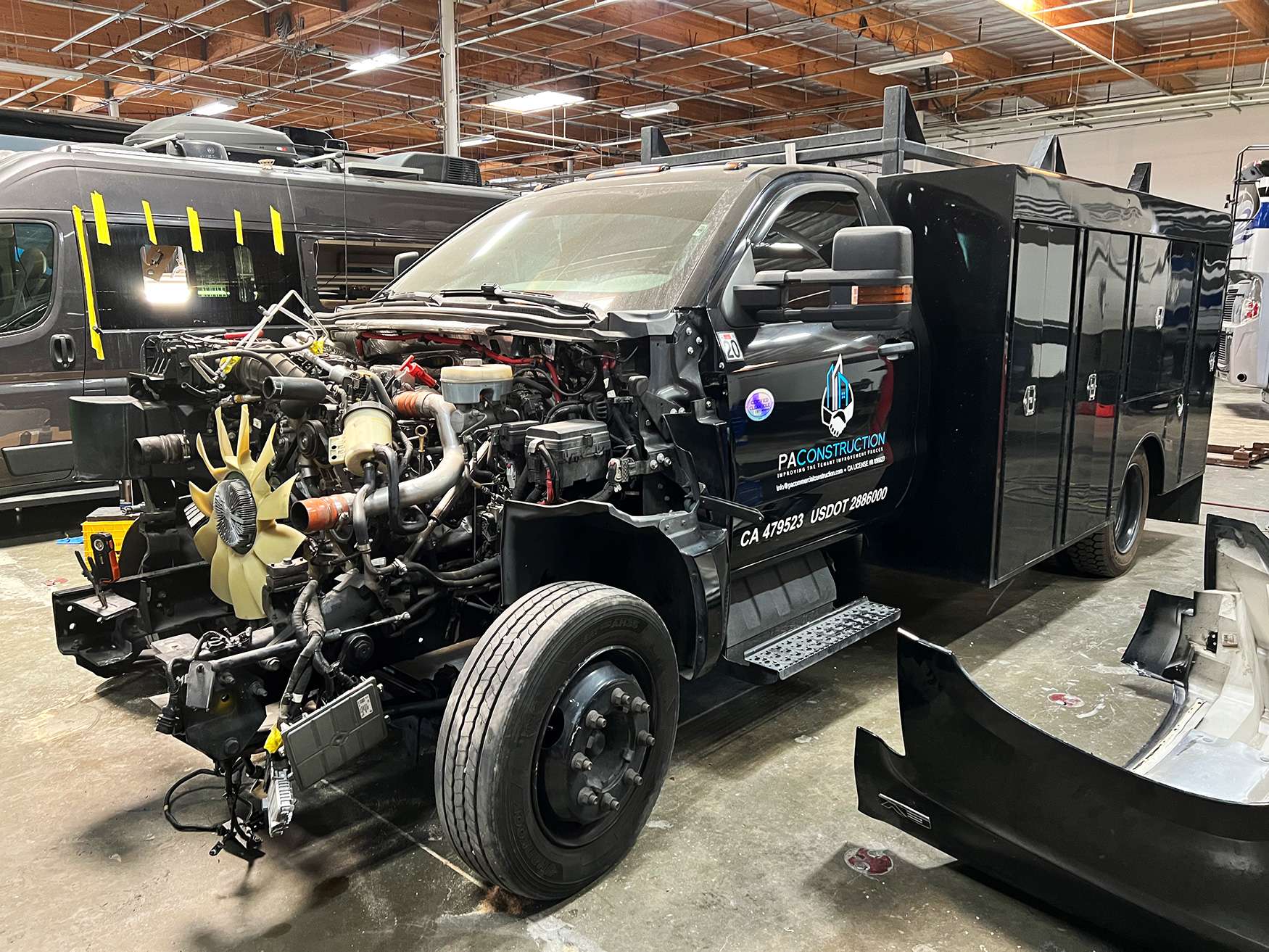
Fleet vehicle repair Orange County managers can actually plan around starts with data, not promises. You are measured on cost per unit, availability, and whether the numbers you gave finance in the spring survive the fall. Our shop is structured for that. Multi unit intake, staged release so the fleet is never fully down, itemized invoicing that reconciles to your system, and reporting detailed enough to defend a line item in a budget review. Fleets across Westminster work with us on exactly those terms.
Cost Per Unit Is the Metric That Matters
Fleet managers do not really buy repairs. They buy availability at a defensible cost per unit, and every repair decision is ultimately a question about whether a given vehicle is still worth carrying. A shop that only quotes job prices is not helping you answer that question at all. A shop that shows you cumulative spend by unit, over time, is handing you the input your actual decision requires.
We itemize by vehicle and retain the history, so when a specific truck comes back for the third time in a year, the conversation shifts from the current job to the lifecycle. That is frequently the difference between authorizing another repair and moving the unit into disposal. Either outcome is defensible, but it should be reached with numbers in front of you rather than a general sense that the vehicle has been troublesome lately.
We also separate accident driven cost from wear driven cost in our reporting, because those two categories point at completely different corrective actions. Rising accident cost is a driver, routing, or vehicle assignment question. Rising wear cost is a replacement cycle question. Blending them into a single maintenance number hides both problems and all but ensures that whatever you do about it will be aimed at the wrong target.
- Itemized cost captured per unit, not per invoice batch
- Repair history retained so repeat visits are visible over time
- Accident driven and wear driven cost reported separately
- Downtime days recorded alongside dollars spent
- Deferred items tracked so nothing disappears between visits
Scheduled Downtime Versus Unscheduled Downtime
Unscheduled downtime is the expensive kind, and the expense is rarely the repair. It pulls a unit out of rotation without warning, forces a substitution or a missed commitment, and lands on an availability number you already forecast to finance. Scheduled downtime is just a line on a calendar that everyone planned around. Most of the work fleets treat as unscheduled could have been scheduled if somebody had looked at it a month earlier.
We push fleets toward planned intake windows for exactly that reason. Deferred cosmetic work, minor body damage, and known mechanical items get batched into a slot you choose, ideally during your slowest week of the month. The unit is out of service either way, but you decide when it happens, and the substitute vehicle is arranged in advance rather than scrambled for on a Monday morning.
For genuine emergencies we hold capacity, because a collision does not wait for a convenient week and pretending otherwise helps nobody. What we will not do is let an emergency intake displace a scheduled one that another customer planned around. A shop that reshuffles its queue for every walk in is a shop whose dates mean nothing, and dates that mean nothing are worse than no dates at all for a fleet.
Bringing In Multiple Units Without Losing the Fleet
Multi unit intake has one common failure mode: the shop takes six vehicles, works them all in parallel, and returns them together in week four. That is the worst possible outcome for a fleet, because your availability collapses for a month instead of dipping briefly and recovering. We stage releases deliberately so units come back on a rolling schedule and your coverage gap stays shallow.
The sequencing logic is straightforward once you see it. Units with the longest parts lead time start first so their waiting happens in parallel with productive work on other vehicles. Quick cosmetic jobs slot into the gaps that creates. Anything requiring a specialty subcontract operation begins before the shop work that depends on it. You receive that release calendar at authorization rather than discovering the schedule as vehicles happen to finish.
For fleets running mixed vehicle types, and most fleets in this region are mixed, we handle the full range under one roof. Commercial trucks, box vans, service bodies, trailers, and recreational units all move through the same 35,000 square foot shop. That removes the coordination overhead of splitting a batch across vendors, and it removes the reporting gaps that show up when three shops use three different documentation conventions.
- Staged release calendar issued at authorization
- Long lead parts units started first to parallelize waiting
- Mixed vehicle types handled in one facility
- Substitute coverage planned around the release schedule
- Single point of contact for the whole batch
Invoicing You Can Forecast
Surprise invoices are how a shop loses a fleet account, and it usually happens once. The scope you authorized is the scope we invoice. Anything discovered during teardown comes back to you as a documented supplement for approval before the work happens, with photographs attached showing what we found and where. There are no exceptions to that and no quiet additions that surface at the end of a job.
Invoices are structured to reconcile against your system without manual translation by somebody in accounting. Unit identifier as you designate it, authorization reference, labor and parts separated cleanly, and supplements shown as distinct lines rather than folded into the original scope. If your team has to rebuild our invoice before entering it, we did the administrative half of the job badly regardless of how the repair turned out.
Assessments are paid and credited against an authorized repair. For a fleet that means the assessment cost on approved work becomes part of the repair rather than an extra line item, and on work you decline you have paid for a genuine diagnostic with documentation you can carry into a disposal decision. Either way the money bought something concrete rather than disappearing into an overhead recovery you never see.
Reporting That Survives a Budget Review
At some point somebody above you asks why fleet maintenance is running over plan, and the answer needs to be specific with documentation behind it. Generic invoices do not survive that meeting. Unit level detail with dates, causes, downtime, and deferred items does, because it lets you show a pattern rather than assert one and it moves the conversation from your judgment to the data.
We provide repair documentation at a level fleets can actually use in that conversation: what happened, what was found during teardown, what was repaired, what it cost, how long the unit was out of service, and what was deferred to a later window. When a pattern emerges across several units, that becomes evidence supporting a routing change, a driver training decision, or a replacement cycle argument that finance will take seriously.
This is the part of fleet work most shops skip, because documentation does not generate revenue on its own. What it generates is retention. A fleet manager who can defend the number in a review without scrambling for backup is a fleet manager who keeps sending vehicles to the same place, and that is a better business outcome for us than an extra hour billed on any single job.
How We Prioritize Across a Mixed Fleet
Not every unit in a fleet is equally important, and pretending otherwise wastes your money on the wrong vehicles. A revenue generating truck in daily service and a spare unit sitting in a yard do not deserve the same urgency even when the damage is identical. We ask you to rank the batch at intake, and then we work that ranking rather than substituting our own judgment about what looks worst.
Safety items are the one exception and they are not negotiable. Anything affecting braking, steering, structural integrity, load securement, or occupant protection gets addressed regardless of where the unit sits in your priority order. We will tell you as soon as we find one of those, and we will not release a vehicle we consider unsafe to operate no matter how badly the schedule wants it back on the road.
Beyond that category, the order is entirely yours to set and change. Reach us at (949) 799-3387 or info@ocrvcenter.com to set up fleet intake and agree on documentation and invoicing conventions. Our facility is licensed by the California Bureau of Automotive Repair under ARD00288521, holds EPA identification CAL000367879, and has operated since 2015 in a 35,000 square foot shop. Tell us how your organization tracks its units and we will match that convention from the first invoice forward.
- Fleet supplies the priority ranking at intake
- Safety related findings escalate regardless of ranking
- Revenue generating units sequenced ahead of spares
- Deferred items documented and carried to the next window
- One contact accountable for the entire batch
Questions
Frequently asked questions
How do you report cost per unit across a fleet?
Every repair is captured against a specific vehicle identifier rather than an invoice batch, and we retain the history so repeat visits are visible over time. Reporting separates accident driven cost from wear driven cost, because those two point at completely different decisions. Rising accident cost is usually a driver, routing, or vehicle assignment question. Rising wear cost is a replacement cycle question. We also record downtime days alongside dollars, since a cheap repair that keeps a unit out for two weeks is frequently more expensive to the operation than a costlier one that returns it in three days.
Can you take in several vehicles at once without dropping our availability?
Yes, and staging is the whole answer. The failure mode with multi unit intake is a shop that works everything in parallel and returns the entire batch at the end, which collapses your availability for a month rather than dipping it briefly. We sequence so units with the longest parts lead times start first, quick cosmetic work fills the gaps, and vehicles release on a rolling calendar. You receive that release calendar at authorization, so substitute coverage can be planned rather than scrambled.
How do you handle work discovered after the repair starts?
It becomes a documented supplement that you approve before any additional work happens. We photograph and describe the finding, explain why it was not visible at assessment, and price it as its own line. Nothing gets added to a fleet invoice quietly. On the invoice itself, supplements appear as distinct lines rather than folded into the original scope, so your accounting team can see exactly what changed between authorization and completion. That transparency is the reason fleet invoices from us tend to reconcile without a dispute.
Do you charge for assessments on fleet vehicles?
Yes, and the fee is credited against the repair when you authorize it. For a fleet this structure works in your favor. On approved work the assessment cost folds into the repair rather than sitting as an extra line. On work you decline, you have paid for a genuine diagnostic with documentation you can use in a disposal or replacement decision, which is worth something on its own. A shop that declines to bill for assessments is recovering that labor somewhere, usually inside repair pricing where you cannot see it.
What vehicle types can you handle in one facility?
Commercial trucks, box vans, service bodies, cab and chassis units, trailers, vans, and the full range of recreational vehicles. That breadth matters for mixed fleets, which describes most fleets in this region. Splitting a batch across multiple vendors adds coordination overhead, creates gaps in your reporting, and produces finger pointing when a repair does not hold. Running the batch through one 35,000 square foot facility gives you a single point of accountability and one consistent documentation format across every unit type you operate.
How do you decide which of our units gets worked first?
You decide. We ask for a priority ranking at intake and we work to it, because you know which units are revenue generating and which are spares sitting in a yard. The one exception is safety. Anything we find affecting braking, steering, structural integrity, load securement, or occupant protection escalates regardless of where the unit sits in your order, and we will not release a vehicle we consider unsafe to operate. Outside of that category, the sequence is yours to set.
Can you hold capacity for emergency intake?
We reserve capacity for genuine emergencies, because a collision does not wait for a convenient week. What we deliberately avoid is letting emergency intake displace scheduled work, since a shop that reshuffles its queue for every walk in produces dates that mean nothing to anybody. If you have a unit down unexpectedly, call and we will tell you honestly what we can absorb and when. An accurate answer you can plan around is more useful than an optimistic one you cannot.
What do we need to do to open a fleet account?
Call (949) 799-3387 or email info@ocrvcenter.com with your fleet size, vehicle mix, and how you want documentation and invoicing structured. We will set up intake to match your process, including purchase order handling if your organization requires it, unit identifier conventions that match your system, and a reporting format your accounting team can enter without rework. Our facility has operated since 2015, is licensed under BAR ARD00288521, and holds EPA identification CAL000367879.
Keep reading
Related pages
Others we work with
Services we perform
Talk to a repair specialist today
Tell us what happened and we will tell you what the repair actually involves, what it costs, and how long it takes. We work directly with every major carrier and serve Westminster owners and fleets from our 35,000 square foot facility.
Posted labor rates are published on our prices page. Diagnostic and systems assessment fees are credited against an authorized repair.