Getting Started
RV Insurance Claim Concierge Service for Westminster Owners
In short
Our claim concierge service means one person at our shop owns the administrative side of your file: carrier calls, inspection scheduling, teardown documentation, supplement preparation and filing, approval follow up, progress updates, and closing paperwork. You still own the coverage decisions and the policy relationship, because those belong to you and your carrier. Westminster owners typically spend under an hour of their own time on a claim we are handling.
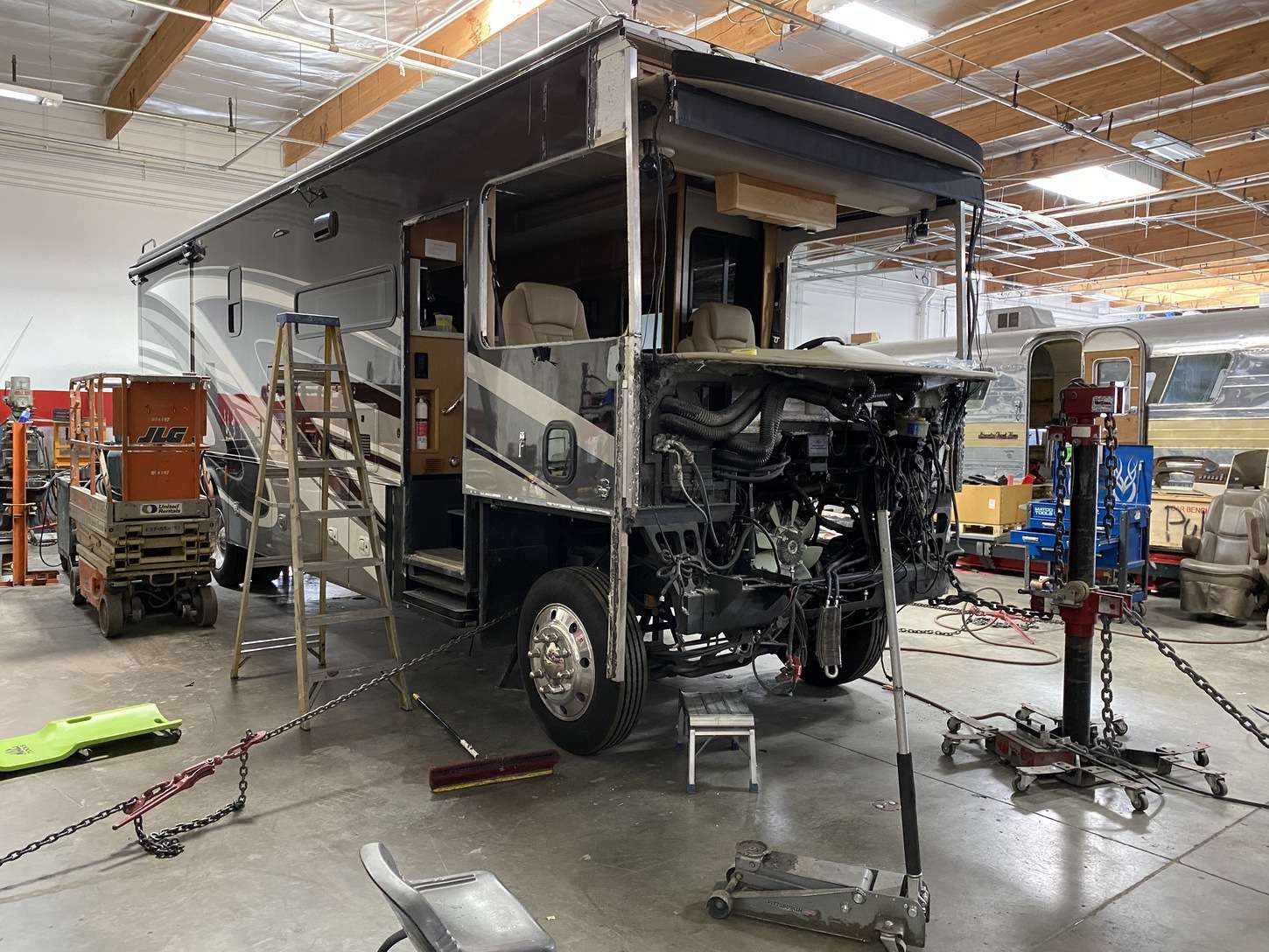
An rv insurance claim concierge service is administrative labor, not a marketing promise. Somebody has to call the desk adjuster, sit through the field inspection, assemble the photograph set, price the parts, write the supplement, chase the approval, and close the paperwork. If the owner does it, it takes weeks of phone time and it gets done by someone who does it once. If we do it, it gets done by people who file supplements every week. This page describes exactly what that work is.
Who Owns Your File?
One named person at our shop is assigned to your claim and stays on it from intake through delivery. They hold the claim number, the adjuster's contact information, the estimate versions, the parts status, and the production schedule. When you call, you talk to them, not to whoever answers. That person is not the technician performing the repair, and that separation is deliberate. Technicians are in the shop with their hands on the vehicle. Claim work is phone calls, documents, and follow up, and it does not get done consistently by someone who is also mid disassembly on a sidewall. Splitting the roles is why approvals get chased on a schedule instead of when someone remembers.
They are also the person who tells you bad news. If a part is on national back order, if an approval has stalled, if teardown found rot that predates the loss and is going to become a coverage conversation, you hear it from them and you hear it early. Files go badly when owners are surprised at week six by something the shop knew at week two.
Carrier Communication We Handle
With your written authorization to discuss the file, we contact the desk adjuster directly and become the operational point of contact for anything technical. That covers scheduling the field inspection, answering questions about damage, discussing repair method, and following up on pending decisions. The single highest value thing we do is have an estimator physically present during the field inspection. Damage gets documented while the adjuster is standing at the vehicle, disagreements about what something is get settled in person, and questions that would otherwise generate a week of email get answered in ten minutes. An inspection attended by a shop estimator produces a materially more complete initial estimate than an inspection attended by nobody.
We also maintain a documented follow up cadence rather than calling when it occurs to someone. Pending items get a scheduled touch, each contact is logged with date, name, and outcome, and that log is part of your file. If a decision needs to move up to a supervisor or a reinspection needs to be requested, the log is what supports the request.
- Direct contact with the desk adjuster on the file
- Field inspection scheduling and estimator attendance
- Repair method and labor operation discussions
- Scheduled follow up on every pending approval
- Escalation to a supervisor or reinspection request when a decision stalls
- A dated contact log retained in your file
Documentation We Assemble and Submit
Claim documentation is the product. An approval is a carrier's response to evidence, and thin evidence produces thin approvals. Our documentation package is built during teardown, not reconstructed afterward from memory. That package contains a captioned photograph set covering the area before, during, and after disassembly, with a scale reference in close range frames. It contains measured damage. It contains manufacturer part numbers pulled from the catalog for the specific floor plan and model year, because an RV part that fits one model year frequently does not fit the next.
It contains published repair procedures supporting the method chosen, which is how a panel replacement gets justified over a panel repair. And it contains labor operations itemized against the work actually required, including the operations that are easy to miss such as sealant bed restoration, alignment after a frame hit, and sensor calibration on newer chassis. Everything is transmitted in the format the carrier's system expects, which sounds trivial and is not. Documentation submitted in the wrong format sits in a queue. We keep a full copy of everything sent, with transmission dates, so the record of what was submitted and when is never in question.
- Captioned photograph sets from before, during, and after teardown
- Measured damage with scale references in frame
- Model year and floor plan specific part numbers
- Published manufacturer repair procedures
- Itemized labor operations with written justification
- Copies of every transmission with dates retained in the file
How Does a Supplement Actually Get Filed?
A supplement package is prepared as a single document set rather than a series of phone calls. It contains the revised estimate showing added and changed line items, the photographic evidence for each addition keyed to the line it supports, part pricing with source documentation, and a written technical justification explaining why each item is required and why the chosen method is correct.
It is transmitted to the adjuster who owns the file through the carrier's estimating platform or their designated intake channel, and logged with the transmission date. We then work it on a follow up schedule. Some supplements are approved on paper within a few days. Some generate questions we answer with additional documentation. Some trigger a reinspection, where a field adjuster returns to view the disassembled vehicle, and those usually resolve quickly because a partially opened wall is a persuasive document.
Complex losses generate more than one supplement. A structural repair commonly produces a second when parts arrive and fitment reveals additional issues, and sometimes a third when paint blending across adjacent panels becomes necessary. We file each one as its own package rather than bundling them, because a clean single issue supplement moves through review faster than a mixed one.
Progress Updates and What We Tell You
You receive an update at each state change on the file, plus a scheduled check in even when nothing has changed. The scheduled check in matters more than it sounds like it should. Silence is the thing owners find intolerable, and a call that says the supplement is still in review with the adjuster and here is when we are following up next is worth more than no call at all.
Updates tell you which stage the file is in, what we are waiting on, who is holding the next action, and what the current realistic date looks like. If the date has moved, we say it has moved and why. We do not hold a slipping date in place until it becomes undeniable. You choose the channel. Phone, email, or text, whichever you will actually respond to. If your carrier or lienholder needs something from you, that request comes through the same channel with a clear statement of what is needed and by when.
- Notification at every state change on the file
- A scheduled check in even during quiet periods
- Current stage, blocking item, and who holds the next action
- Honest movement on completion dates as soon as it is known
- Your preferred contact channel used consistently
- Clear requests when the carrier or lienholder needs something from you
Closing Paperwork and the End of the File
The last two weeks of a claim generate more administrative friction than the first two, and it is almost always paperwork rather than repair. We prepare the final invoice reconciled against the approved estimate and every supplement, so the carrier is reviewing a document that matches what they authorized. If there is a lienholder, we coordinate the endorsement. Lenders commonly want a completion inspection, a copy of the repair invoice, or photographs of the finished work before endorsing a two party check.
Starting that conversation at the beginning of the repair rather than the end routinely saves a week at delivery. At delivery you sign the repair authorization completion and any carrier required release, pay your deductible and any non covered items, and take the vehicle. We retain the complete file: estimates, supplements, photographs, part invoices, procedures, and the contact log. If a question comes up later, the record exists and you can get a copy.
Limits of What a Concierge Service Can Do
We do not interpret your policy. Reading coverage language and telling you what it means for your situation is between you, your agent, and your carrier. We can tell you what we typically see, and we will tell you when something looks like it belongs in that conversation, but the policy relationship is yours. We do not negotiate coverage decisions on your behalf. Whether a loss is covered, which section responds, and what your deductible is are determinations between you and your carrier. What we negotiate is technical: repair method, labor operations, part sourcing, and scope. That distinction is real and we hold to it.
We are not your legal representative and we do not give legal advice. If a file reaches a point where you need a public adjuster or an attorney, we will say so plainly rather than pretending the shop can absorb that role. And we do not predict outcomes. We can tell you what documentation typically supports an approval. We cannot tell you what your carrier will decide, and anyone who does is selling something.
- No policy interpretation or coverage opinions
- No negotiation of coverage determinations that belong to you
- No legal advice and no representation
- No predicted claim outcomes or promised approvals
- No contact with your carrier without your written authorization
What We Need From You
This works when four things are in place. A signed repair authorization, so we can begin. Your policy number and claim number. Written authorization for us to speak with the carrier about the file. And a decision from you on how the deductible is being handled at delivery. After that, the variable that most affects your timeline is your responsiveness.
Carriers ask owners for things directly: a signed form, a recorded statement, confirmation of a detail, a decision on a non covered item. Those requests block the file until they are answered, and we cannot answer them for you. A same day response and a five day response are the difference between a file that stays in motion and one that restarts a review cycle.
The same applies to decisions on non covered work. Nearly every RV that comes in for a claim has something the carrier will not pay for, and you have to decide whether you want it done at your own expense while the unit is already apart. Deciding quickly usually saves money, because the labor to open the area is already spent.
- Signed repair authorization
- Policy number and claim number
- Written authorization for us to speak with the carrier
- Same day responses to carrier requests directed at you
- Timely decisions on non covered or optional work
- Deductible arrangement confirmed before delivery
Questions
Frequently asked questions
What does an RV claim concierge service actually do?
It handles the administrative work of a claim on your behalf. That means contacting the desk adjuster, scheduling the field inspection and having an estimator attend it, assembling the teardown documentation package, preparing and filing supplements, following up on pending approvals on a set schedule, escalating when a decision stalls, updating you at each state change, and closing out the final invoice, lienholder endorsement, and release paperwork. What it does not do is make coverage decisions, interpret your policy, or represent you legally. Those remain between you, your carrier, and if it ever becomes necessary, your own professional advisors. The practical effect for most owners is that a claim consumes under an hour of their own time rather than several days of phone calls.
Does it cost extra to have the shop handle my claim?
The claim handling work is part of how we run a repair file, not a separate line item billed to you. What is billed is the repair itself, which the carrier pays under the claim, and the initial assessment, which is a paid inspection whose fee is credited against an authorized repair. What you pay out of pocket at delivery is your deductible plus any non covered items or optional work you chose to have done while the vehicle was already apart. If a specific administrative service falls outside normal claim handling, we tell you before it is performed rather than after. There are no charges that appear on a final invoice without having been discussed in advance.
Can the shop talk to my insurance company for me?
Yes, with your written authorization to discuss the file. That authorization is standard and it is part of the intake paperwork. Once it is on file, we contact the desk adjuster directly for anything technical: inspection scheduling, damage questions, repair method, part sourcing, supplement status, and approval follow up. What we cannot do, and would not do, is make decisions that belong to you. Coverage questions, policy interpretation, settlement acceptance, and anything involving your premium or claim history go back to you. If the adjuster raises one of those, we tell you what was asked and let you handle it directly with your carrier or agent. The authorization is limited to the repair file.
How often will I get updates on my claim?
At every state change on the file, plus a scheduled check in during quiet stretches. State changes include the adjuster inspection completing, teardown finishing, a supplement being filed, an approval landing, parts arriving, the repair moving into paint or reassembly, and quality control clearing. The scheduled check in exists because the quiet stretches are what owners find hardest, and a call saying the supplement is in review and here is when we follow up next is more useful than silence. Updates tell you what stage the file is in, what is blocking it, who holds the next action, and the current realistic date. If a date has slipped, we tell you as soon as we know rather than at the original delivery date.
Who do I call for an update on my repair?
The person assigned to your file. One named individual owns your claim from intake through delivery and holds the claim number, the adjuster contact, the estimate versions, the parts status, and the production schedule. You are given their name and direct contact at intake. If they are unavailable, anyone in the claim office can read the file notes and tell you the current stage and blocking item, because the file log is maintained continuously rather than living in one person's memory. The main line is (949) 799-3387 and email is info@ocrvcenter.com. When you call, the most useful question is which stage the file is in and what is holding the next action.
What happens if my insurance company stops responding?
We work a documented follow up schedule rather than calling when it occurs to someone, and every contact is logged with the date, the person, and the outcome. When a pending item passes the point where a normal response would have arrived, the next step is a written follow up to the desk adjuster referencing the transmission date and the specific item awaiting decision. If that does not produce movement, the request goes to a supervisor, or we request a reinspection so a field adjuster returns to the vehicle. That log is what supports the escalation. If a file reaches a point where those steps are exhausted, we tell you plainly, give you the complete documented record, and explain what options exist on your side of the relationship.
Will you tell me if my claim is going badly?
Yes, early and directly. The most common way a repair relationship fails is not a bad outcome, it is an owner learning at week six about something the shop knew at week two. If a part is on national back order, if an approval has been sitting without response, if teardown exposed damage that appears to predate the loss and is likely to become a coverage discussion, or if the completion date has moved, you hear it as soon as we know it. We do not hold a slipping date in place until it becomes undeniable. What we will not do is speculate about how your carrier will decide something. We can describe what the documentation shows and what typically happens, not what will happen.
Do I still need to talk to my insurance company at all?
Yes, for some things, and those things are genuinely yours. Carriers contact owners directly for signed forms, recorded statements, confirmation of facts about the loss, decisions about coverage, and anything touching your policy or claim history. We cannot answer those for you and we should not. What we take off your plate is the technical and administrative volume: inspection scheduling, damage documentation, repair method discussions, part sourcing, supplement filing, and approval follow up, which is the overwhelming majority of contact on a typical file. The practical split is that your carrier calls you a handful of times and calls us continuously. Responding to your handful the same day is the single largest thing you control on the timeline.
Keep reading
Related pages
More on insurance
Services we perform
Talk to a repair specialist today
Tell us what happened and we will tell you what the repair actually involves, what it costs, and how long it takes. We work directly with every major carrier and serve Westminster owners and fleets from our 35,000 square foot facility.
Posted labor rates are published on our prices page. Diagnostic and systems assessment fees are credited against an authorized repair.