Claim Situations
RV Insurance Claim Timeline
In short
A cosmetic RV repair claim typically runs three to five weeks from first notice of loss to delivery, and a structural claim involving sidewall lamination, frame work, or a slideout mechanism typically runs eight to sixteen weeks. Three things drive nearly all delay: parts availability, supplement approval cycles, and carrier response time. For Westminster owners, parts availability is the most common cause and the one nobody can shorten by making phone calls.
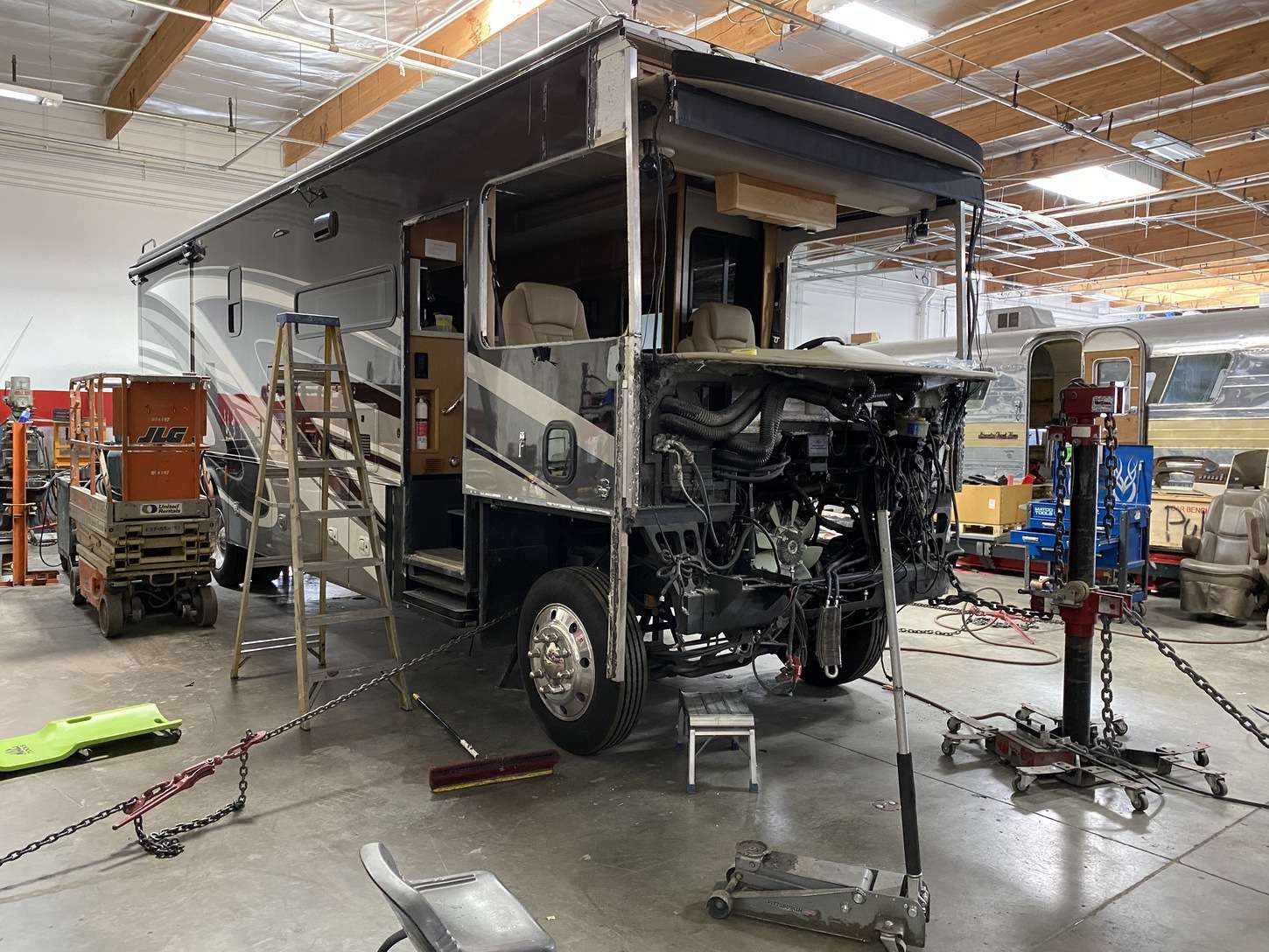
An honest rv insurance claim timeline is the thing owners want most and get least, because the truthful answer is uncomfortable. Repair labor is rarely what takes the time. Waiting does. Waiting for an adjuster to inspect, waiting for a supplement decision after teardown, and above all waiting for parts that are built in small production runs for a specific model year. What follows is a realistic week by week picture and an honest account of what moves it.
Week One: Reporting, Assignment, and First Inspection
Day one is reporting and documentation. The loss is reported, a claim number is issued, and the file is assigned to a desk adjuster. If the vehicle is not drivable, towing is arranged and the unit lands at a repair facility. This is also when your photographs and written account go into the file, and their quality shapes everything downstream.
Days two through seven are typically the first inspection. A field adjuster or an independent appraiser looks at the vehicle and writes an initial estimate from visible damage. Scheduling this inspection is the first real queue in the process, and its length depends on adjuster workload in the area. After a widespread weather event it stretches considerably, because every adjuster in the region is booked. By the end of week one you should have a claim number, an assigned adjuster, an inspection completed or scheduled, and an initial estimate either issued or pending. If you do not have an adjuster assigned by day three, that is the point to call and ask.
- Loss reported and claim number issued
- Desk adjuster assigned to the file
- Towing and storage arranged if the unit is not drivable
- Field inspection scheduled and performed
- Initial estimate written from visible damage
- Repair authorization signed with the chosen facility
Weeks Two and Three: Teardown and the First Supplement
Teardown is authorized and the damaged area is disassembled. On an RV this is where the claim's actual size becomes known, because the initial estimate was written from the outside of a laminated box and the real damage lives inside it. Lamination separation, fractured framing, crushed wiring, disturbed sealant beds, and floor delamination all surface here. Documentation is assembled during disassembly rather than after: staged photographs, measured damage, part numbers pulled for the specific model year and floor plan, and the published repair procedures supporting each method. That package becomes the first supplement, which is transmitted to the desk adjuster.
Then the file waits. Supplement review takes anywhere from a few days to a few weeks. Some are approved on paper. Some generate questions. Some trigger a reinspection, where a field adjuster returns to look at the opened vehicle, which adds scheduling time but usually resolves disagreements quickly. This is the first point where an owner feels the claim go quiet, and it is normal.
Approval and Parts Procurement in Weeks Three to Six
Once the supplement is approved, parts are ordered. This is where an RV claim diverges sharply from an automotive claim, and where most of the schedule is actually decided. Automotive parts move through a mature distribution network with regional warehouses and same day or next day availability on common items. RV components do not. They are produced in small runs for a specific brand, model, and year. A sidewall panel, a slideout fascia, a specific window, a corner cap, or a molded plastic component may be built to order, may come from a single supplier, or may have been discontinued when the model year changed.
Lead times of four to twelve weeks on a single structural component are ordinary, and longer is not unusual. Long lead items are ordered first, as soon as they are approved, and work that does not depend on them proceeds in parallel. When a component is genuinely unavailable, the options are fabrication, sourcing a serviceable used component, or an approved alternative, and each requires carrier agreement and its own documentation. None of that is fast, and none of it is improved by calling more often.
- Supplement approved and scope finalized
- Long lead structural components ordered first
- Independent work sequenced while parts are in transit
- Back order status confirmed and communicated with dates
- Fabrication or alternative sourcing proposed where a part is unavailable
- Second supplement filed if fitment reveals additional damage
Structural Repair and Refinish Through Week Twelve
With parts on hand, the physical repair proceeds in sequence. Structural work first: framing, substrate, and lamination. Then panel installation and fitment. Then preparation and refinish, including blending into adjacent panels where a match requires it. Then reassembly of trim, seals, hardware, and systems. Refinish adds calendar time that is not obvious from the outside. Paint and gelcoat work involves cure times between stages that cannot be compressed, and a full body paint or large decal scheme adds days rather than hours. On units with complex graphics, decal fabrication may itself be a lead time item.
Fitment is where second supplements are born. A replacement panel that does not sit correctly reveals framing damage the first teardown did not expose. A slideout that binds after reassembly points to rail damage that was not visible. Each finding restarts a small approval cycle, and this is the most common reason a claim that looked like six weeks becomes ten.
Final Week: Quality Control, Paperwork, and Delivery
The last stage is verification and administration. Systems are tested: slideouts cycled under load, plumbing pressure checked, twelve volt and shore power circuits verified, appliances operated, seals inspected. Water testing confirms that everything opened during the repair is sealed. Alignment is performed where the frame or suspension was involved, and driver assistance sensors are calibrated where the chassis requires it.
In parallel, the final invoice is reconciled line by line against the approved estimate and every supplement, because an invoice that does not match what the carrier authorized will sit in review. Completion photographs are assembled and any carrier specific release is prepared. The item that most often delays an otherwise finished vehicle is lienholder endorsement. A two party check cannot be deposited until the lender signs, and lenders frequently require a completion inspection or repair documentation first. That process takes days at minimum. It is why we start it at the beginning of a repair rather than at the end, and why owners with a loan should ask about it in week one.
- Slideouts cycled and adjusted under load
- Plumbing pressure tested and electrical circuits verified
- Water testing on every opened seam and penetration
- Alignment and sensor calibration where applicable
- Final invoice reconciled to approved estimates and supplements
- Lienholder endorsement and carrier release completed
What Actually Causes the Delay?
Three things, in this order. Parts availability is first and it is not close. RV components are built in small production runs for specific model years, distribution is thin, and a discontinued or model specific part can add months on its own. This is the honest answer most owners are not given, and it is the factor least affected by anyone's diligence.
Supplement cycles are second. Every supplement introduces a review period, and structural RV claims commonly generate two or three. Each one is days to weeks. Complete documentation shortens each cycle materially, which is the main reason thorough teardown documentation is worth the effort it takes. Carrier approval response time is third. Adjusters carry heavy caseloads, and after a regional weather event those loads spike sharply.
A file that would move in three days moves in three weeks when every adjuster in the area is working a hail event. Scheduled follow up and documented escalation help. They do not eliminate the queue. What does not usually cause delay, contrary to expectation, is repair labor. The technicians are rarely the bottleneck. A vehicle sitting for six weeks is almost always waiting for a component or a decision, not for someone to pick up a tool.
- Model specific or discontinued parts on extended lead time
- Multiple supplement cycles on structural losses
- Adjuster caseload, especially after a regional weather event
- Reinspection scheduling when a supplement is contested
- Owner response time on carrier requests and decisions
- Lienholder endorsement at the end of the file
How Can I Keep My Claim Moving?
Four things are genuinely within your control and they measurably shorten files. Report within twenty four hours with complete documentation, so the file opens with substance rather than a placeholder. Respond to carrier requests the same day, because a request directed at you blocks the file until you answer and no one can answer it for you. Decide quickly on non covered work, since the labor to access the area is already spent.
And choose a facility that documents thoroughly, because incomplete supplements are re reviewed and re reviewed supplements are the slowest thing in the process. Track the right thing. When you call for an update, ask which stage the file is in and what is blocking the next action, rather than asking when the vehicle will be ready. Those are different questions and only the first has a useful answer.
A file waiting on a supplement decision and a file waiting on a back ordered rail are both stalled, but only one can be moved. Accept the parts reality early. If a structural component carries a ten week lead time, no amount of pressure changes that, and energy spent on it is energy not spent on the things that do respond. Ask for the expected arrival date in writing, ask to be told immediately if it moves, and plan around it.
Questions
Frequently asked questions
How long does an RV insurance claim repair take?
A straightforward cosmetic repair with available parts commonly runs three to five weeks from first notice of loss to delivery. A structural repair involving sidewall lamination, frame work, or a slideout mechanism commonly runs eight to sixteen weeks, and complex losses run longer. The repair labor itself is rarely the constraint. Time is consumed waiting for the adjuster inspection at the start, waiting for supplement approval after teardown, and above all waiting for parts. RV components are produced in small runs for specific model years and floor plans, and a single structural panel can carry a lead time of four to twelve weeks. The most reliable predictor is whether the damage is cosmetic or structural, because structural damage nearly always generates at least one supplement cycle and often two or three.
Why is my RV sitting at the shop with nothing happening?
Almost always one of two reasons: it is waiting on a decision or it is waiting on a part. After teardown, a supplement is filed and the file cannot proceed until the carrier approves the revised scope, which can take days to weeks and sometimes requires a field adjuster to return for a reinspection. Alternatively, the scope is approved and a structural component is on order with a long lead time, in which case the vehicle waits because the part does not exist yet in a warehouse anywhere. Call and ask specifically which of the two applies, and if it is a part, ask for the expected arrival date. A vehicle sitting is rarely a vehicle being ignored, but you are entitled to know precisely what it is waiting for.
Why do RV parts take so long compared to car parts?
Distribution and production volume. Automotive parts move through a mature network of regional warehouses stocking common components for millions of identical vehicles, so next day availability is normal. Recreational vehicles are produced in comparatively small runs, and components are frequently specific to one brand, one model, and one model year. A sidewall panel, a corner cap, a slideout fascia, or a particular window may be built to order, may come from a single supplier, or may have been discontinued when the model year changed. Lead times of four to twelve weeks on one structural component are ordinary. When a part is genuinely unavailable, the alternatives are fabrication, sourcing a serviceable used component, or an approved substitute, and each requires carrier agreement plus its own documentation cycle.
How long does the insurance company take to approve a supplement?
Anywhere from a few days to a few weeks per supplement, and structural RV claims commonly generate two or three. A well documented supplement with staged photographs, measured damage, part numbers, and the published manufacturer procedure supporting each method moves through review considerably faster than a thin one, because the adjuster can approve it without asking questions. Some supplements trigger a reinspection, where a field adjuster returns to view the disassembled vehicle. That adds scheduling time but usually resolves disagreements quickly, since an opened wall is difficult to argue with. Approval time also depends heavily on adjuster caseload. After a regional weather event, review periods stretch considerably because every adjuster in the area is working the same surge.
Can I get a rental or reimbursement while my RV is being repaired?
It depends entirely on your policy. Some recreational vehicle policies include a loss of use, emergency expense, or vacation interruption provision that can reimburse lodging or alternative accommodation while a covered repair is underway, and some include nothing of the kind. Where it exists, the benefit is usually capped by a daily amount and a total limit, and it commonly applies only while the vehicle is actively being repaired rather than during the entire time it is at the shop. Ask your carrier at first notice whether the provision exists on your policy, what the limits are, and what documentation is required, then keep every receipt. Do not assume it applies. This is one of the more variable provisions across recreational vehicle policies.
What is the fastest an RV collision repair can realistically be done?
For genuinely cosmetic damage where every part is in stock and no supplement is required, roughly two to three weeks from authorization to delivery, and that assumes the adjuster inspected promptly and the estimate was complete. Anything structural adds a teardown and at least one supplement cycle, which realistically moves the floor to six weeks even under favorable conditions. Refinish work adds cure time between stages that cannot be compressed regardless of scheduling. Be cautious of any promise that is dramatically faster than these ranges on structural damage, because the usual way to hit an aggressive date is to skip teardown documentation, which means the hidden damage stays hidden and reappears as a problem you own six months later.
Does the shop or the insurance company control how long it takes?
Both, plus a third factor neither controls. The shop controls teardown thoroughness, documentation quality, parts ordering speed, and production scheduling. The carrier controls inspection scheduling, supplement review, and approval timing. Neither controls parts availability, which is set by the manufacturer and the supply chain, and which is the single largest source of delay on RV claims. This is why asking which stage the file is in is more useful than asking when the vehicle will be ready. A file waiting on a supplement decision can be pushed with follow up and escalation. A file waiting on a back ordered structural panel cannot be pushed at all, and knowing which situation you are in tells you whether a phone call is worth making.
What can I do to speed up my RV insurance claim?
Four things, and they matter more than owners expect. Report within twenty four hours with complete documentation, because a file that opens with substance moves faster than one that opens with a placeholder. Respond to carrier requests the same day, since any request directed at you blocks the file until you answer and nobody can answer it on your behalf. Decide quickly on non covered work found during teardown, because the labor to access that area has already been spent and revisiting it later costs both time and money. And choose a repair facility that documents thoroughly, since incomplete supplements get re reviewed and re reviewed supplements are the slowest thing in the entire process. Beyond those, track stage and blocking item rather than a delivery date.
Keep reading
Related pages
More on insurance
Services we perform
Talk to a repair specialist today
Tell us what happened and we will tell you what the repair actually involves, what it costs, and how long it takes. We work directly with every major carrier and serve Westminster owners and fleets from our 35,000 square foot facility.
Posted labor rates are published on our prices page. Diagnostic and systems assessment fees are credited against an authorized repair.