Public Sector and Partners
Fire and EMS Apparatus Service for Response Fleets
In short
Fire and EMS apparatus service is dominated by one constraint: an out of service unit reduces coverage. We repair apparatus bodies, compartments, ambulance modules, and patient compartments for departments serving Westminster and the surrounding Orange County area, with scheduling built around reserve availability and shift coverage rather than shop convenience.
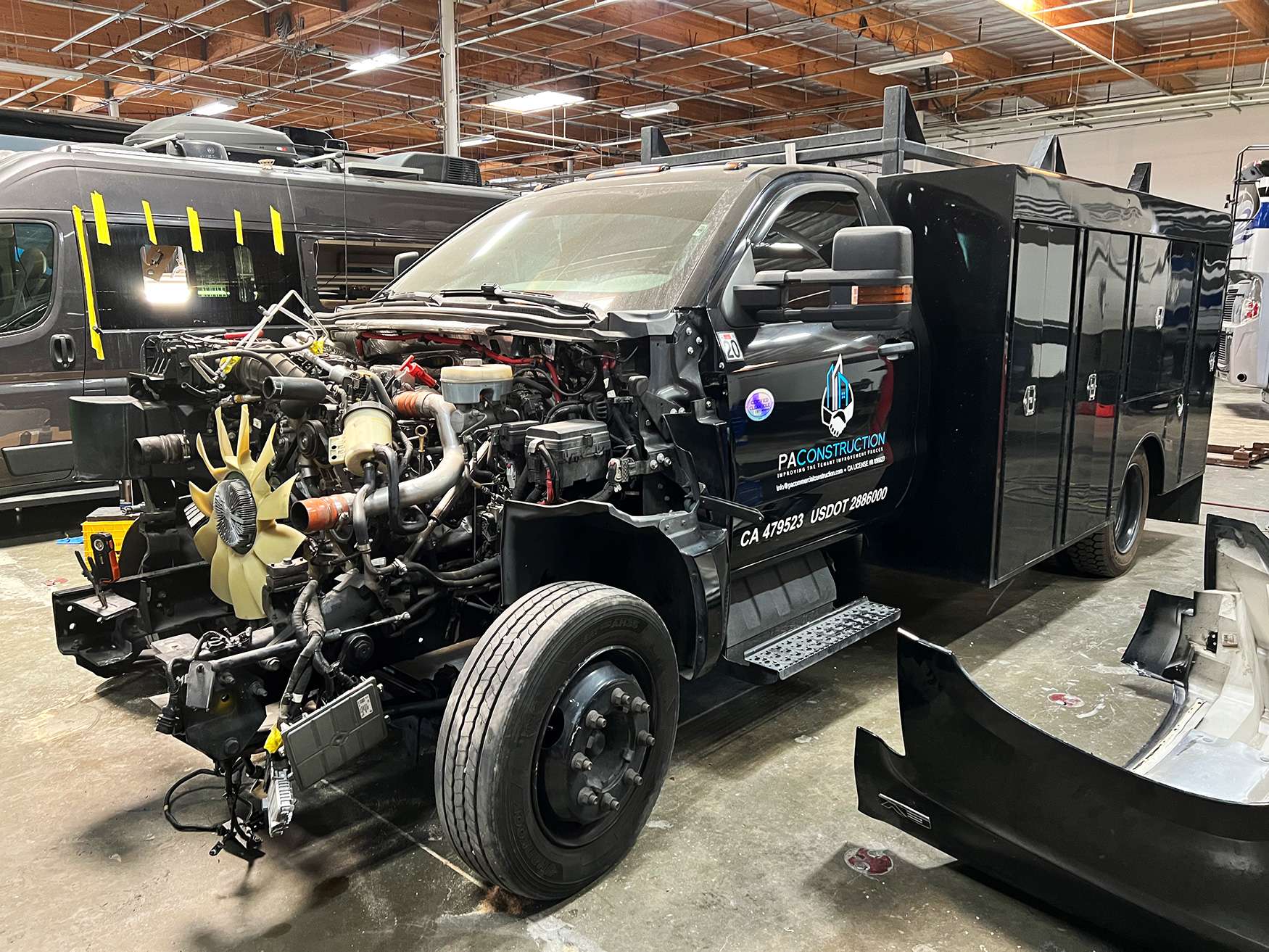
Fire and EMS apparatus service is judged by how quickly a unit returns to the response roster. Every day an engine or a medic unit sits in a bay is a day a department runs on a reserve or accepts a longer response, and chiefs feel that in a way no ordinary fleet manager does. We repair apparatus and ambulance bodies for departments serving Westminster and across Orange County, sequencing work around reserve coverage so the front line gap stays short.
Out of Service Pressure Is the Real Constraint
Departments do not carry spare capacity the way commercial fleets do. A reserve engine exists, but it is a reserve for good reasons, and running on it for a month is a compromise that shows up in maintenance cost, in equipment layout confusion, and in crew frustration. The repair schedule is therefore an operational decision made by command rather than a maintenance detail handled quietly by a mechanic.
We plan apparatus work backward from the date the unit must be back on the roster. That means identifying long lead components immediately at assessment, ordering before the apparatus even arrives wherever that is possible, and sequencing the job so the unit is not occupying a bay while waiting on a part that could have been ordered three weeks earlier by anybody who thought to look.
Where the full repair genuinely cannot fit the available window, we separate what must be completed for the unit to return to service from what can be scheduled for a later visit. A unit back on the roster with cosmetic work outstanding serves the community every single shift. A perfect unit still sitting in a bay serves nobody, and no chief has ever preferred the second outcome.
Apparatus Body and Compartment Repair
Apparatus bodies take damage that ordinary trucks never see. Backing incidents in tight station approaches and at congested scenes. Contact damage while positioning under pressure. Corrosion at compartment floors from constant water and foam exposure that never fully dries. Door and shutter mechanisms that stop sealing properly after years of cycling in every condition the region produces. None of it is remarkable on its own, and all of it compounds on a vehicle expected to perform without hesitation at three in the morning.
Compartment integrity matters far more than appearance on an apparatus. A compartment that leaks quietly ruins equipment worth many times the panel protecting it, and a door that does not latch reliably is a piece of equipment that leaves the compartment somewhere between the station and the call. We repair compartment structures, door and roll up shutter mechanisms, seals, and the shelving and mounting systems inside them.
Corrosion at lower compartment areas is the most common structural finding on older apparatus by a considerable margin. We remove it back to sound metal and replace failed sections rather than coating over the problem, because a coated repair on a compartment floor that regularly carries standing water fails on a schedule you could mark on a calendar in advance.
- Compartment structure and floor section replacement
- Roll up shutter and swing door mechanism repair
- Compartment seal replacement to protect stored equipment
- Shelving, tray, and equipment mount repair inside compartments
- Body panel and structural repair after backing and scene contact
- Step, handrail, and access hardware repair for crew safety
Ambulance Modules and Patient Compartments
The patient module is a genuinely different repair discipline than a truck body. It is an occupied working space containing mounted medical equipment, oxygen systems, electrical distribution, cabinetry, and interior surfaces that have to remain cleanable to a standard nobody applies to a cargo area. Damage to the module structure frequently disturbs several of those systems at the same time.
We repair module structures, exterior panels, door and hardware systems, interior cabinetry and mounting, and the sealing that keeps the compartment weather tight and cleanable. Where damage involves systems requiring a specialty trade, particularly oxygen and certain medical equipment installations, we identify that and coordinate rather than performing work that should be done by people who do only that work.
Module to chassis mounting deserves specific attention after any collision, and it is the item most likely to be skipped. The module is a heavy structure attached at defined points, and impact loads travel directly through those attachments before they reach anything visible. We inspect them rather than assuming they survived an impact that deformed the surrounding body enough to bring the unit here.
Coordinating With Reserve Units
The reserve fleet is what makes an apparatus repair survivable at all, and coordinating with it is part of planning the repair rather than a separate departmental problem. A department that knows a unit will be out for three weeks can rotate a reserve into service deliberately and plan around the differences in equipment layout. A department receiving a rolling series of one week extensions cannot plan anything at all.
So we commit to honest dates and to telling you the week something changes rather than waiting until pickup to mention it. Your operational plan depends on that timing considerably more than a commercial fleet's does, because a coverage gap is not an inconvenience that gets absorbed by overtime. It is a response time, and response times are the thing your department is measured on publicly.
Where a department wants to move equipment between a front line unit and a reserve during the repair, we work around that schedule rather than requiring you to work around ours. Tell us what is being removed and when your crews are available to do it, and we sequence the work so equipment transfer is not happening in the middle of a torn down compartment.
- Honest return dates issued at authorization and updated the week they move
- Work sequenced around equipment transfer to and from reserve units
- Return to service items separated from deferrable cosmetic work
- Long lead components identified and ordered before arrival where possible
- Single point of contact for the duration of the repair
Markings, Reflective Striping, and Visibility
Apparatus markings are safety equipment rather than decoration, and treating them as cosmetic is how a repair ends up incomplete. Reflective striping, chevron patterns on rear surfaces, unit identification, and agency markings all contribute directly to how visible a unit is at a scene at night, which is a genuine and well understood risk factor for personnel working around it on a roadway.
We restore markings as part of the repair rather than leaving them for somebody else to schedule later. Panel repair is refinished to a color match first, then striping and identification are reapplied so the finished unit reads exactly as it did before the damage occurred. Partial restoration that leaves a gap in a reflective pattern is a repair that has not been finished, regardless of how sound the structural work underneath it is.
For departments updating a marking scheme across a fleet, we can sequence that work deliberately so the department is not running two visual identities for an extended period. It also means units come off the roster one at a time rather than as a group, which is the difference between a manageable project and a coverage problem that lands on a battalion chief.
- Reflective striping and rear chevron pattern restoration
- Unit identification and agency marking replacement
- Color matched refinishing before any marking is applied
- Fleet wide marking updates sequenced one unit at a time
- Visibility treated as safety equipment rather than appearance
Scheduling Around Shift Coverage
Apparatus does not arrive on a shop's preferred schedule. It arrives when a unit can actually be released, which depends on staffing that day, call volume, and whatever else is already out of service across the department. We build intake around that rather than asking a department to fit into a slot that only works on paper and never survives contact with a real duty roster.
Drop off and pickup timing gets coordinated with your duty schedule rather than assumed. For departments with limited staff available to move apparatus, we plan the handoff so a single trip accomplishes both movements where possible, instead of requiring two separate crew details on different days for what is fundamentally a logistics problem rather than a repair problem. Saving a department one crew movement is worth considerably more on a thin roster than it sounds like on paper.
Our shop has 35,000 square feet of bay space, which matters more for apparatus than for almost anything else we handle. A ladder or a large engine cannot be shoehorned into a general body shop bay without displacing everything around it. Call (949) 799-3387 or email info@ocrvcenter.com to discuss department intake and documentation requirements. Send photographs with the first message if you have them, since that is what lets us order long lead components before the unit arrives.
Questions
Frequently asked questions
How do you minimize the time an apparatus is out of service?
We plan backward from the date the unit needs to be back on the roster rather than forward from the day it arrives. Long lead components get identified immediately and ordered before the apparatus comes in where that is possible, since parts availability rather than labor is almost always what extends an apparatus repair. Where the full scope will not fit the available window, we separate what must be completed for the unit to return to service from what can be scheduled later. A unit back in service with cosmetic work outstanding still covers the community.
Do you repair ambulance patient modules?
Yes. Module structural repair, exterior panels, door and hardware systems, interior cabinetry and mounting, and the sealing that keeps the compartment weather tight all come through the shop. Module to chassis mounting gets specific inspection after any collision, because the module is a heavy structure attached at defined points and impact loads travel through those attachments even when they look undisturbed. Where damage involves oxygen systems or certain medical equipment installations that require a specialty trade, we identify that and coordinate rather than performing work that should be done by the right hands.
What causes most compartment damage on fire apparatus?
Corrosion at lower compartment areas leads the list on older units, driven by constant water and foam exposure combined with standing moisture that has nowhere to drain. After that comes door and roll up shutter mechanism wear from years of cycling in all conditions, seal failure that lets water reach stored equipment, and backing or positioning contact damage at stations and scenes. We remove corrosion back to sound metal and replace failed sections rather than coating over compromised areas, since a coated repair on a compartment floor carrying water fails on a predictable schedule.
Can you restore reflective striping and chevron markings?
Yes, and we treat them as part of the repair because they are safety equipment rather than decoration. Reflective striping, rear chevron patterns, unit identification, and agency markings all affect how visible an apparatus is at a scene at night, which is a real risk factor for personnel working around it. Panel repair is refinished to a color match first, then striping and identification are reapplied so the finished unit reads as it did before the damage. A repair that leaves a gap in a reflective pattern is not a finished repair.
How do you coordinate with our reserve unit rotation?
By committing to honest dates and updating you the week anything moves rather than at pickup. Your operational plan depends on that timing far more than a commercial fleet's does, because rotating a reserve into front line service has staffing and equipment layout consequences. If your crews need to transfer equipment between the front line unit and a reserve during the repair, tell us the timing and we sequence the work so the transfer is not happening in the middle of a torn down compartment. One point of contact stays with the job for the duration.
Do you have the bay space for a ladder or a large engine?
Yes. Our facility covers 35,000 square feet, which matters for apparatus specifically. A ladder truck or a large engine cannot be worked in a general body shop bay without displacing everything around it, which is why apparatus repairs at undersized facilities tend to take longer than quoted and get bumped when other work arrives. Space also allows the unit to stay staged rather than being moved repeatedly, which reduces the handling risk on a vehicle carrying mounted equipment.
How do you handle purchase orders and department documentation?
Every job references the purchase order or authorization number your department provides, uses your unit identifiers rather than shop numbering, and separates labor, parts, and approved supplements into distinct invoice lines. Repair files include dated photographs, written damage descriptions, teardown findings, and an itemized scope tying each operation to a specific damage point. That level of documentation supports both your maintenance records and whatever review your agency's finance side applies to apparatus spending.
How does a department get scheduled?
Call (949) 799-3387 or email info@ocrvcenter.com with the unit, a description of the damage, photographs if you have them, and the date you need it back on the roster. Photographs genuinely help, because they let us identify long lead components before the apparatus arrives. Assessments are paid and credited against an authorized repair. Our shop has operated since 2015, is licensed by the California Bureau of Automotive Repair under ARD00288521, and holds EPA identification CAL000367879.
Keep reading
Related pages
Others we work with
Services we perform
Talk to a repair specialist today
Tell us what happened and we will tell you what the repair actually involves, what it costs, and how long it takes. We work directly with every major carrier and serve Westminster owners and fleets from our 35,000 square foot facility.
Posted labor rates are published on our prices page. Diagnostic and systems assessment fees are credited against an authorized repair.