Blog
RV Repair Tips From the Shop Floor
In short
Most RV problems announce themselves long before they become structural. Soft spots, hairline cracks at panel corners, and slide seals that leave a wet edge are all early signals. These posts explain what each symptom usually means, how a shop confirms it, and which findings change the repair from cosmetic to structural.
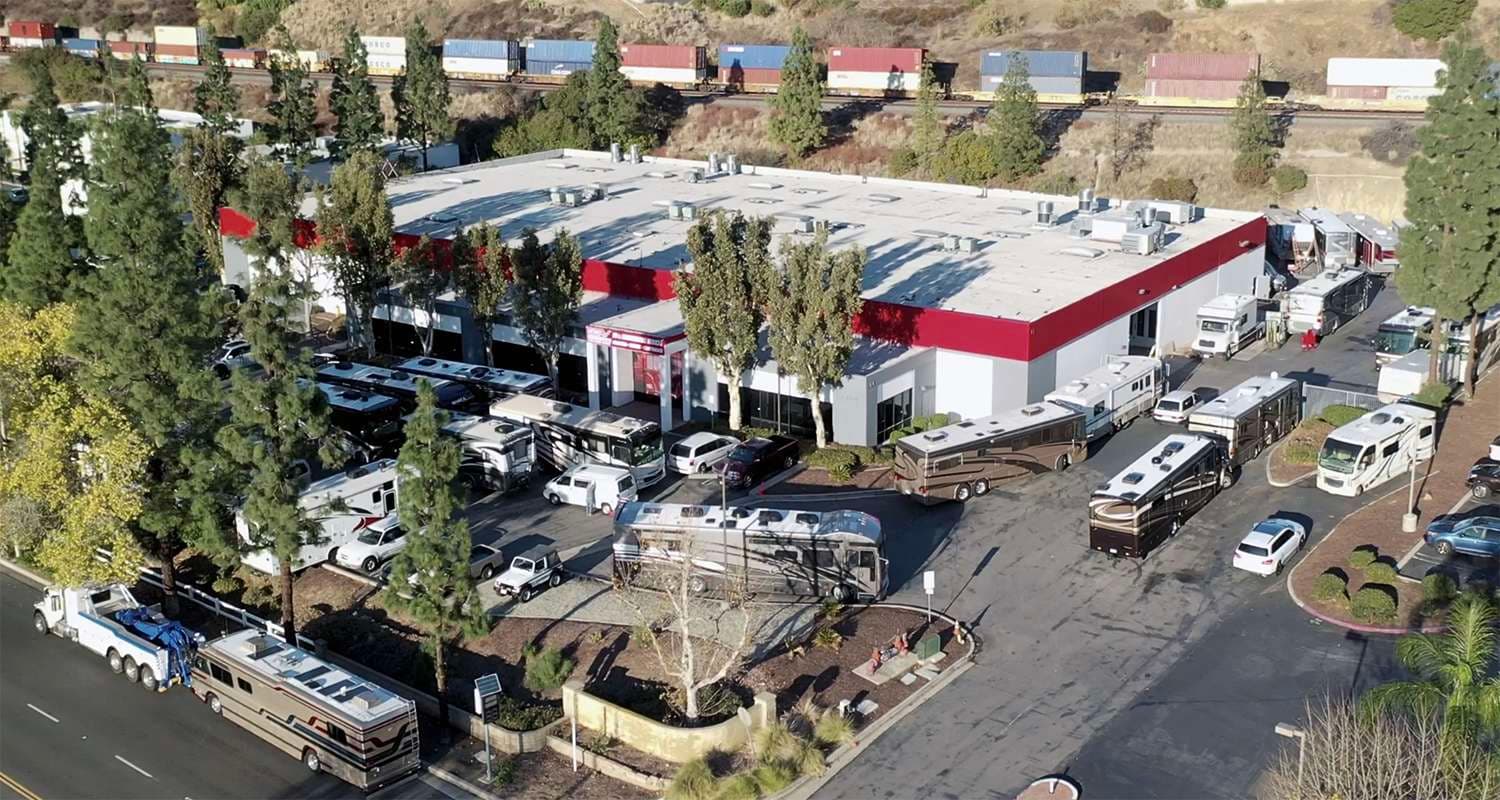
These rv repair tips come from work that happens with the panels off and the trim on the bench. An owner sees a bubble, a crack, or a stain. A technician sees a sequence of causes that leads back to a bonded joint, a flexing corner, or a seal that stopped compressing. The point of this section is to close that gap so you can describe symptoms accurately, ask better questions, and catch failures while they are still small.
Sidewall Corner Cracks
Corners crack because they concentrate stress. A window or door opening interrupts the load path through a sidewall, and the corner is where...
Read moreRV Repair TipsSlide Seal Warning Signs
Slide seals fail gradually and predictably. The early signs are a bulb seal that stays compressed instead of springing back, uneven contact...
Read moreRV Repair TipsFrame Rack Measuring
A frame rack does three jobs: it anchors the vehicle so force can be applied without moving it, it measures reference points against specifi...
Read moreRV Repair TipsStructural Delamination
Delamination is structural when the wall has lost its ability to carry load, which shows up as flex under hand pressure, changed door or sli...
Read moreWhich RV Symptoms Actually Signal Structural Damage?
There is a short list of findings that move a repair from cosmetic to structural, and every one of them involves either water or load. Water gets into a laminated wall and destroys the bond between skin, foam, and framing, which is what makes a sidewall flex under hand pressure. Load bends steel or aluminum, which shows up as doors that stop latching, slide rooms that stop sealing evenly, and body gaps that measure differently side to side. Cosmetic damage does not change how a vehicle closes, seals, or tracks.
The reliable test is not how the damage looks, it is whether something that used to fit still fits. A cracked fiberglass panel with square door gaps and a slide that seals is a surface repair. The same crack on a coach where the entry door now drags and the slide leaves a gap at one corner is a structural conversation. That distinction is what determines whether the job needs measuring on a rack or filler, primer, and a blend.
- Sidewall that flexes or feels soft under moderate hand pressure
- Door, window, or compartment latches that suddenly need force
- Slide room that seals on one edge and not the other
- Body gaps that measure differently on the left and right of the same coach
- Cracks that radiate from a corner rather than sitting in the middle of a flat panel
- Interior wall stains or a musty smell that returns after cleaning
How Do Technicians Confirm What They Suspect?
Confirmation is a process of narrowing, not a single test. It usually starts with a moisture meter reading taken in a grid across the suspect area and compared against a known dry section of the same wall. Wet readings are mapped and photographed. Next comes a tap test, where a light mallet or knuckle produces a sharp sound over bonded material and a dull one where the bond has released. The dull area gets outlined in tape, and that outline is the working boundary for the repair.
When load is involved, measurement replaces sound. Reference points along the chassis and body are compared against factory specification or against the undamaged side of the same vehicle. Numbers that disagree by more than the published tolerance mean the structure moved, and no amount of surface work fixes that. Documenting these findings while the vehicle is still apart is what turns a suspicion into a supported repair plan, and it is what a carrier needs to see before approving structural operations.
What Repairs Can Owners Reasonably Postpone?
Not everything needs to be handled immediately, and pretending otherwise burns money that would be better spent on the failures that spread. Cosmetic gelcoat chips, faded decals, minor curb rash on a step, and small scuffs on a compartment door are stable. They do not get worse on their own, and they can wait until the coach is in for something else. Bundling that work into a single visit is almost always less expensive than handling each item separately, because setup, masking, and cure time are shared.
What cannot wait is anything that lets water in or lets structure move. A failed roof seam, a slide seal that no longer compresses, a cracked corner at a window flange, and a bent frame member all get worse in a predictable direction. Water damage in particular compounds quietly, because the visible stain is usually the smallest part of the wet area. Postponing those items does not save money, it shifts spending from one repair into three.
- Can wait: gelcoat chips, faded graphics, light scuffs, minor step damage
- Can wait: interior trim scratches that do not sit at a wall joint
- Should not wait: any active leak path at roof, window, or slide
- Should not wait: soft or flexing wall sections, however small
- Should not wait: structural cracks radiating from a corner or a mounting point
- Should not wait: chassis or suspension damage that changes how the unit tracks
When Does a Repair Stop Being Worth Doing Yourself?
The dividing line is not difficulty, it is consequence. Replacing a roof vent, swapping a water pump, or resealing a lap joint are jobs a careful owner can do well with a weekend and the right sealant, and doing them promptly is far better than waiting for a shop opening. The risk is low because a mistake shows up quickly and costs little to correct.
The line moves when the repair either hides something or holds something up. Anything that covers a wall cavity, seals a structural joint, or carries load belongs to someone with a moisture meter and a way to verify the result. A patch that looks correct and traps water behind it does more damage in a year than the original leak would have in three, and the second repair costs several times the first because by then the framing is involved.
- Does the work permanently cover something you cannot inspect later
- Does a failure leave you stranded rather than merely inconvenienced
- Does the repair carry structural load or seal a structural joint
- Would a carrier need documentation of how it was done
- Do you have a way to verify the result rather than assume it
Questions
Frequently asked questions
How do I tell a cosmetic crack from a structural one?
Look at where the crack starts and what it does next. Cosmetic cracks tend to sit in the middle of a flat panel, stay short, and stop growing. Structural cracks start at a stress concentration, which on a recreational vehicle means a corner: a window flange corner, a door opening corner, a slide opening, or a point where an awning arm or ladder bolts through the wall. Those cracks radiate outward and lengthen over months. The second test is functional. Open and close everything near the crack. If a door that used to shut with a light push now needs a shoulder, or if a slide seals along three edges but leaves daylight at the fourth, the panel is carrying load it was not designed to carry. That is a structural finding regardless of how small the crack looks.
Is a soft spot in an RV wall always delamination?
Almost always, though the cause varies. A laminated sidewall is a sandwich: outer fiberglass skin, foam block insulation, framing, and an inner panel, all bonded under pressure. Softness means the bond between at least two of those layers has released, and the skin is no longer sharing load with what sits behind it. Water is the usual reason, entering through a failed sealant joint at a window, a marker light, an awning bracket, or a roof seam and then traveling downward inside the wall. Heat cycling and flexing accelerate it. There is a less common cause, which is an original bonding defect that shows up as a bubble with no moisture reading at all. The repair path differs, so the moisture map matters. Wet cores must be dried or removed before anything is rebonded.
Can I repair fiberglass damage myself with a kit?
For a small chip above the beltline on a non structural panel, a quality gelcoat repair kit is a reasonable owner project, and it will look acceptable from a normal viewing distance. What kits do not handle is matching aged pigment, matching surface texture across a large area, or dealing with anything behind the skin. Two problems tend to catch people. The first is that a filled crack which is still moving will reopen, because filler does not add stiffness. The second is trapped moisture: sealing the outside of a wet wall prevents drying and accelerates the damage underneath. If the area flexes, if a moisture meter reads high, or if the repair is larger than roughly a hand span, the honest answer is that a kit will cost you time and then need to be redone.
How often should sealants on an RV be inspected?
Twice a year is the working standard, with an extra look after any long trip or any severe weather event. Inspection means getting close enough to actually see the sealant bead, not glancing at the roof from the ground. You are looking for chalking, shrinkage that pulls the bead away from one edge, hairline splits, and any place where the sealant has lost adhesion and lifted. Pay attention to the transitions where materials change, since those move at different rates and fail first: roof to sidewall, around vents and skylights, at the front and rear cap seams, and at every fastener that penetrates the roof. Reapplying compatible sealant over a sound bead is quick maintenance. Chasing water damage after a bead has been split for a season is not.
Talk to a repair specialist today
Tell us what happened and we will tell you what the repair actually involves, what it costs, and how long it takes. We work directly with every major carrier and serve Westminster owners and fleets from our 35,000 square foot facility.
Posted labor rates are published on our prices page. Diagnostic and systems assessment fees are credited against an authorized repair.